Yale Budget Lab estimates tariffs will cost households $1,100 per year
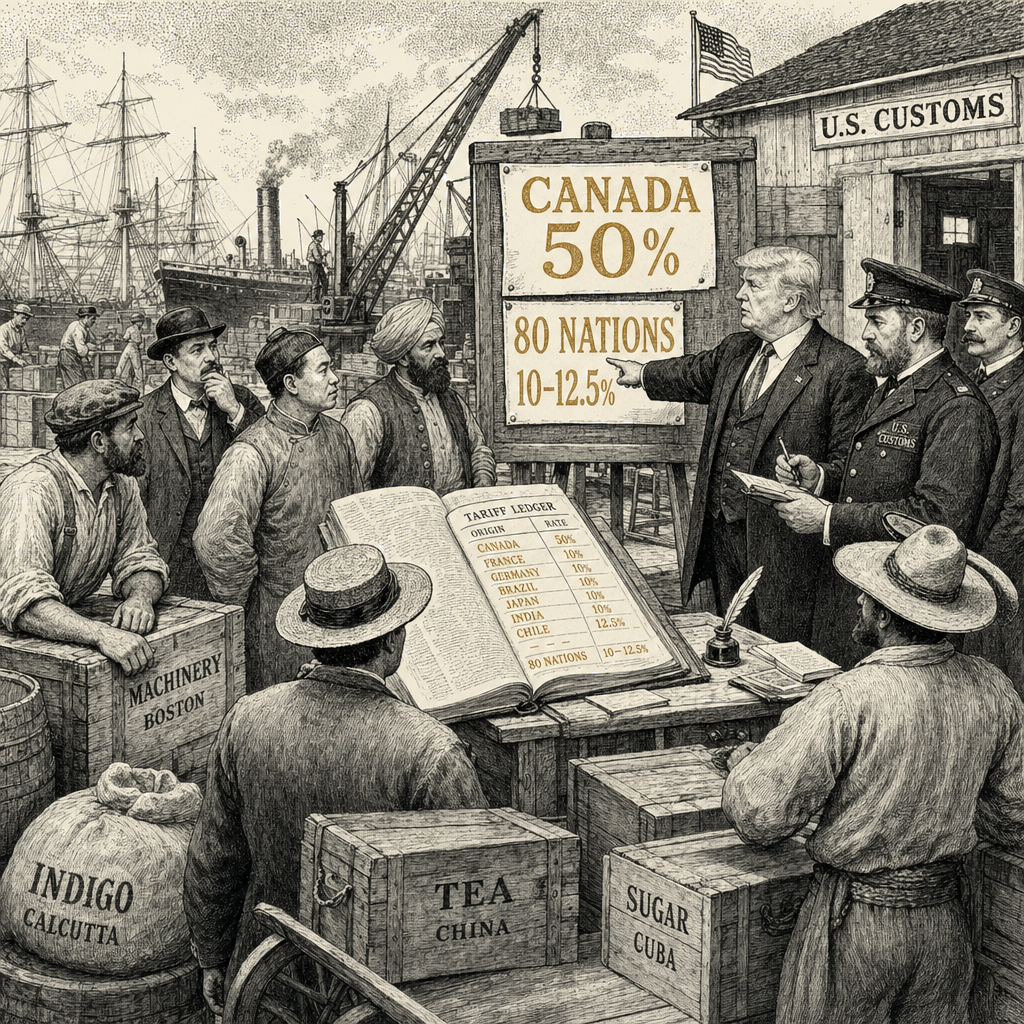
President Donald Trump last week imposed a 50% tariff on a range of Canadian goods and new across-the-board tariffs of 10% to 12.5% on goods from more than 80 countries, according to a report published Monday. The actions reimpose broad tariffs using alternative legal authorities months after the U.S. Supreme Court struck down his earlier tariff regime in February.
The tariffs are projected to increase costs for the average U.S. household by $1,100 per year, according to the Yale Budget Lab. Economists have also warned about rising uncertainty: “Volatility and unpredictability is the new normal,” Atsi Sheth, chief credit officer for Moody’s Ratings, told the New York Times, as cited in the report.
The 50% tariff on Canadian goods — covering items including hockey sticks, paper, plywood and dairy products — was imposed under a provision of the Smoot-Hawley Tariff Act that the report said had never been used before. The White House cited Canada’s retaliatory measures against earlier U.S. tariffs: 11 of Canada’s 13 provinces halted liquor imports from the U.S., and Canada imposed a 25% tariff on select U.S.-made cars after Trump placed a 25% tariff on Canadian-made cars. Trump also told reporters he would “put a big tariff on Canada because of the smoke,” referring to Canadian wildfire smoke that had crossed the border.
Ontario Premier Doug Ford responded defiantly on social media, saying, “We won’t back down. The fastest and only way to get US alcohol back on Ontario shelves is for the U.S. to drop its illegal tariffs on Canada.”
The broader tariffs on more than 80 countries were justified under a trade law provision that allows punishment of nations the U.S. deems insufficiently active against forced labor. A report by the U.S. Trade Representative identified Canada, the UK, Australia, Norway, Japan, China and the European Union as not doing enough to enforce prohibitions on forced labor.
Former Biden administration labor officials criticized the tariffs as insincere, pointing to the Trump administration’s decision to cut more than $500 million from Labor Department programs aimed at combating forced labor, child labor and human trafficking. Thea Lee, former deputy undersecretary for international labor affairs, called the cuts a “completely indiscriminate meat ax” and said “workers will suffer.” Kelly Fay Rodriguez, former special representative for international labor affairs, told Equal Times: “Unfortunately, it is extremely likely that child labor and forced labor practices will increase. We know these problems are endemic but … we’ve wiped out the resources and the prioritization for fighting them.”
The U.S. has lost 75,000 factory jobs since Trump returned to office, according to the report, and some trade experts noted the contrast between Trump’s stated concern over forced labor and his administration’s efforts to improve ties with China, which the Biden administration had identified as having serious forced labor problems in its Xinjiang region.