UK wage growth eases to 4.1%; unemployment dips to 4.9%
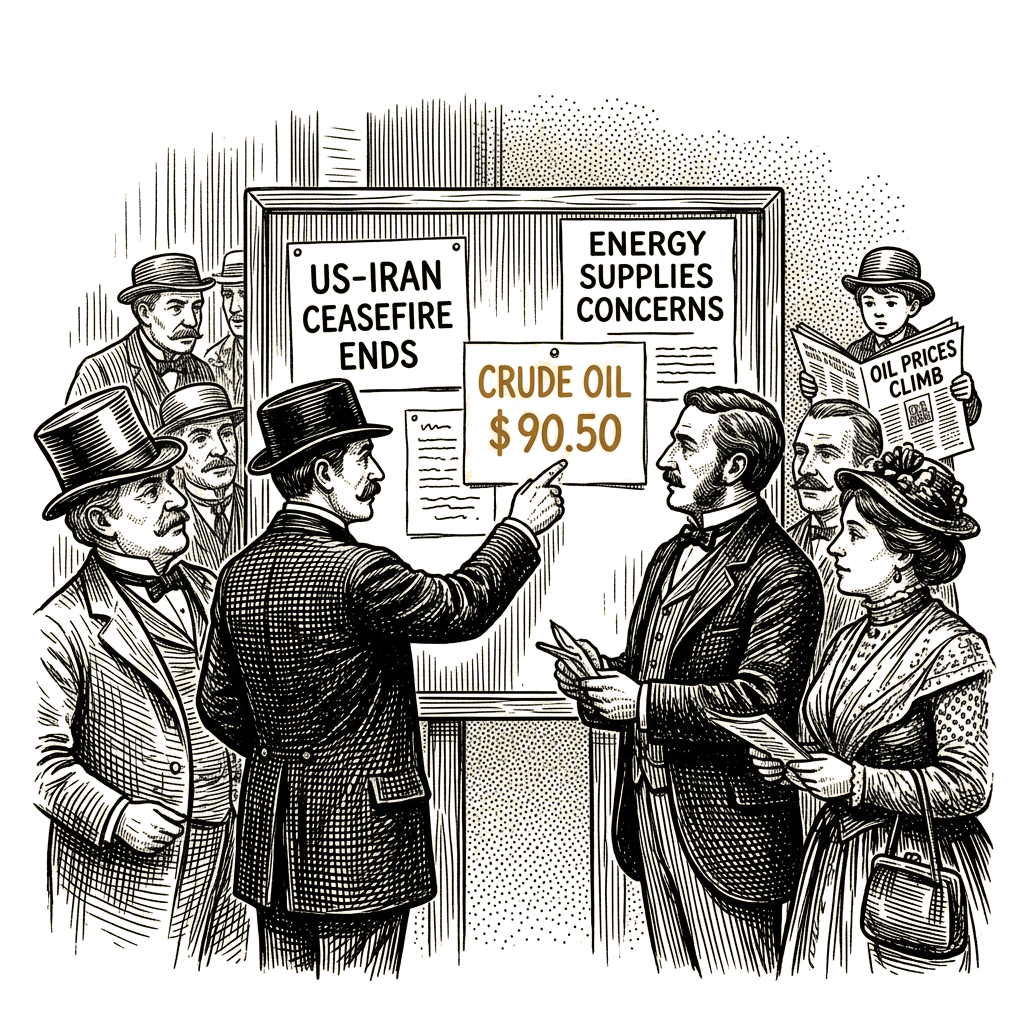
Oil prices climbed above $90 a barrel on Monday as hopes faded for a deal to end the war in the Middle East, heightening fears about energy supplies. A senior Iranian official told Reuters that Iran will shift to a “fully offensive” military stance as efforts have stalled towards a permanent end to the war, while Washington ruled out extending the temporary ceasefire pact. Brent crude futures climbed 0.8%, to $91.60 a barrel, the highest since 30 July. US West Texas Intermediate crude futures were up 75 cents at $85.25 a barrel, after hitting $85.37, the highest since 31 July.
The oil move landed alongside official figures showing UK wage growth slowing amid a cost of living squeeze. Figures from the Office for National Statistics show average growth in total earnings, including bonuses, fell to 4.1% in the three months to June, down from 4.3% in the three months to May. City economists had forecast a bigger fall to 4%. Excluding bonuses, regular pay growth was 3.5%, higher than the 3.4% expected by economists.
Liz McKeown, the ONS director of economic statistics, said the data showed “some softening” in the jobs market despite a broadly unchanged overall picture. “Regular wage growth has remained broadly stable in recent months,” she said. “However, private sector pay growth has continued to ease, while public sector pay growth remains elevated due to the timing of the latest NHS pay awards.”
The UK’s unemployment rate dipped to 4.9% in the three months to June from 5% in the previous three months. The number of job vacancies fell 7,000 to 712,000.
Felix Feather, economist at the fund manager Aberdeen, said: “Today’s labour market figures continue to point to a softening UK jobs market.” He noted that regular private-sector pay growth, which is closely watched by Bank of England officials, eased to 2.8% from 2.9% previously, and that the more timely indication from PAYE payroll data showed employment fell again, this time by 13,000.
“Broadly, the labour market has been loosening for some time,” Feather said. “Hiring activity has softened, vacancies have trended lower, and businesses continue to face a challenging demand environment.” He added: “This underlines our expectation for the Bank of England to be on hold for the rest of the year. Still, we expect inflation will jump at tomorrow’s reading, due to the recent uplift in the energy bill price cap, challenging the impression of domestically generated disinflation reflected in the recent dataflow.”