Apollo co-founder’s attorneys push to limit deposition to two NDAs
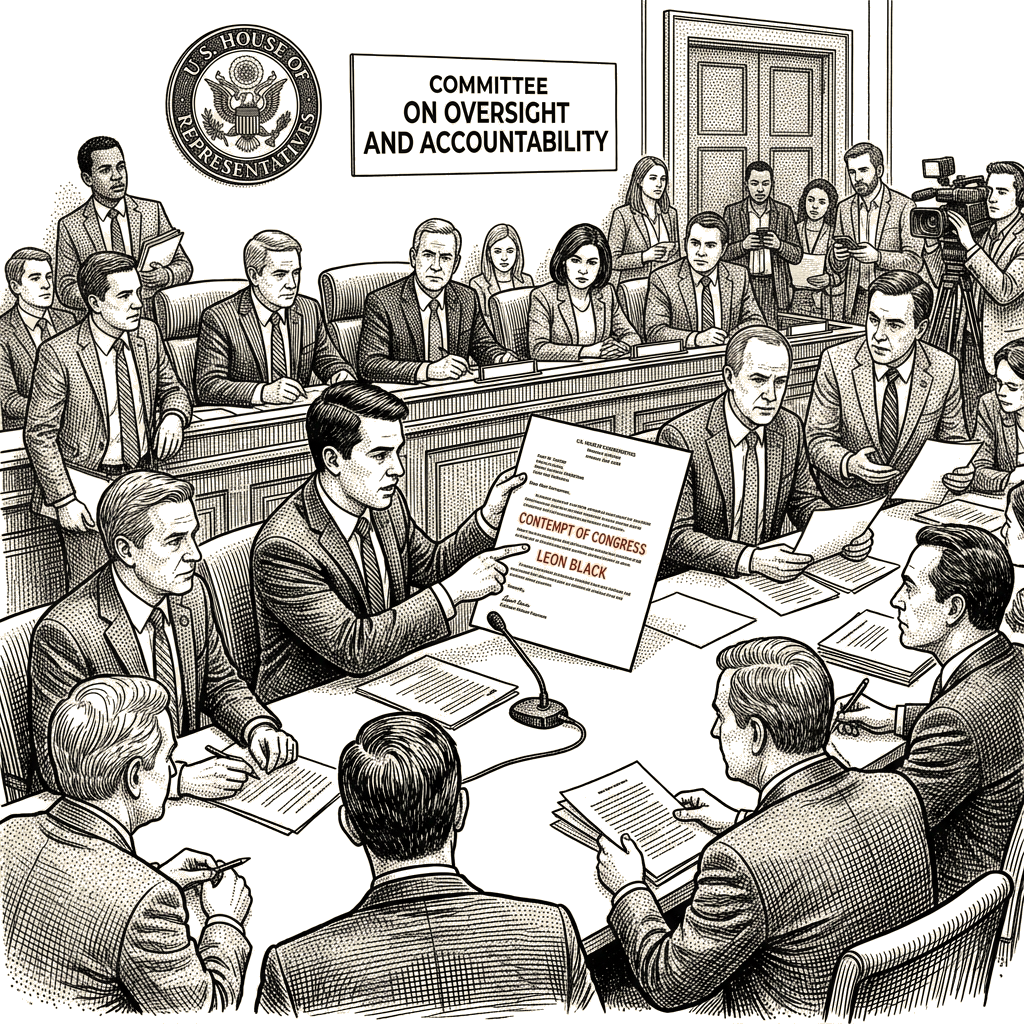
The committee’s confrontation with Black centers on the scope of its inquiry. Comer, a Kentucky Republican, addressed the letter to Black’s lawyer and said the committee “will use all tools at its disposal, including contempt” if Black refuses to provide documents or appear for his scheduled September 3 deposition. Comer accused Black of trying to “dictate to the Committee the scope of its investigation” rather than seeking “reasonable accommodation.”
Black voluntarily agreed to testify before the committee in June as part of the panel’s broad Epstein investigation, which the committee has said includes an examination of the alleged mismanagement of the federal government’s investigation into the late sexual predator, the operation of sex-trafficking rings, and the ways Epstein and his companion Ghislaine Maxwell “sought to curry favor” to protect their “illegal activities.” But Black’s appearance ended abruptly — after about one hour of questioning — after members of both parties said Black was refusing to answer questions about non-disclosure agreements. Comer, in his capacity as committee chairman, issued two subpoenas the same day: one demanding that Black produce “all non-disclosure agreements to which he is a party” and another compelling him to appear for a deposition.
The current dispute focuses on what materials Black must hand over. Black has produced one NDA and, according to Comer’s letter, indicated willingness to provide one additional agreement. In return, Black’s attorneys are seeking a promise that Black will not be held in contempt; a change of the deposition subpoena to a voluntary transcribed interview; limits on questions about confidentiality agreements to the two NDAs he is willing to provide; and a postponement from September 3 to early October. “At no point has Mr Black sought a reasonable accommodation from the Committee, but rather he has consistently sought to dictate to the Committee the scope of its investigation,” Comer wrote.
The disagreement also turns on when any undisclosed NDAs were signed. Black defended producing a single agreement by saying that “to the extent any more such confidentiality agreements exist, they would have been negotiated … well after Epstein’s death” in 2019. Comer rejected that rationale, writing that Black does not have “the right to decide what documents are responsive” to his subpoena, and that agreements signed after Epstein’s death “could still involve [Epstein’s] victims.”
Estrich pushed back on Comer’s account. “Mr Black provided the Committee with the only confidentiality agreement that pre-dated Epstein’s death and the only one of which Epstein was aware,” she said. She added: “Congress has no right to invade private lives as part of a fishing expedition especially where the parties to a confidentiality agreement do not want their identities revealed in a circus-like atmosphere and especially when Epstein had nothing do with any agreement.”
The committee’s investigation comes against a backdrop of well-documented financial ties between Black and Epstein. According to a report commissioned by Apollo several years ago, Epstein provided financial services to Black between 2012 and 2017. After Epstein pleaded guilty to Florida state prostitution charges in 2008, including procuring a minor, Black became Epstein’s largest client, paying him a total of roughly $170 million in fees, according to an investigation by the Senate finance committee.
Black has described his work for Epstein as tax and estate-planning services. In a statement to the oversight committee in June, Black wrote that “I did not know about this nefarious activity until Epstein was charged with trafficking in July 2019.” Black acknowledged, however, that he did know about Epstein pleading guilty in “2008 to state charges relating to prostitution involving a minor.”