UAE cites Iranian attacks on its ships as trigger
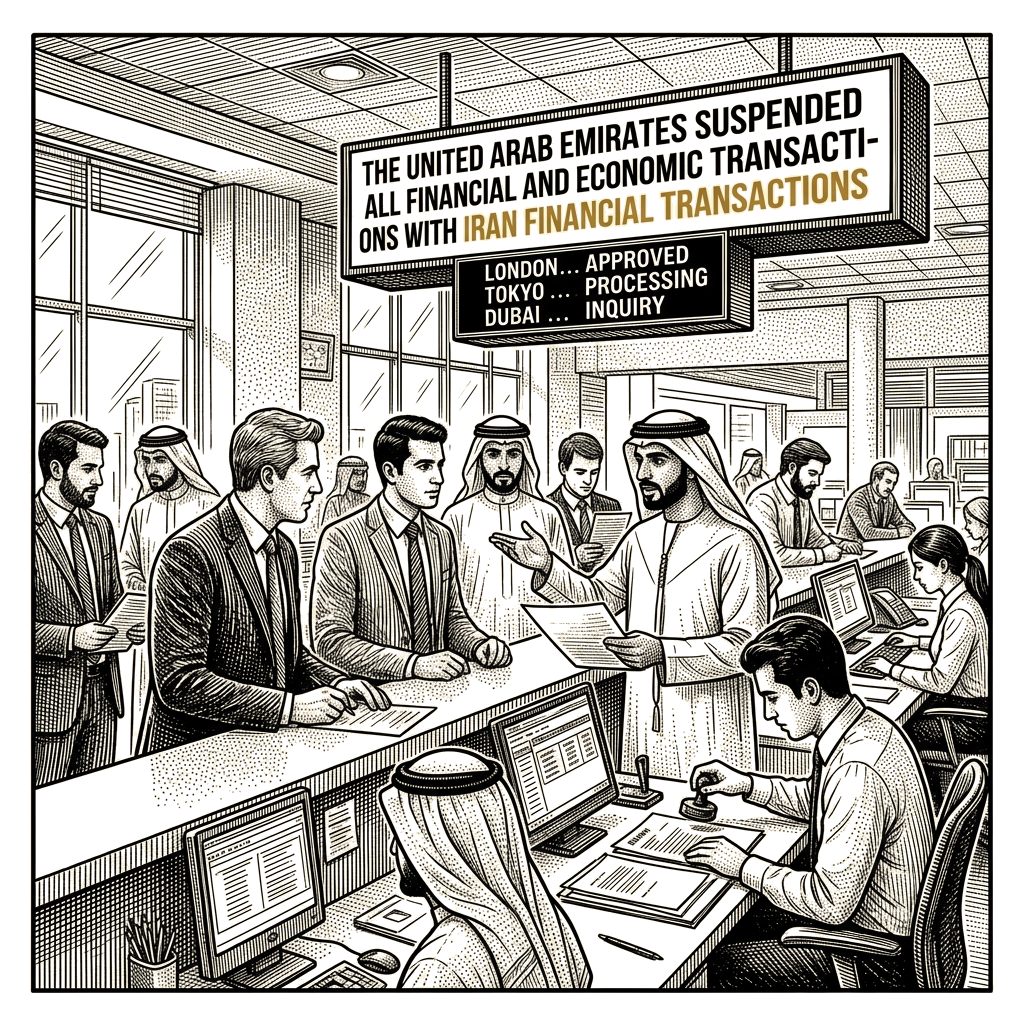
The United Arab Emirates suspended all financial and economic transactions with Iran late Tuesday after weeks of pressure from the Trump administration, potentially cutting off Tehran’s main import source and a key financial back channel to the global economy.
The move follows what Emirati officials described as Iranian attacks on seven of the country’s ships this month and two ballistic-missile launches toward the U.A.E. on Tuesday, which triggered the Emirates’ air defenses. The Emirates’ Defense Ministry said the missiles were aimed at maritime traffic and fell into the sea.
According to people familiar with the matter, the Trump administration had told Emirati officials in recent weeks that cracking down on Iranian financial networks operating in Dubai could have a greater impact on Tehran than the U.S. naval blockade of Iranian ports. The U.S. also urged the U.A.E. during the war to take tougher action against sanctioned Iranian entities and other networks operating covertly in the Emirates.
The U.A.E. was Iran’s largest source of imports in 2024, ahead of China, supplying more than 30 percent of the country’s total — about $21 billion worth — according to the World Trade Organization. If implemented broadly, the suspension could significantly curb Tehran’s access to foreign currency and global trade networks as the Iranian economy buckles under soaring inflation, sanctions and wartime disruption. The Trump administration hopes the pressure could push Iran to strike a deal.
Treasury Secretary Scott Bessent last week said Washington would impose new restrictions on Iran’s economy in the coming days, in what he called a “one-two punch” alongside the U.S. naval blockade of Iranian ports.
Whether the U.A.E. can fully choke off Iranian financial flows is another question. Much of the activity is deliberately obscured. U.S. sanctions orders show that oil revenues, foreign-currency trades and payments for Iranian entities have long moved through shell companies and exchange houses in Dubai, often without an Iranian name appearing on the transaction.
“When you look at Iranian sanctions evasion and Iran’s ability to earn money from illicit oil sales, Dubai is a major hub for illicit financial flows,” said former U.S. sanctions official Max Meizlish, now a research fellow at the Foundation for Defense of Democracies. “The U.A.E. taking action against direct trade and financial activity is important but the reality is that a great deal of indirect activity flows through banks in Dubai supporting Iran’s shadow-banking and illicit-financing operations.”
Iran has set up front companies in the U.A.E. to collect oil payments, settle transactions and obscure where the money originated, according to the U.S. Treasury and analysts tracking Tehran’s activities. In 2024, $9 billion passing through correspondent accounts maintained by U.S. banks appeared tied to clandestine Iranian financial activity, the department said. U.A.E.-based firms — mostly in Dubai — received 62 percent of those funds.
Iran has also relied on a shadow fleet of older tankers to transport sanctioned crude while masking the vessels’ movements and ownership structures. Many tankers tied to Iran’s shadow trade are owned or managed by companies based in the U.A.E., according to the Treasury.
Emirati officials see the latest measures as part of a gradual escalation rather than a wholesale break with Tehran, according to the people familiar with the matter. The U.A.E. is expected to move step by step, beginning with new restrictions on cargo and potentially expanding to a broader crackdown on Iranian-linked entities if the Revolutionary Guard continues its strikes. The approach reflects the Emirates’ preference for testing what works while preserving room to adjust.
U.A.E. policymakers worry Washington’s strategy of inflicting deeper economic pain on Iran could hurt the segment of Gulf states’ economies that relies on tourism and trade rather than oil, and eventually provoke further Iranian military retaliation, the people said. Emirati officials also want to keep some channels to Tehran open so they retain a diplomatic option if the Trump administration’s pressure campaign fails, they said.
The U.A.E. did not respond to a request for comment. An administration official said the U.S. sanctions and blockade have crippled Iran’s economy and that Trump has more levers to pull.
“It is doable but with limits,” said Eric Alter, dean of the Anwar Gargash Diplomatic Academy in Abu Dhabi. The government can shut down official banking and major port traffic, but it “cannot police every local partner, every free-zone or every small-vessel movement across seven emirates with different commercial cultures,” he said.
Earlier in the war, the U.A.E. had already suspended direct cargo shipping with Iran and launched a broader crackdown on Iranian activity in the country, including canceling visas and shutting schools and clubs.
The U.A.E. action is the latest step in the Trump administration’s broader effort to grind down Iran economically. As MSI previously reported, Treasury Secretary Bessent had signaled that new sanctions would form a “one-two punch” alongside the naval blockade — the same week Iran struck two more Emirati ships in the Strait of Hormuz. The shift to economic pressure as the primary strategy was set out earlier in August, when the president settled on sanctions and the naval blockade rather than further military strikes.