Federal debt tops $40 trillion as Treasury reports record milestone
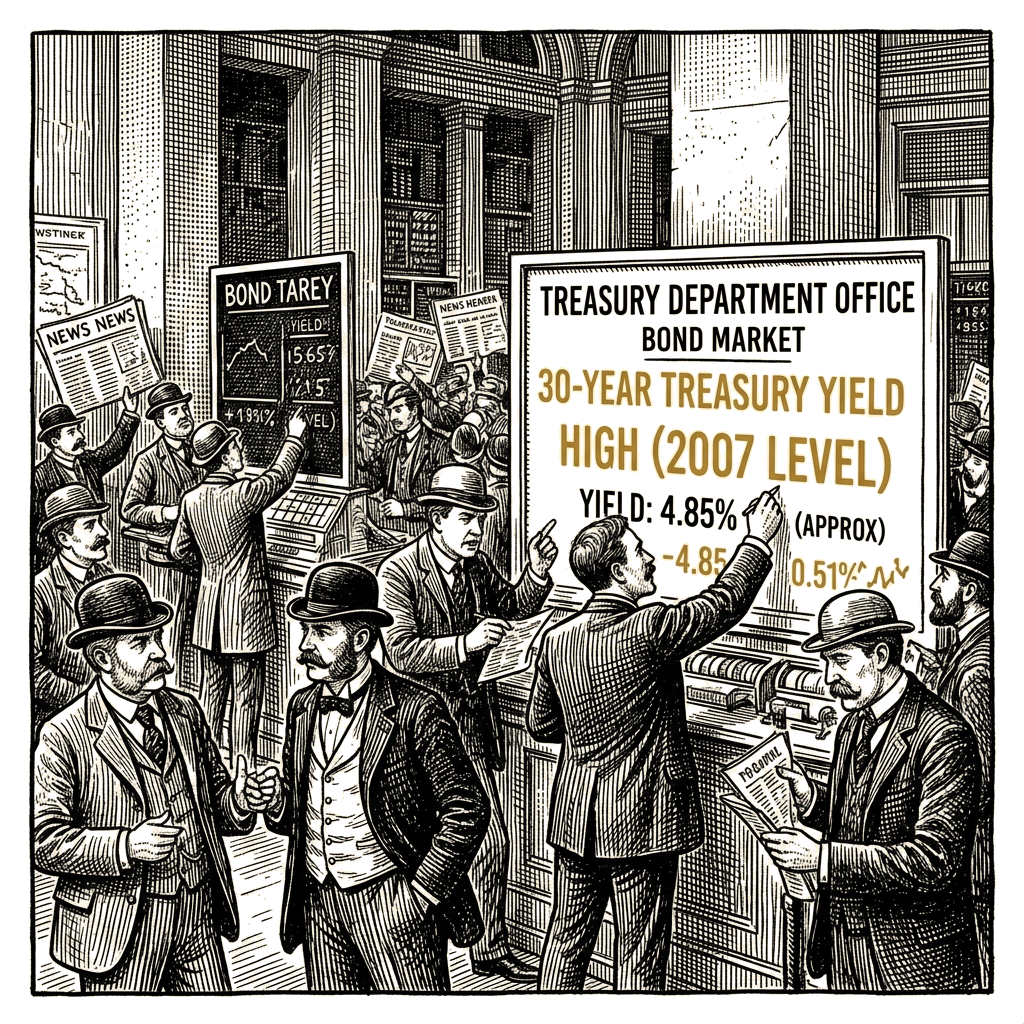
A sharp sell-off has driven 30-year Treasury yields to their highest level since 2007 this week. The move comes as the U.S. Treasury Department reported Wednesday that federal debt hit a record $40 trillion for the first time, according to NPR reporting by Rafael Nam.
The bond market’s signals carry implications far beyond Wall Street. Treasury yields serve as a benchmark for mortgage rates, car loans, credit card interest, and other consumer borrowing costs. Higher yields translate directly into more expensive borrowing for households and businesses.
To understand why the sell-off matters, it helps to understand how bond markets work. Bonds are essentially loans. The U.S. government needs to borrow money to afford its spending, so it regularly sells bonds to a wide range of investors — from banks to foreign governments to individuals. Just as banks charge interest on credit cards or mortgages, investors expect to be paid interest in exchange for lending money to the government. That interest rate is called the bond yield.
Bond prices and yields move in opposite directions. When bond prices fall, as they are now, investors demand higher interest as additional compensation. When bond prices rise, investors accept less interest because their bonds are appreciating in value. NPR compared the dynamic to a financial firm charging a higher interest rate to a borrower it considers risky.
Two main concerns are driving the current sell-off, according to NPR. First, investors worry that rising inflation is making the bonds they hold worth less. Second, they are concerned about the U.S. government’s persistent pattern of spending more than it collects in taxes. The $40 trillion debt milestone reflects that pattern: federal debt has grown under successive presidencies, including through President Trump’s recent megabill, which extended tax cuts from his first term while raising spending on areas such as border security.
The consequences are showing up in household finances. Last week, the average rate on a 30-year fixed-rate mortgage hit 6.67%, nearly the highest level in a year, according to Freddie Mac data reported by NPR. Rising bond yields also push up interest rates on credit cards, car loans, and other forms of borrowing.
The federal government itself is feeling the impact. Bond prices have been falling, and the U.S. is now paying approximately $3 billion in interest per day, NPR reported. Interest payments have become the federal government’s second-biggest expense, trailing only Social Security.
Despite falling bond prices, stocks have recently hit record highs. NPR noted that bond investors and stock investors tend to see things differently. Bond investors care primarily about whether they will be paid back, so they demand higher interest rates when they get worried. Stock investors make a more direct bet on corporate profits. Tax cuts illustrate the divide: bond investors generally dislike them because they reduce government revenue, while stock investors often welcome them for the spending they can stimulate.
The split may not last. As NPR reported, if signs emerge that inflation or rising borrowing costs are starting to slow consumer spending and economic growth, stock investors are likely to join bond investors in worrying about the economy.