NPS had warned of elevated flash flood risk after North Rim wildfire
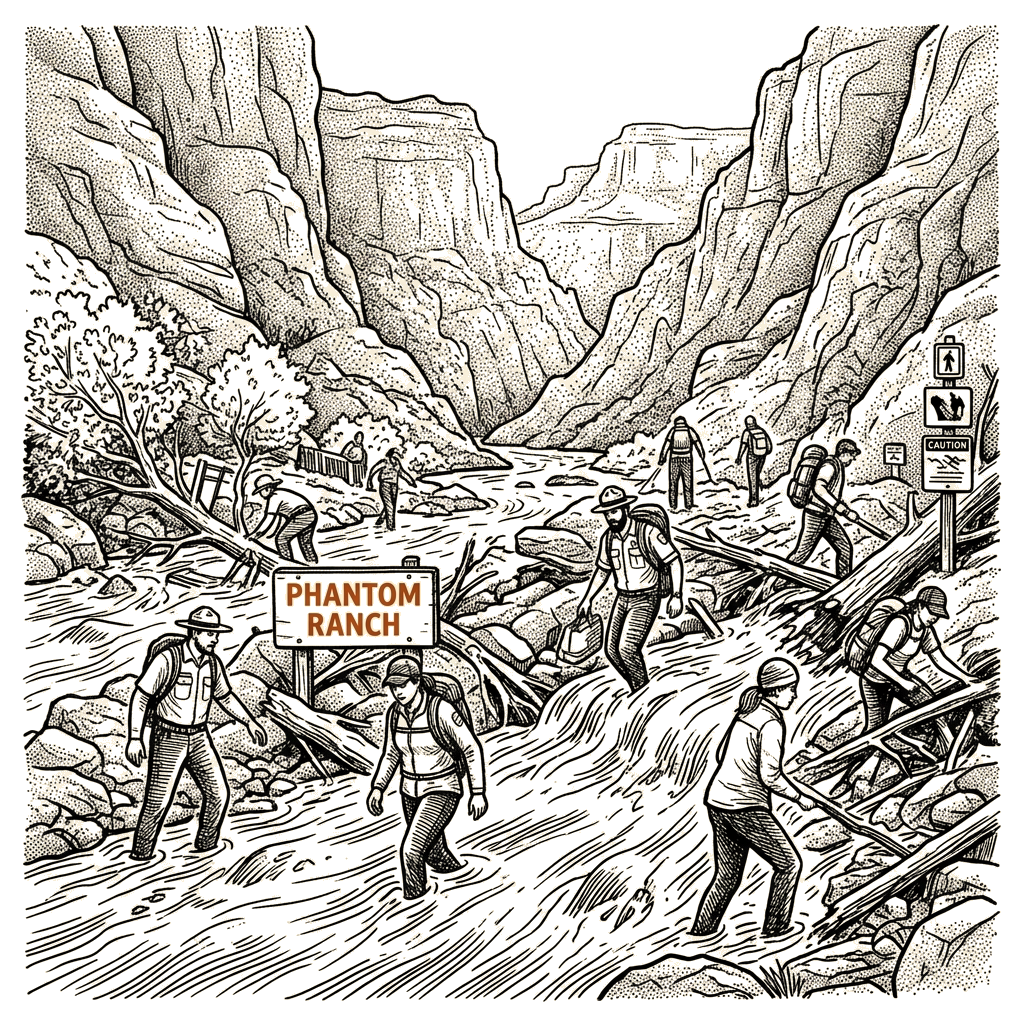
A flash flood on Saturday afternoon swept through Phantom Ranch, the sole lodge at the bottom of the Grand Canyon, killing two people and leaving at least 15 missing, according to The Guardian. The newspaper reported on Monday that more than 60 people were evacuated by air from the ranch and the bottom of the adjacent North Kaibab Trail, which winds 14 miles down from the lesser-trodden North Rim of the canyon, and that the extent of damage to the historic lodge remained unclear.
The deluge came when heavy rain swelled Bright Angel Creek, which tumbles into the Colorado River at the base of the canyon. The rapid transformation of rain-swollen creeks into roaring flash floods as they drop steeply into the canyon as tributaries to the Colorado is a recurring danger for visitors below the rim.
The National Park Service had warned in February of “the elevated potential for flash flooding and debris flows in the Bright Angel Creek watershed,” the Guardian reported, citing an NPS advisory issued after the Dragon Bravo wildfire decimated parts of the North Rim last year. That fire forced the closure of the North Kaibab Trail from July to March of this year. NPS describes flash flooding as an inherent risk in the canyon, the newspaper said.
Phantom Ranch sits along Bright Angel Creek near where it meets the Colorado, a remote outpost more than a vertical mile below the South Rim, where the hundreds of thousands of visitors who annually “peep over” the rim at lodges, restaurants, and overlooks cannot see the river or the ranch below. Hikers who trek down the seven or eight zig-zag miles of the South Kaibab or Bright Angel trails and cross footbridges over the Colorado to reach the ranch descend steadily from the tourist bustle into an increasingly rugged and tranquil wilderness. Heat, thirst, and flood pose the greatest dangers there, the Guardian reported, more so than mountain lions, rattlesnakes, or scorpions.
The lodge was established on the site of a camp Theodore Roosevelt set up during a 1913 hunting trip after he had declared the canyon a national monument in 1908. The area became a national park in 1919, and the ranch — named after one of the many side canyons within the Grand Canyon — opened in 1922.
Boaters floating and paddling down the Colorado River stay at the ranch, as do visitors riding mules. The future King Gustaf VI Adolf of Sweden arrived by mule in 1926 as a prominent early guest. In 1967, then-Senator Robert F. Kennedy stayed at the ranch after rafting down the Colorado with family and friends, traveling 90 miles on the river’s east-west flow from Lake Powell.
Native Americans made their home in various parts of the canyon for thousands of years and were driven out of much — though not all — of it before Roosevelt declared it a national monument in 1908, the Guardian reported.