Gross hiring fell 5% to under 5.1 million, Labor data shows
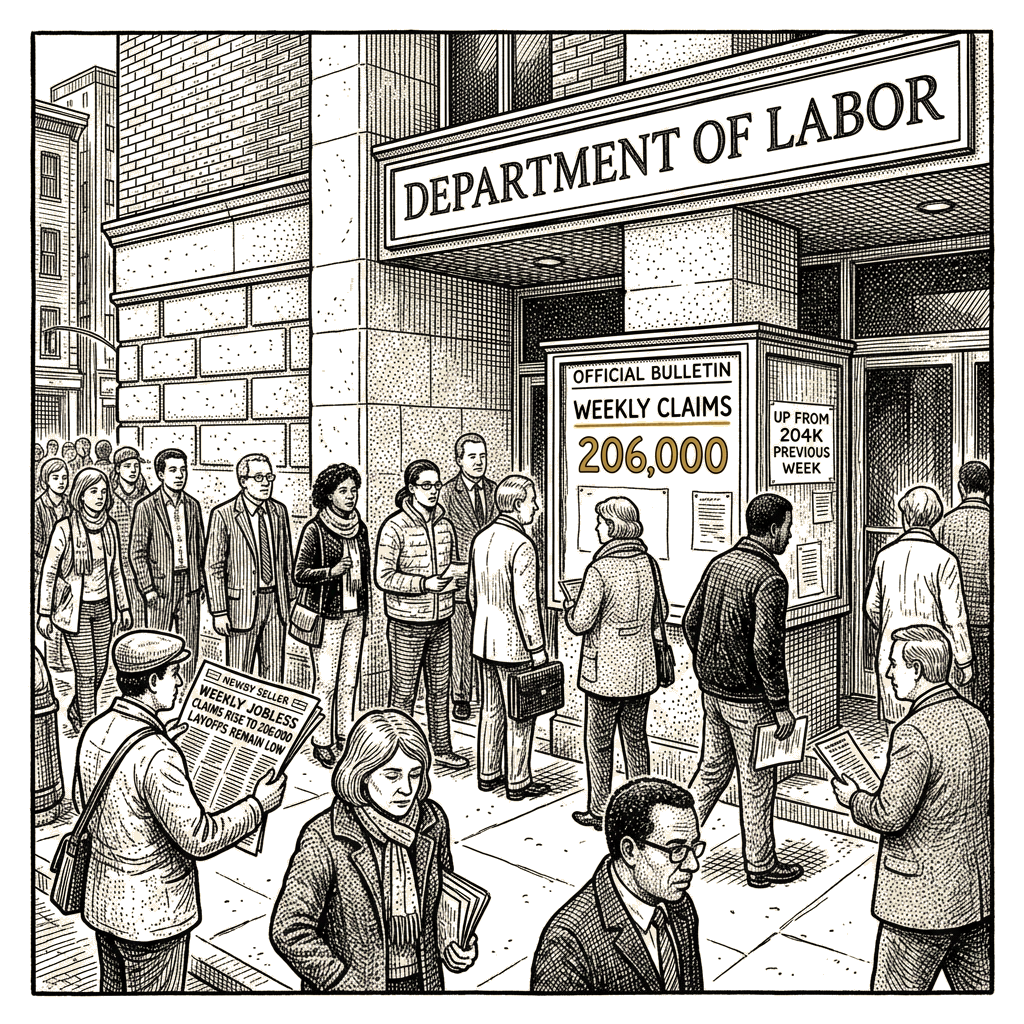
Filings for unemployment benefits rose to 206,000 for the week, the Labor Department reported Thursday, up from a revised 204,000 the week before. The four-week average, which smooths out week-to-week volatility, edged up to 207,250.
Claims serve as a proxy for layoffs, and economists watch them as a near-real-time signal of where the job market is headed. For the past year, the figure has mostly held within a historically low 200,000-to-230,000 weekly range — territory that, in the post-pandemic economy, signals continued employer reluctance to shed staff. The official unemployment rate stood at 4.1%.
Companies are still mindful of the worker shortages that followed the end of COVID-19 lockdowns, according to the AP’s Paul Wiseman. The memory of those shortages, and the difficulty of recruiting replacements, is one reason employers have held onto workers even as hiring has cooled.
What has changed is the pace of new hiring. The Labor Department reported Tuesday that gross hiring — measured before subtracting workers who lost or left jobs — fell 5% to fewer than 5.1 million. The combination of low layoffs and weak hiring produces what economists call a “no-hire, no-fire” labor market: workers who already have jobs enjoy unusual security, but the same conditions make it hard for young workers seeking an entry-level position or for unemployed people trying to return to work.
The data places the labor market in a narrowly balanced state — historically low filings paired with hiring that has decelerated enough to narrow the path back into employment.