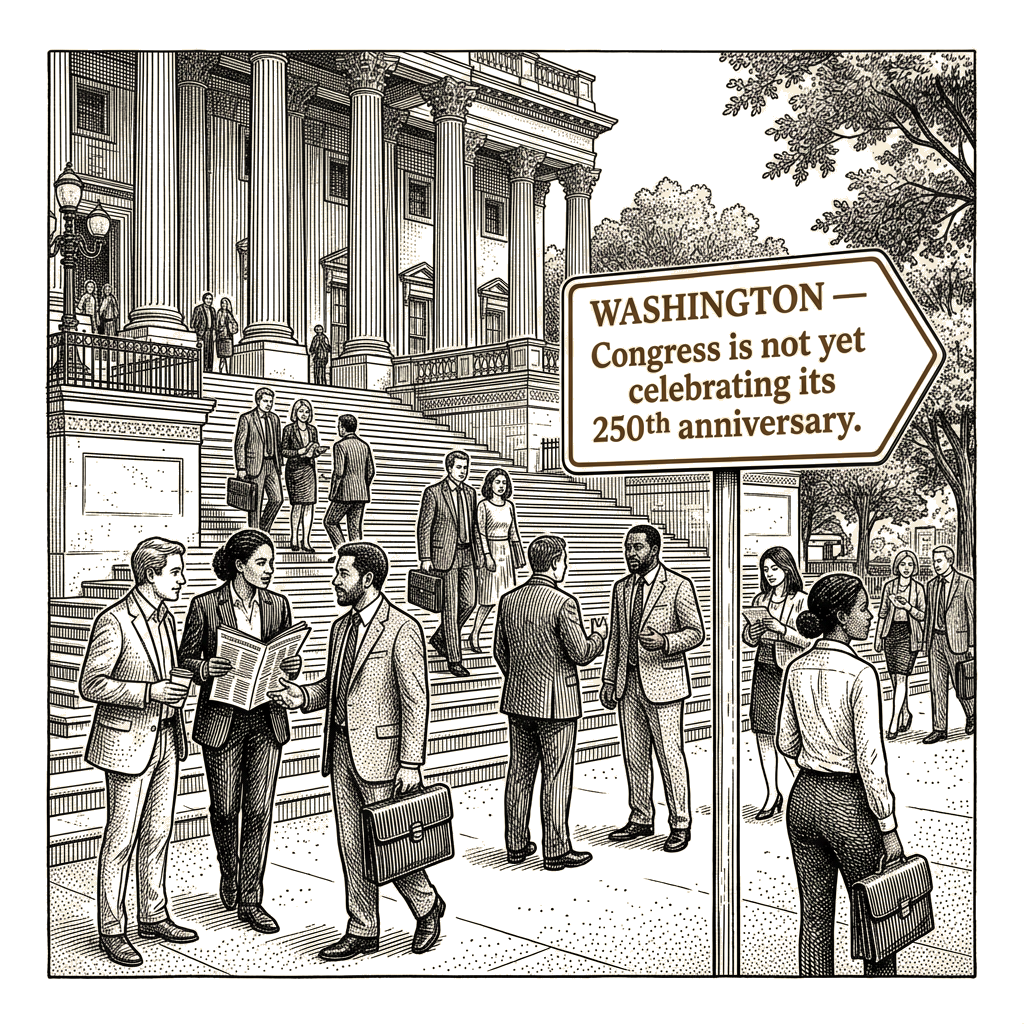
The modern House and Senate first convened in 1789
WASHINGTON — Congress is not yet celebrating its 250th anniversary. The House and Senate as they are recognized today first convened in 1789, and the institution has since served as an enduring, if imperfect, forum in the country’s pursuit of a more perfect union.
An Associated Press account opens by distinguishing the Declaration of Independence from what it calls “a grand experiment in representative democracy.” The report presents Congress as the institution that carried that experiment forward.
Under the account’s modern definition, the House and Senate first convened in 1789. That is the date the report uses as Congress approaches, but does not yet celebrate, its 250th anniversary.
From that starting point, the AP account traces Congress’s work to the drafting of the Bill of Rights. It describes the document as enshrining, for many people, what it means to be an American, including freedom of speech and the right to bear arms.
The institution’s modern work also includes legislation on taxes, civil rights, war and peace. The report says that work has shaped the nation.
Its central description of Congress is “enduring, if imperfect.” The phrase joins the institution’s longevity to an explicit acknowledgment that its performance has not been flawless.
Philip Wallach, a scholar at the American Enterprise Institute in Washington and the author of “Why Congress,” offered a concise description of the institution’s purpose.
“Congress needs to be the place where we figure out how to live with each other,” Wallach said.
His statement presents Congress as a place where the country works out how to live with one another. As the anniversary approaches, the account’s picture of Congress is defined by both record and purpose: the laws it has made and the forum it provides.