Three news organizations sued Monday to overturn Friday’s White House ban
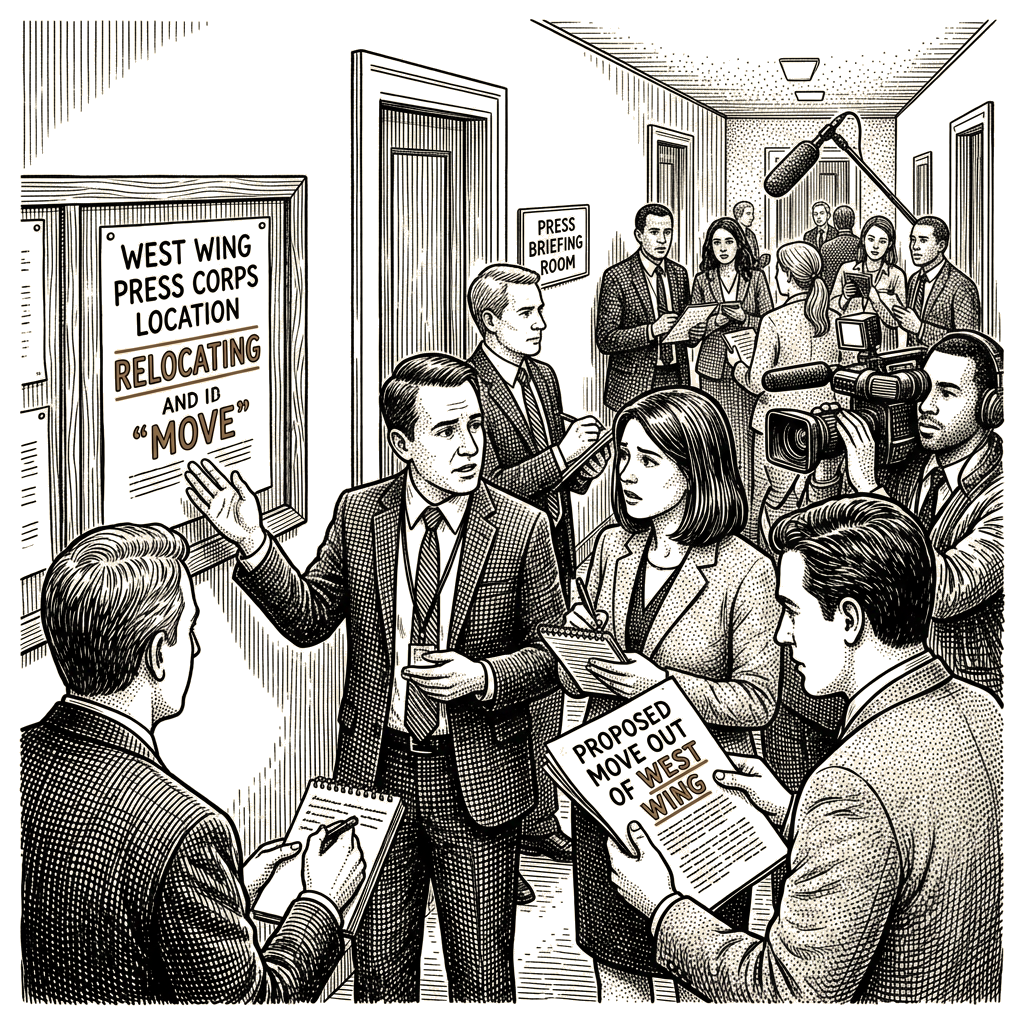
President Trump has repeatedly discussed moving White House journalists out of the West Wing, where they have worked for decades, and into a nearby building, according to current and former administration officials, in conversations that span both of his terms.
The Wall Street Journal reported that the president raised the matter as recently as last month, as his frustrations with media coverage of his second term escalated, one of the officials said. Some of Trump’s advisers have cautioned against the move, the people said.
A senior administration official said the president had no plans to kick the press corps out of the White House. The White House didn’t comment on the record.
The prospect of relocation has been discussed for years. Shortly after Trump won the 2016 election, his aides looked into moving the press out of the White House, former officials said, but never followed through. In 2017, incoming White House chief of staff Reince Priebus told ABC News that the plan was aimed at finding a larger space to brief reporters. Trump raised the idea throughout his first term, a former senior administration official said, but it was ultimately abandoned.
At the beginning of Trump’s second term, senior administration officials considered moving reporters out of the White House press briefing room and into the Eisenhower Executive Office Building or another nearby building, according to people familiar with the matter. The EEOB is adjacent to the West Wing and inside the security perimeter that surrounds the White House.
The discussions come amid broader restrictions on press access. On Friday, Trump banned CNN, Politico and MS Now from the White House grounds, citing their coverage of the administration. On Monday, the news organizations filed a lawsuit to overturn the ban. In a joint statement, the news organizations said they were filing the suit to “protect our First Amendment rights and defend the principle that the government does not decide what the press reports or publishes.”
Trump has also made several changes to the way the White House press corps operates and limited press access to the offices used by senior communications officials such as the press secretary. He has sued several news organizations — including The Wall Street Journal — for defamation, barred Associated Press reporters and his administration has subpoenaed journalists. The administration has also tightened media access at the Pentagon, which last year introduced new rules restricting reporters’ ability to gather information; several major news organizations rejected the policy and surrendered their Pentagon press credentials rather than comply.
Journalists who cover the White House work in a press room in the West Wing that is cut off from much of the rest of the building, where the president and his senior staff work. The briefing room has 49 seats. In the nearby space where journalists work, there are small offices used by television, radio and print outlets, as well as desk space for photographers and digital outlets.
The briefing room was converted from the White House indoor swimming pool in 1970 by President Richard Nixon. During the Reagan administration, couches and informal desks were moved out of the briefing room and a lectern and permanent seats were installed for briefings, according to the White House Historical Association. The press was temporarily moved to the nearby White House Conference Center during the George W. Bush administration while renovations were under way.
Trump would not be the first person to consider moving the press out of the White House. Former White House communications director George Stephanopoulos wrote in his memoir that Hillary Clinton wanted to move the press to the Eisenhower Executive Office Building at the start of the Clinton administration, and got the idea from former first lady Barbara Bush. “Barbara Bush told her we should show you guys who’s boss right from the start. Easy for her to say; she doesn’t have to deal with you anymore,” Stephanopoulos recalled telling veteran White House reporter Helen Thomas.