US gasoline average climbs to $4.48 per gallon since February war
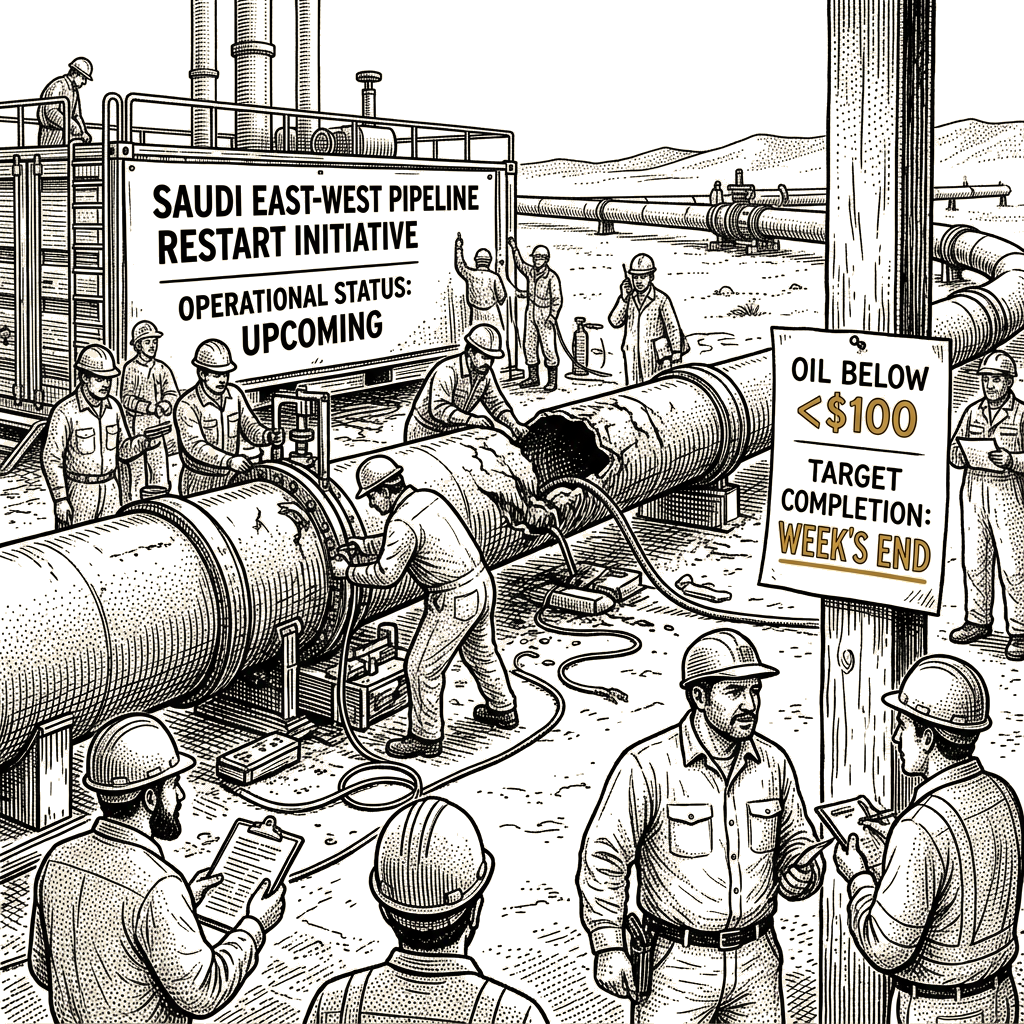
Oil prices retreated Tuesday on news that Saudi Arabia plans to restart a key export pipeline that had been knocked offline by Houthi attacks earlier this month. West Texas Intermediate crude was hovering around $90 per barrel in Tuesday morning trading, while Brent crude, the international benchmark, dropped 2% to about $98 per barrel, according to United Press International.
Saudi Arabia plans to bring the line back online as soon as this week. The pipeline is currently undergoing testing after the September attacks.
The East-West pipeline is a 750-mile network that transports oil from fields along the Persian Gulf to ports on the Red Sea. It has served as a critical workaround for Saudi Arabia during the Iran war, which began Feb. 28. With the Strait of Hormuz under threat from the broader conflict, the East-West line has allowed the kingdom to export crude through the Red Sea, bypassing the Persian Gulf chokepoint. Saudi Arabia was forced to shut the pipeline earlier this month after the Houthi strikes, contributing to a recent peak in Brent of about $109 per barrel.
The Houthis, an Iran-backed rebel group, have expanded their control of the Yemeni coast along the Red Sea and have taken control of the Bab al-Mandab Strait — a separate bottleneck in Middle East oil trade. The disruption of the Saudi pipeline accelerated a rise in oil and gas prices globally.
At the U.S. pump, the impact of the broader conflict has been sustained. The national average price of gasoline reached $4.48 per gallon on Tuesday, according to AAA — a 50% increase since the war started Feb. 28. Diesel prices have climbed even more steeply, with the national average at $6.52 and California drivers paying $8.43, the highest in the country.
Bringing the East-West line back into service would restore a key alternative route for Saudi crude at a moment when both ends of the kingdom’s traditional shipping corridors face security risks.