Houthi attacks put west-coast export route under pressure
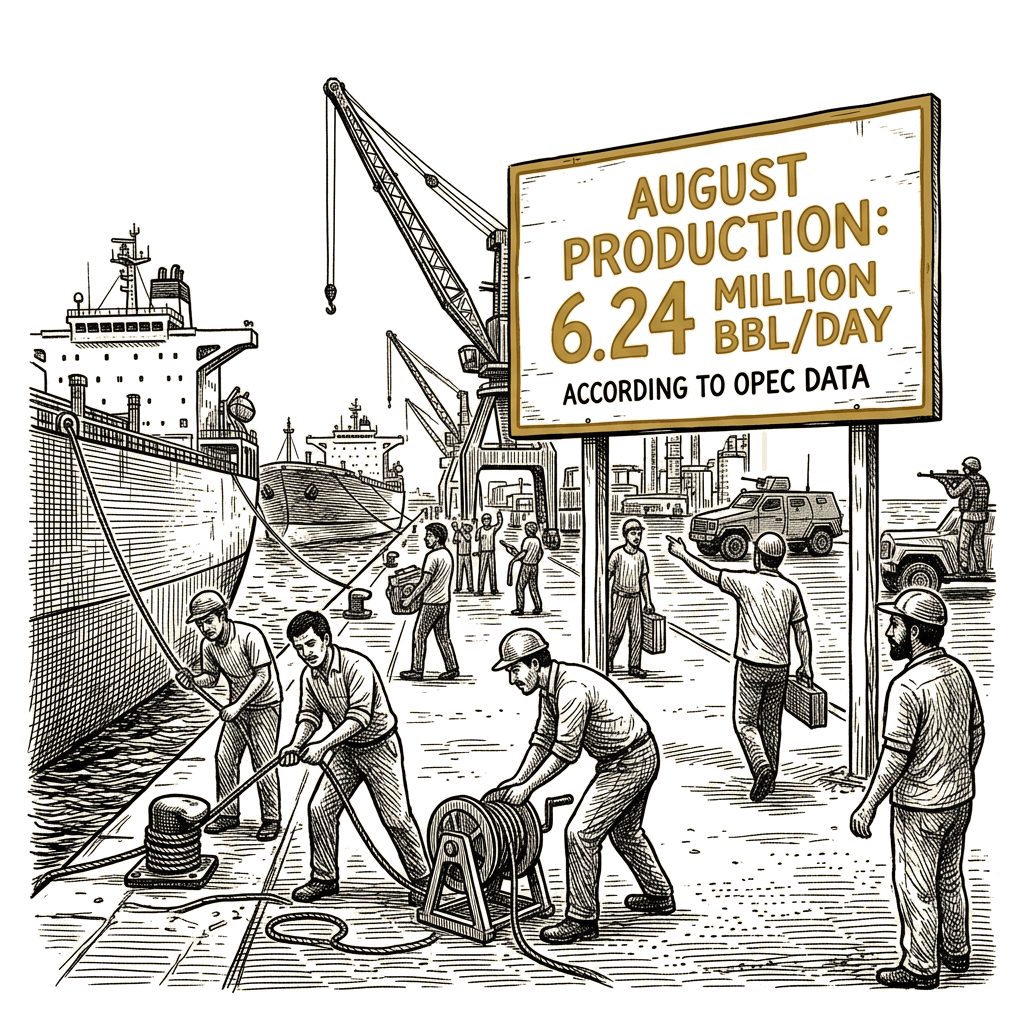
Saudi Arabia produced 6.24 million barrels of oil a day in August, down roughly 1.9 million barrels a day and 23% from July, according to data from the Organization of the Petroleum Exporting Countries. Saudi Arabia is OPEC’s largest producer and the world’s biggest oil exporter.
In the same monthly report, OPEC lowered its forecast for global oil-demand growth this year to 380,000 barrels a day from its previous estimate of 580,000 barrels a day. The group raised its forecast for next year’s demand growth to 2.36 million barrels a day from 2.16 million barrels a day.
Production across OPEC moved higher despite the Saudi decline. OPEC data put the group’s August crude production at 24.08 million barrels a day, an increase of 346,000 barrels a day. The increase was driven by a sharp rise in Iraqi output.
OPEC data also put Iranian production at 2.1 million barrels a day, down 399,000 barrels a day. Separately, a U.S. naval blockade restricted Iranian shipments from the Gulf.
Saudi Arabia’s decline came as threats from Iran-backed Houthi rebels disrupted exports from the kingdom’s west coast and shipments through the Strait of Hormuz in the Persian Gulf remained constrained.
Soon after the war began in late February, Saudi Arabia started diverting oil through the East-West pipeline. The roughly 750-mile system transports crude from eastern oil fields and processing centers near the Gulf to Yanbu on the west coast.
At the end of July, Yemen’s Houthi rebels declared a blockade of nearby Saudi ports and began a series of attacks on shipping in the Bab al-Mandeb strait. The waterway links the Red Sea to major Saudi oil markets in Asia. Saudi and Yemeni officials said the Houthis were nearing complete control of the coast along Bab al-Mandeb.
The Strait of Hormuz remained another source of disruption. Before the war, the waterway carried roughly a fifth of the world’s oil and liquefied natural gas supplies to international buyers. The amount of crude still moving through the strait was difficult to measure because some tankers crossed with their transponders switched off, while vessels continued to face threats of attack.
Oil prices rose alongside those shipping disruptions. Brent surpassed $100 a barrel during the week for the first time since July amid escalating U.S.-Iran clashes and renewed Houthi strikes on Saudi Arabia. The Wall Street Journal reported that those developments had increased fears of prolonged supply disruptions.
In early U.S. trading Thursday, Brent rose 3.8% to $105.06 a barrel. West Texas Intermediate futures gained 3.7% to $99.60 after topping $100 earlier in the session. Both benchmarks had risen more than 20% during the month.
The Wall Street Journal also reported concerns that a drawn-out war could drive energy-related inflation, with higher fuel costs potentially affecting households, businesses and the broader economy.
Earlier in the month, key members of the OPEC+ alliance agreed to keep production stable in October after six consecutive monthly increases. The broader group was reviewing members’ production-capacity baselines for future quotas. Analysts said the war could test the alliance’s cohesion if producers sought to increase output beyond their targets.