S&P sees AI capex concentrated among U.S. hyperscalers
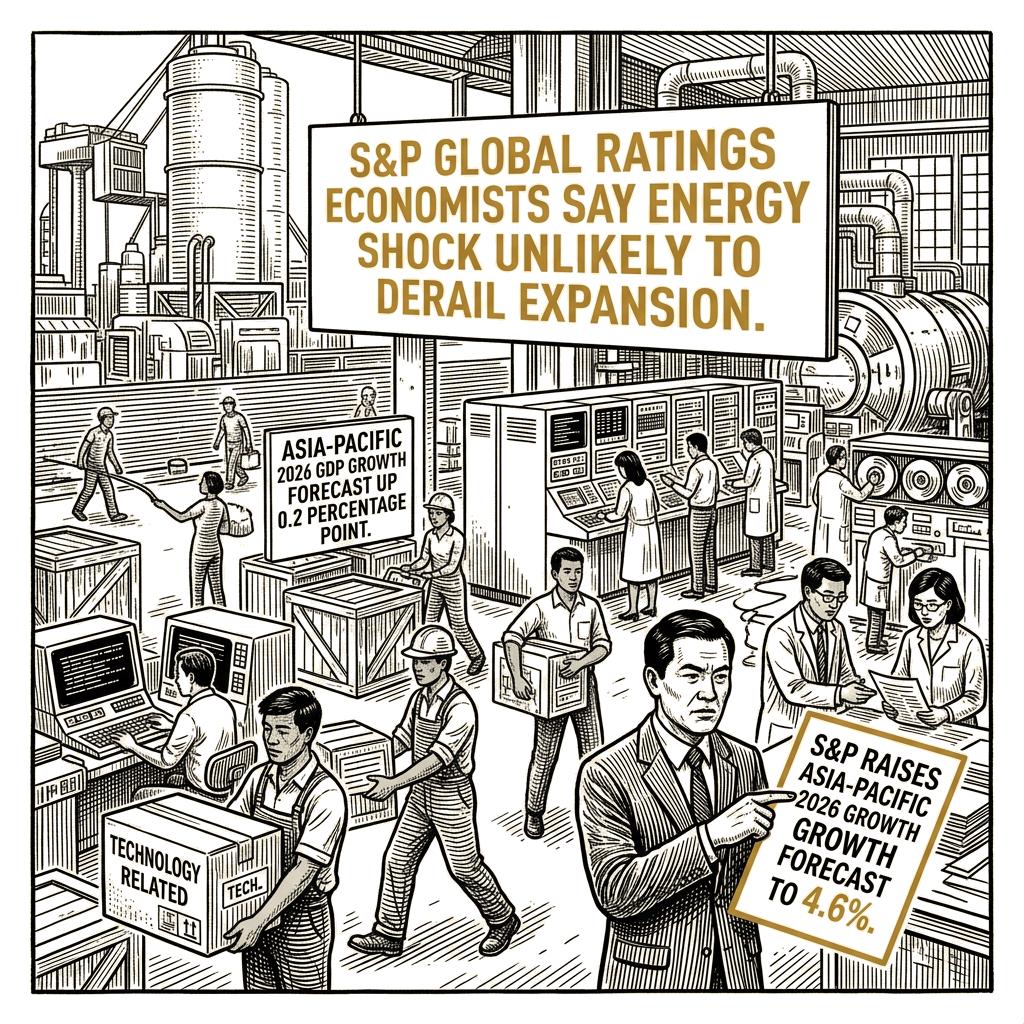
S&P Global Ratings raised its baseline projection for Asia-Pacific economic growth in 2026 to 4.6%, up 0.2 percentage point from a quarter earlier, with S&P Global Ratings economists saying the energy shock is unlikely to derail the region’s economic expansion as artificial-intelligence-related investment powers the region’s tech exports, according to a Wall Street Journal report. S&P sees 2027 growth at 4.4%.
Exports have been a main engine of the resilience seen so far this year, especially in tech-heavy economies such as South Korea, the S&P economists said. Domestic demand has held up more broadly. Consumption growth was especially strong in India, Indonesia, Malaysia, and Taiwan, while investment momentum stood out in places including Australia, Singapore, and Thailand.
Even though average oil-import prices remained above $100 a barrel through July, raising input costs and squeezing margins, the adoption of policies to cushion against the hit has protected domestic demand, the S&P report said. Macroeconomic policies more generally are also accommodative, S&P added.
The economists cautioned that the strong growth projection does not mask the underlying challenges. “Energy prices are likely to remain high in coming months and monetary tightening in the U.S. will be a hurdle,” they said.
There is also a risk of AI capex weakening, the economists added, especially as much of the initial investment has been done by a relatively small group of companies, notably U.S. hyperscalers, implying an overconcentration risk if plans change.
As U.S. interest rates rise, the impulse from domestic demand in the region will probably soften, the economists said.
The report was written by Fabiana Negrin Ochoa and Amanda Lee.