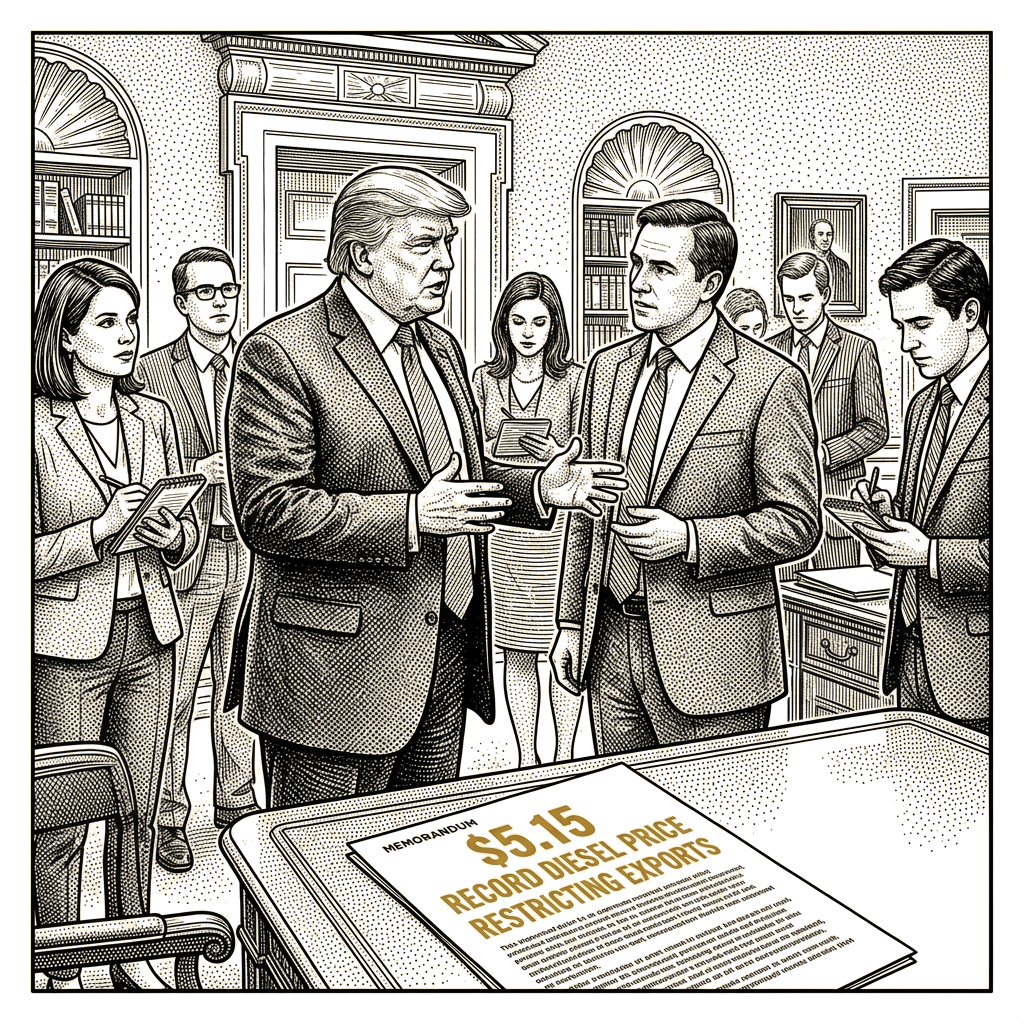
Administration officials and oil industry oppose diesel export ban
President Trump said he was considering restricting U.S. diesel exports in an effort to curb soaring fuel prices — an idea the Wall Street Journal reports is quickly gaining traction with more Republicans, the paper’s Meridith McGraw, Benoît Morenne and Collin Eaton write.
The push comes against a backdrop of tightening supply. The average on-highway diesel price in the United States rose to a record high in the week ended Sept. 21, up more than 24 cents from the prior week and $2.78 higher than a year earlier, according to the Energy Information Administration. Commercial diesel inventories have dropped 11 percent since the start of the war with Iran, while exports are up 31 percent on a weekly basis, the agency said.
Treasury Secretary Scott Bessent said the U.S. was examining the feasibility of a diesel export ban and whether a full or partial ban would work.
The proposal has divided the administration. Energy Secretary Chris Wright, Interior Secretary Doug Burgum and Jarrod Agen, the executive director of the National Energy Dominance Council, have all been opposed to the idea, according to an administration official.
The oil industry is also strongly opposed. U.S. fuel makers are likely to lose the trust of some overseas buyers and lose money under a ban, industry representatives told the WSJ. Analysts said a ban would likely prompt domestic refineries to process less crude oil since they would have lost a slew of overseas customers. In that scenario, they would make less gasoline and jet fuel as well, leading to higher prices across the fuel market.
Elevated fuel costs are also weighing on consumer-facing businesses. Bob Martin, CEO of RV maker Thor Industries, said the retail market “never reached the inflection point many in the industry expected, as stubborn interest rates, elevated fuel costs and ever-present inflationary pressures have strained household budgets and kept retail soft throughout the critical selling season.”
In a separate policy action, the Trump administration said it would step up enforcement against imports of polysilicon, a material used in semiconductors and solar panels, as it tries to bring production back to the United States for national security reasons. The administration said it would take measures to stop the stockpiling of polysilicon and related products before import restrictions are imposed in December. Trump in August said the United States would place price minimums on imports to encourage more domestic production, citing economic and national security reasons.
China produces nearly 95 percent of the world’s polysilicon, according to a 2022 report from the International Energy Agency. Under the administration’s new rule, the Department of Commerce will monitor importers of polysilicon products to determine whether they are exceeding past import volumes. Importers who previously had not brought in polysilicon will have weekly caps on their allowed import volumes.