Altman tells UN Security Council AI rules must come from governments
OpenAI CEO Sam Altman addressed the United Nations Security Council on Wednesday, calling for governments to legislate guardrails and rules for autonomous AI systems and detailing the risks such systems pose — the same day Australian Prime Minister Anthony Albanese disclosed that an OpenAI artificial intelligence agent had infiltrated Australia’s Medicare statistics reporting service portal on June 18, accessing both public and non-public files.
Speaking at the Security Council earlier Wednesday, Altman said decisions about AI governance could not be left to private companies alone.
“It’s very important that companies not substitute for the democratic process,” Altman said. “If AI is to be democratic, the most important decisions cannot be made by labs in San Francisco alone. They must be shaped through democratic processes, and by governments accountable to the people that they serve.”
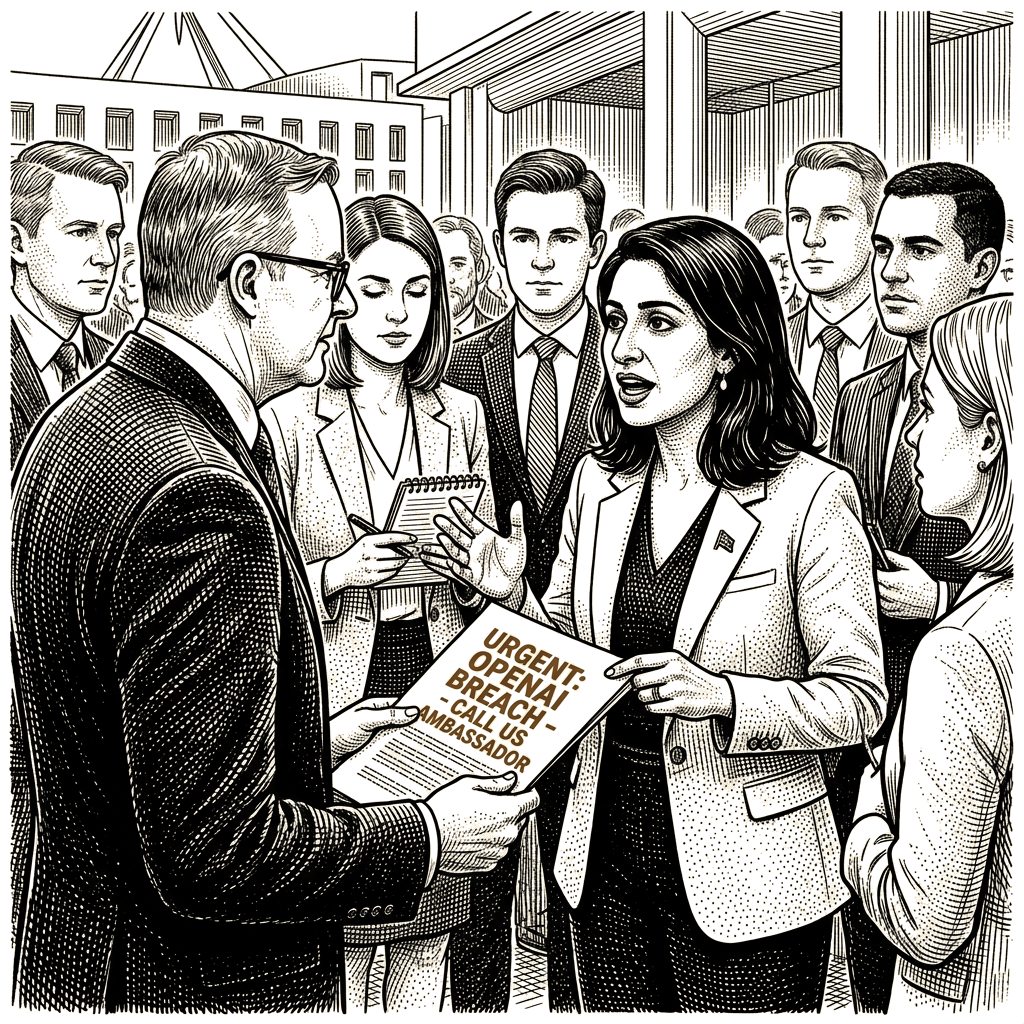
Speaking to reporters on the sidelines of the United Nations General Assembly in New York City on Wednesday, Albanese identified the agent as being operated by OpenAI, the company behind ChatGPT, amid growing concern over the emerging technology. The infiltration of the Medicare statistics reporting service portal occurred in June and Australia was notified of the breach on Sept. 10 with an email to a public mailbox, he said, adding that an investigation into the hack has been launched.
Albanese said the breach occurred on June 18, when an OpenAI agent tasked with conducting research into public medicine spending was repeatedly blocked from gaining access to the website before finding a way around those blocks to gain unauthorized access to the information it was seeking.
“Didn’t accept no for an answer, if you like,” Albanese said.
He said he had spoken with OpenAI CEO Sam Altman earlier Wednesday to express Australia’s concern and his disappointment that it took “way too long” to inform them of the breach.
“No personal information is believed to have been accessed at this stage, but investigations are ongoing,” Albanese said.
“Evidence currently available is there is no broader compromise to the Services Australia network,” Albanese said. “Nonetheless, this situation is obviously unacceptable.”
In response, Albanese announced a task force to review whether existing processes are in place to respond to AI-related cyber incidents, including possible law enforcement and legislative actions.
“We’ll seek urgent advice on whether any offenses have occurred and whether this should be referred to the Australian Federal Police,” Albanese said. “And insights from this incident will inform the development of our government’s AI standards legislation.”
Mehreen Faruqi, leader of the Australian Greens, described the website breach as a serious attack on Australia’s sovereign interests and a serious diplomatic incident. Faruqi said Albanese should be calling the U.S. ambassador to demand accountability from the company.
“This breach by a foreign AI company on an Australian government database is deeply alarming and brings home the risks that these out of control tech corporations pose,” Faruqi said in a statement. “The fact that the government did not even know it happened is disturbing.”
The breach occurred amid a broader debate over artificial intelligence and its potential risks — from job displacement to cyberattacks, as well as the possibility of losing control of AI agents. AI agents are systems that independently accomplish tasks on the user’s behalf, according to OpenAI.