Intimate partner violence rose in high-risk couples after joint planning
In 2022, researchers with the World Bank and the Liberian government, funded by the World Bank and carried out with the nonprofit GiveDirectly, enrolled more than 2,300 households in Maryland and Bomi counties. Each household received $750 in four installments — more than double the average annual cash aid of $250 that the government typically gives to a needy household.
Liberia, among the 10 poorest countries in the world, has a high rate of gender inequality. The government’s standard cash-transfer program targets women, giving them control over the household’s aid money. “One of our key design components is that we target the female in the house,” said Aurelius Butler, Liberia’s national coordinator for social protection. But he said many men reported feeling “excluded” by that approach.
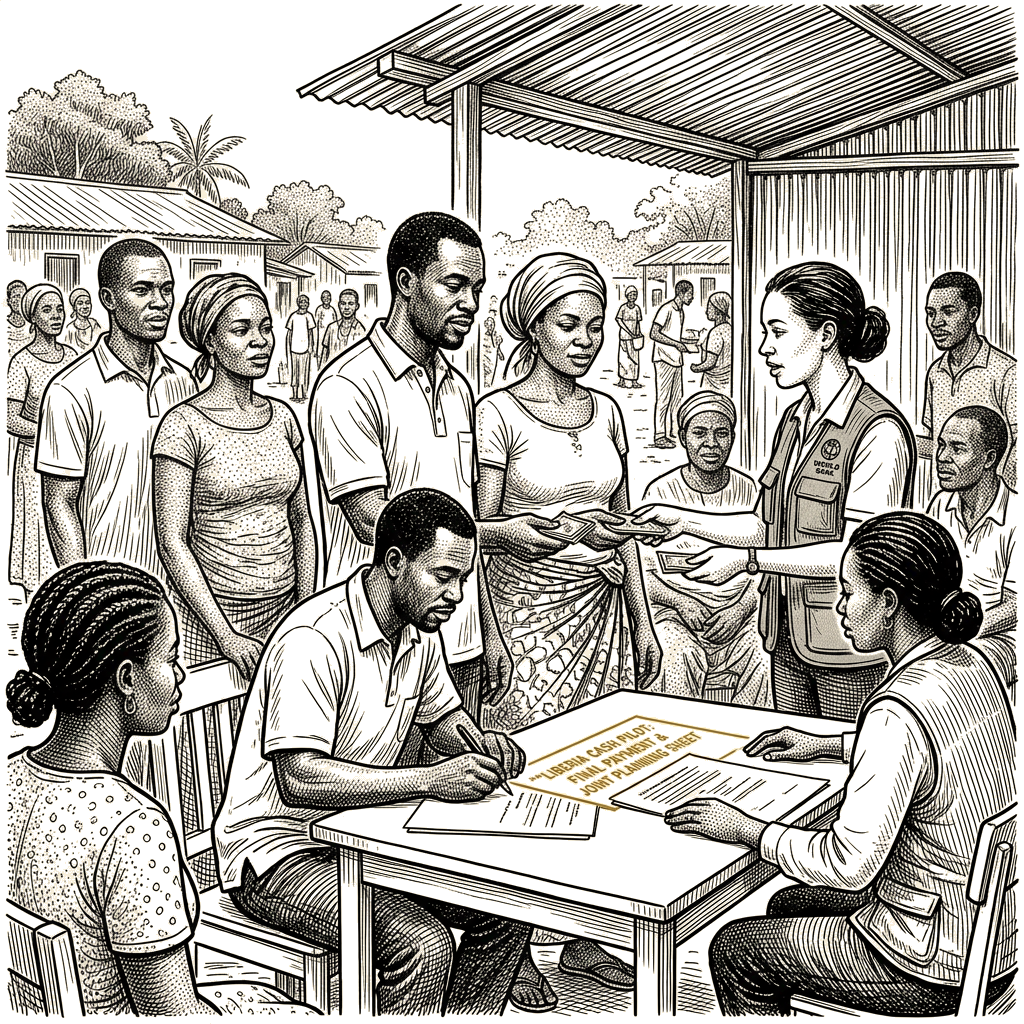
To address the tension, the experiment gave both partners equal cash and an equal say in how to spend it. For half the households, researchers added a joint financial planning session. “We sit down with the couple for about 45 minutes and ask them to detail their plan,” Butler said. “Is it to fix something within the house? Is it to maybe just buy food, or is it to invest in education, planting or build a business?”
Because literacy rates are low in rural areas, researchers provided each couple with a poster. “It just had a picture of a family happy together, and then it had empty boxes for them to list their four top spending priorities for the cash transfer that was coming,” said Sarika Gupta, a senior economist at the World Bank and a lead researcher on the study. Couples who could not write used stickers — a stack of books for education, a stethoscope and syringe for healthcare. “And the poster stays with the couple, and they can put it on their wall so they can see it,” Gupta said. “It’s like a constant reminder of what they’ve kind of committed to.”
Christian, a participant who provided only her first name, works on a farm; her husband gathers latex for rubber making. In their planning session they agreed on priorities: education, food and home repairs. Christian used her cash to pay school fees for their five children, buy rice and pay off debt. Her husband bought solar light bulbs and cement to patch their leaky roof.
Researchers followed the households for a year after the payments. “Households that received the planning actually were even better off economically than households who received only the cash transfer,” Gupta said.
The experiment also examined intimate partner violence, a widespread problem in Liberia where nearly 35% of women report experiencing it, compared with a global average of 27%. Researchers interviewed couples about past violence before distributing cash and checked in a year later. For most couples, there were no reported incidents. But among those determined to be at high risk based on previous incidents, the study found “an increase in intimate partner violence” — but only among those who had received the planning session, Gupta said.
“It is quite clear that it’s something in the shift about couples deciding together that led to the increase in violence,” said Amber Peterman, an impact evaluation specialist at UNICEF who was not involved in the research.
Gupta said conflict may have occurred if one partner deviated from the jointly agreed plan. “Anytime one partner or the other maybe deviates from that plan, the other person kind of can call them out,” she said. “And so that there could be that kind of downside to planning.” The study also noted that the planning may have shifted the power dynamic from men to women, possibly spurring partner violence.
Peterman said the planning component produced clear economic benefits. “We know that this add-on actually did a lot of good at the household level,” he said, “and so I think the question is, how could it be tweaked?”
The researchers said they hope to repeat the experiment with modifications to reduce conflict, provided they can secure funding.