Apple raises iPhone 18 Pro prices $100 as memory costs surge
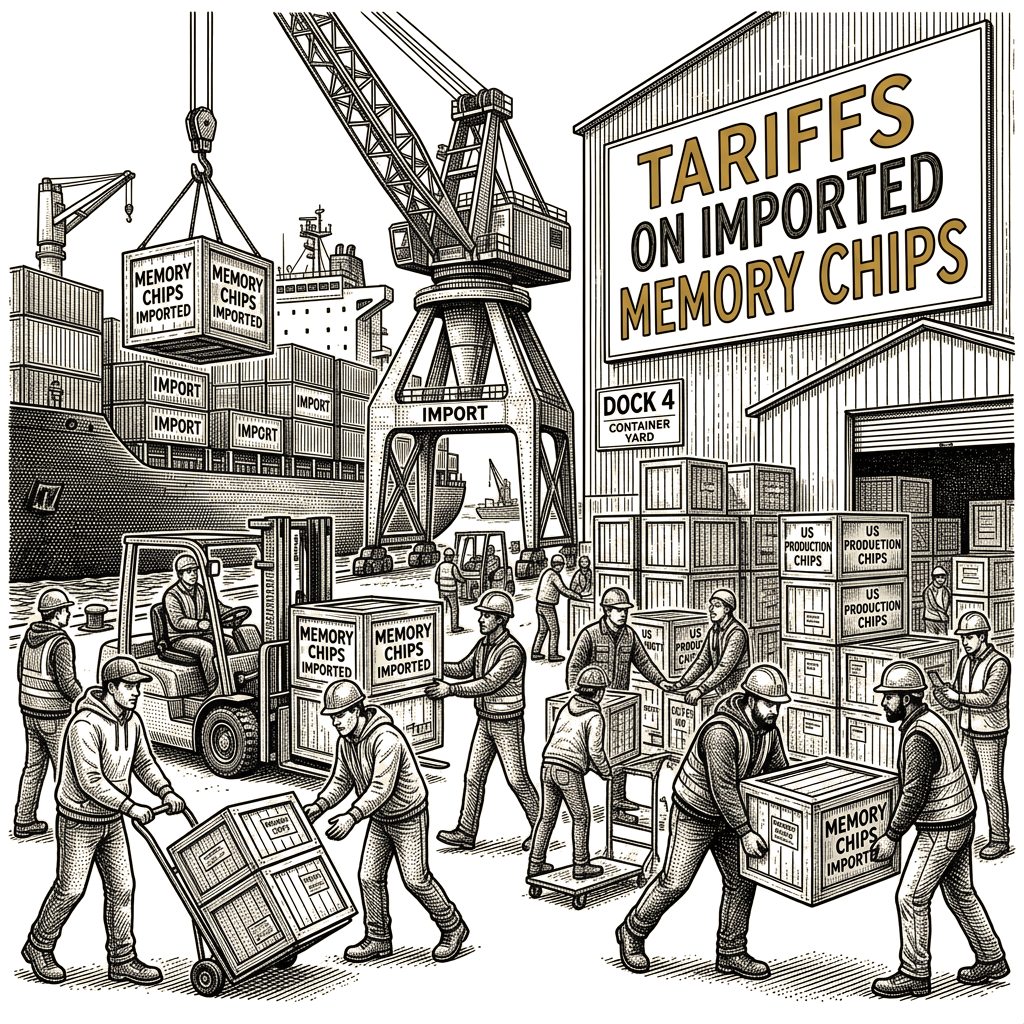
The Trump administration is preparing tariffs on imported memory chips to accelerate U.S. production of components critical to artificial intelligence data centers, even as domestic capacity remains limited to a single Micron facility in Virginia. The push comes as memory prices surge on AI-driven demand, with flash storage costs projected to quadruple from mid-2025 levels by year-end and server memory on course for a more than sixfold increase, according to market researcher TrendForce.
The U.S. currently has one commercial memory production facility, a Micron plant in Virginia that churns out older-generation products for automotive, aerospace, defense and industrial applications. That concentration leaves American buyers of cutting-edge memory dependent on Asian factories operated by Samsung Electronics, SK Hynix and Micron itself. Executives from those companies have said the memory-chip shortage is likely to last anywhere from another 12 months to several years.
The AI buildout requires massive amounts of storage inside data centers, plus advanced memory to power the computations used to train AI models. By the end of the year, the price of flash storage is expected to have quadrupled from mid-2025, while the cost of server memory is on course for a more than sixfold increase, according to TrendForce.
The heavy reliance on foreign-produced memory chips exposes the U.S. to supply disruptions that could threaten businesses, national defense and leadership in a technology critical to AI, said Hanna Dohmen, a senior research analyst at Georgetown’s Center for Security and Emerging Technology. One of the broad objectives of the Trump administration is maintaining U.S. dominance in the global AI race, in particular against China, said Lauryn Williams of the Center for Strategic and International Studies, a Washington, D.C.-based think tank. “Onshoring more chip production is consistent with that view,” Williams said.
The Commerce Department’s national-security probe into certain imported chips led to the introduction of tariffs in January, though exemptions were granted for chips used in consumer electronics and data centers. As Washington prepares to widen the scope of the tariffs, Commerce Secretary Howard Lutnick has suggested foreign companies investing in production on U.S. soil could enjoy a reprieve from such levies.
Efforts to bolster memory production capacity in the U.S. were started under the Biden administration, but they will take years to complete and won’t make a dent in the global supply crunch anytime soon. Micron has pledged roughly $250 billion through 2035 for new U.S.-based chip-making facilities and technology investments. One of the company’s two new factories under way in Idaho will start ramping up production from the middle of next year, but the firm’s New York mega site won’t begin until 2030.
For now, Micron still needs to send what it produces in the U.S. to Asia for final-step packaging to create high-bandwidth memory, or HBM, which is needed for AI training and usage. Micron plans to bring HBM packaging capabilities to the U.S., but only after it completes its second plant in Idaho in late 2028.
The U.S.’s first HBM packaging facility, which recently broke ground and is owned by SK Hynix, is expected to open in 2028. The site won’t start mass production until the following year. SK Hynix plans to ship the memory needed to make the company’s HBM from South Korea to the U.S. It is unclear if the current memory investments will win Micron or SK Hynix exemptions from the tariffs.
Samsung Electronics has readied tens of billions of dollars for new chip production facilities in Texas, though not for memory chips. Tariffs would drive up the costs of semiconductors while increasing tensions with the very partners the U.S. needs to secure its lead in AI, said Troy Stangarone, a visiting senior fellow at the Korea Economic Institute of America, a Washington-based think tank. “Tariffs on semiconductors would be self-defeating,” Stangarone said.
The Trump administration is implementing a “nimble and multi-faceted strategy” to bring back critical manufacturing to the U.S., yielding big investments from industry leaders, said White House spokesman Kush Desai. The Commerce Department did not respond to requests for comment.
Higher memory costs have already driven up the prices of consumer electronic products. Apple, citing surging memory prices, raised the prices on its Mac computers and iPads. The price of this year’s iPhone 18 Pro and Pro Max both increased by $100 compared with last year’s models.
New semiconductor factories, or fabs, can cost $20 billion or more to set up and take years to complete.