Thune says bill would head straight to Trump’s desk if Senate passes
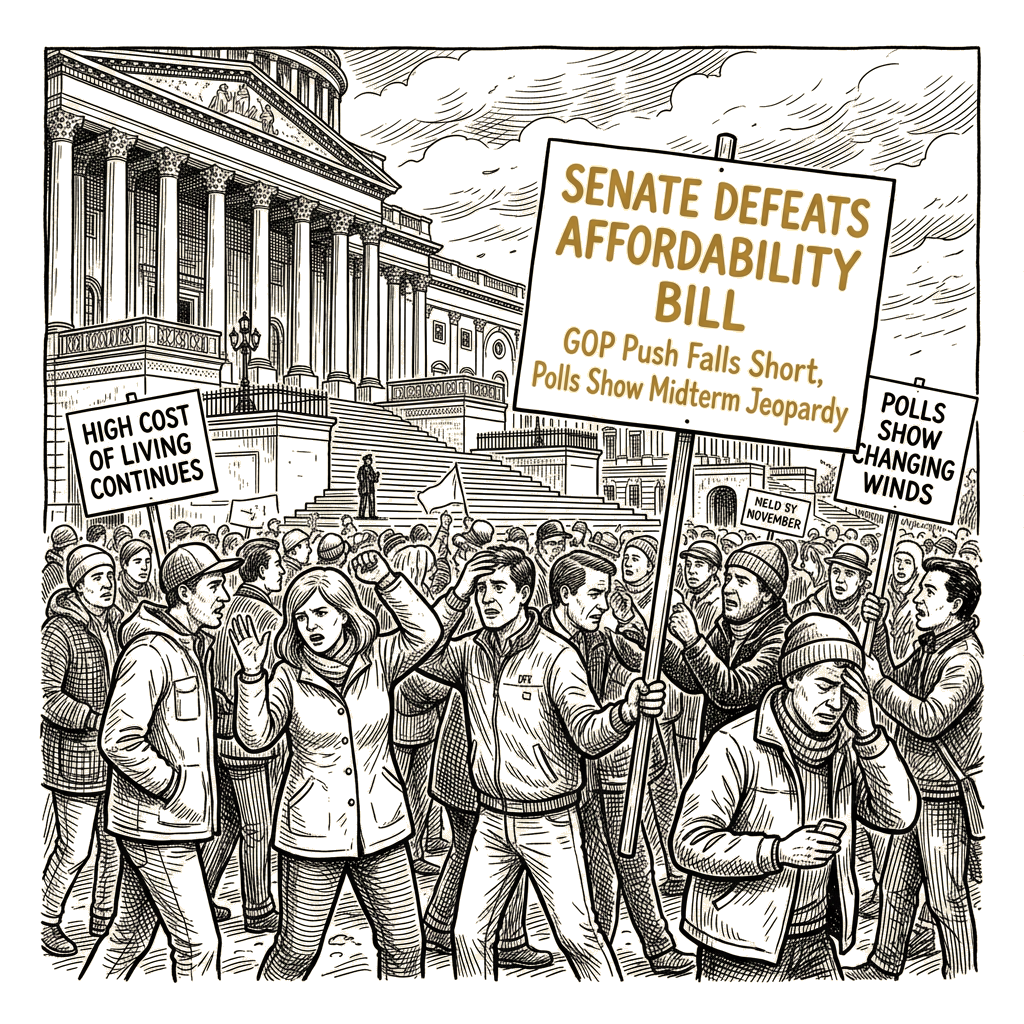
The Senate fell short Wednesday in Republicans’ last-ditch push to show voters they were tackling the high cost of living, with polls signaling the party’s control of the chamber could be in jeopardy in November’s midterm elections. Two GOP bills — the Ratepayer Protection Act aimed at limiting AI data centers’ impact on electricity prices and a separate measure banning stock trading by members of Congress and mandating nationwide voter identification — both failed to reach the 60-vote threshold needed to advance under Senate rules.
The first bill, the Ratepayer Protection Act sponsored by Sen. Jon Husted (R., Ohio), would require AI data center developers to commit to paying more for power and help fund energy infrastructure, with states required to consider such measures. The legislation drew 57 votes in favor and 43 against, three short of the 60 needed to advance under Senate rules. Husted called it “the only game in town” and “the only bill that has a chance to get to the president’s desk before we get to the election.” Majority Leader John Thune (R., S.D.) rejected the idea that the vote was a messaging stunt, noting the House had already passed the same measure, 417-3, with broad support from Democrats — and that if the Senate also passed it, it would head straight to Trump’s desk to be signed into law. “It’s a chance to actually make law,” Thune said. “It’s not just making a point here.”
Senate Minority Leader Chuck Schumer (D., N.Y.) dismissed the legislation as political theater. “All Republicans offer is a toothless messaging bill. This bill is a fraud,” Schumer said, pointing out that the guardrails proposed in Husted’s legislation aren’t mandatory.
The AI measure’s failure allows Republicans to paint Democrats as obstructionists but deprives them of a legislative win to run on as they head home to campaign. With just over a month to go before the midterms, Democrats are giving Republicans a run for their money in states President Trump won by double digits in 2024, including Ohio, Iowa, Alaska, Texas and Kansas. The latest Wall Street Journal poll showed Americans in both parties backing ideas such as government-imposed price caps and other market interventions to make life more affordable.
Husted is in a fierce reelection battle with former Democratic Sen. Sherrod Brown, who has hammered Husted as an ally of the tech industry who helped fuel Ohio’s data-center boom when he was a top state official. Ohio has become increasingly competitive as voters sour on high prices and the Iran War, and Democrats see it as one of their top targets as they try to flip four seats to win control of the Senate. Democrats in other key states including Texas and Michigan have also used data centers to target Republicans. Trump has rejected tough oversight of the data-center industry.
Several Republican senators publicly voiced regret that the party had not spent more time on pocketbook issues before the recess. Sen. Josh Hawley (R., Mo.) listed measures he said he wished the GOP-led Senate had prioritized: a bill to suspend the gas tax, one to allow taxpayers to deduct out-of-pocket medical expenses, and another to cap insulin prices. “My view is that people would love some relief in the price of their gas, they would love some relief in the price of their healthcare, they would love some rights vis a vis these data centers,” Hawley said.
Sen. Jim Justice (R., W.Va.) was more direct. Republicans should have done more months ago to sympathize with voters and confront their affordability concerns head on — and now they could pay the price at the ballot box, he said. “No matter how much you love us as Republicans, we’re in control,” Justice said. “And if you can’t pay the bills, you’ve got a real problem with us.” Sen. Mike Rounds (R., S.D.) added: “You don’t take anything for granted, and we know the American people are hurting right now. We know that, so as part of our responsibility we have to be doing whatever we can to try to address the issue.”
Sen. Susan Collins (R., Maine), seeking reelection in a close race against Democrat Troy Jackson, had advocated for a vote before the recess on a bipartisan bill she championed that would extend a cap on insulin prices to people with private insurance. Thune said procedural hurdles made the vote too time-consuming to schedule. No votes are planned on suspending the gas tax. Husted accused Senate Democrats of being more interested in playing politics than addressing affordability issues.
The Senate also teed up a vote on a separate Republican bill sponsored by Sen. Pete Ricketts (R., Neb.), himself a vulnerable incumbent in a competitive race, that would ban members of Congress, their spouses and dependent children from purchasing publicly traded stocks, impose a seven-day waiting period before any stock sales by members, and mandate voter identification nationwide. That measure drew 53 votes in favor and 47 against, also failing to reach the 60-vote threshold.
Democrats objected that the bill would impose burdensome new requirements on voting — including a copy of identification for mail-in ballots that could violate the right to a secret ballot — and would allow members to keep stocks they own, sell existing holdings and continue trading in privately held companies. “The bill is another desperate attempt to pretend they’re fighting for corruption when what they really want is to score political points because they know they’re drowning in their campaigns,” Schumer said.