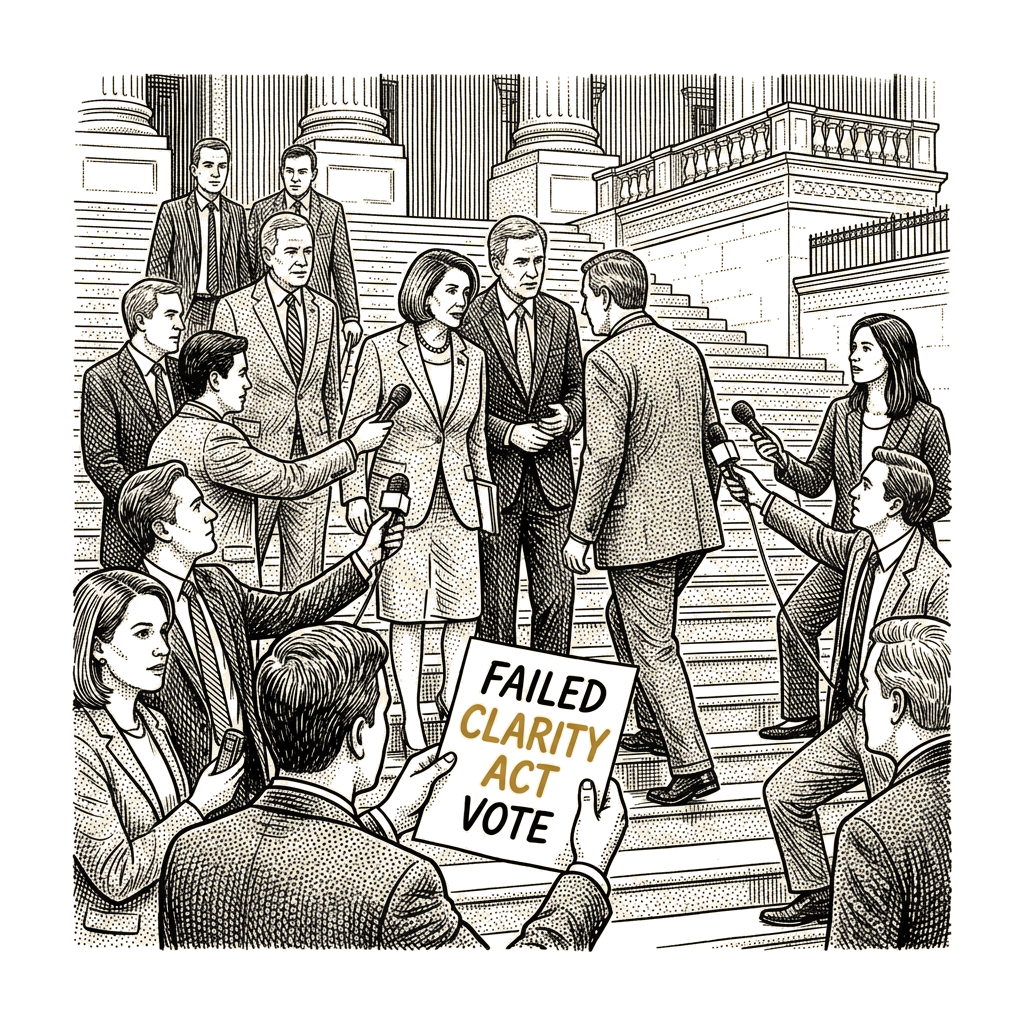
Stablecoin rewards, Trump ethics provisions split Senate
The Clarity Act, a bill that would have established the first comprehensive regulatory framework for digital assets in the United States, failed to advance in the Senate on Tuesday after falling short in a procedural vote requiring 60 senators.
The legislation had been viewed as the leading vehicle for setting ground rules for digital-asset platforms and stablecoins. Its defeat leaves Congress without a comprehensive framework for the sector even as President Trump’s reported crypto earnings have intensified scrutiny of his administration’s digital-asset ventures.
Sen. Mark Warner, a Virginia Democrat, said he voted no because the bill failed to address what he called the “fundamental conflict of interest” tied to Trump’s crypto holdings. “The president should not be able to use the power and influence of his office to benefit his own crypto holdings while his administration makes decisions that could directly affect their value,” Warner said in a statement. “At a minimum, any serious crypto legislation must include meaningful ethics requirements that prevent the president and other senior government officials from profiting off the policies they oversee.”
Trump reported earning more than $1.4 billion from his meme coin and crypto ventures last year, a disclosure that has fueled Democratic demands for ethics restrictions. Last month, Trump gathered a crowd of crypto executives at the White House and urged Congress to pass the legislation, saying it would “keep us ahead of everyone else” and “open the door to the next wave of innovations and innovators.” The White House has said that “neither the president nor his family has ever engaged—or will ever engage—in conflicts of interest.”
Sen. Elizabeth Warren (D., Mass.), speaking with reporters before the vote, framed the legislation as a broader threat. “We need crypto regulation, but voting to proceed to this bill is a vote to bless Donald Trump’s corruption and to put American families, the American economy, and our national security at risk,” Warren said on the call.
Beyond the ethics dispute, banking groups had argued that the bill would allow digital-asset platforms such as Coinbase to offer tokens with interest-like rewards that resembled bank deposits, warning that those arrangements could pull deposits from community banks and threaten regional lending. Crypto and banking executives and their allies dug in on whether such rewards should be permitted, dividing two powerful lobbies that had both pressed Congress for a digital-asset framework.
On Sunday, Republicans had offered what they called the “last, best and final offer,” a revised draft of the bill they said addressed many Democratic concerns. Under the updated text, the Treasury Secretary would be able to restrict stablecoin rewards if community banks suffered substantial deposit flight, with the clause set to expire after 18 months. Previous versions of the bill had included outright prohibitions on rewards for holding stablecoins while allowing activity- or transaction-based rewards.
The new text also revised ethics rules to allow state attorneys general to ban public officials from issuing, sponsoring, or maintaining a significant financial interest in digital assets. Covered officials would have been required to divest from their crypto holdings or place them in a qualified blind trust. The rules would have penalized crypto exchanges that listed digital assets issued or sponsored in violation of the ban. The restrictions, however, would not have extended to Trump’s sons, who run the Trump family’s crypto businesses.
Some Democrats and critics said the revised ethics language did little to prevent Trump from continuing to profit off digital assets. The ethics provisions had been the top roadblock for the Clarity Act since the Senate Banking Committee approved the bill.
After Tuesday’s vote, it was unclear whether Republicans would engage in further negotiations or muster support for another vote on the bill. On the Kalshi prediction-markets platform, traders placed the odds of the Clarity Act becoming law by July 2027 at about 12%. The legislative calendar presents another hurdle: if Republicans lose their majority in the coming midterm elections, the House might be forced to take up any Senate version of the bill during a lame-duck session, increasing the odds of a legislative deadlock.