Iraq marks U.S. pullout as restoration of sovereignty
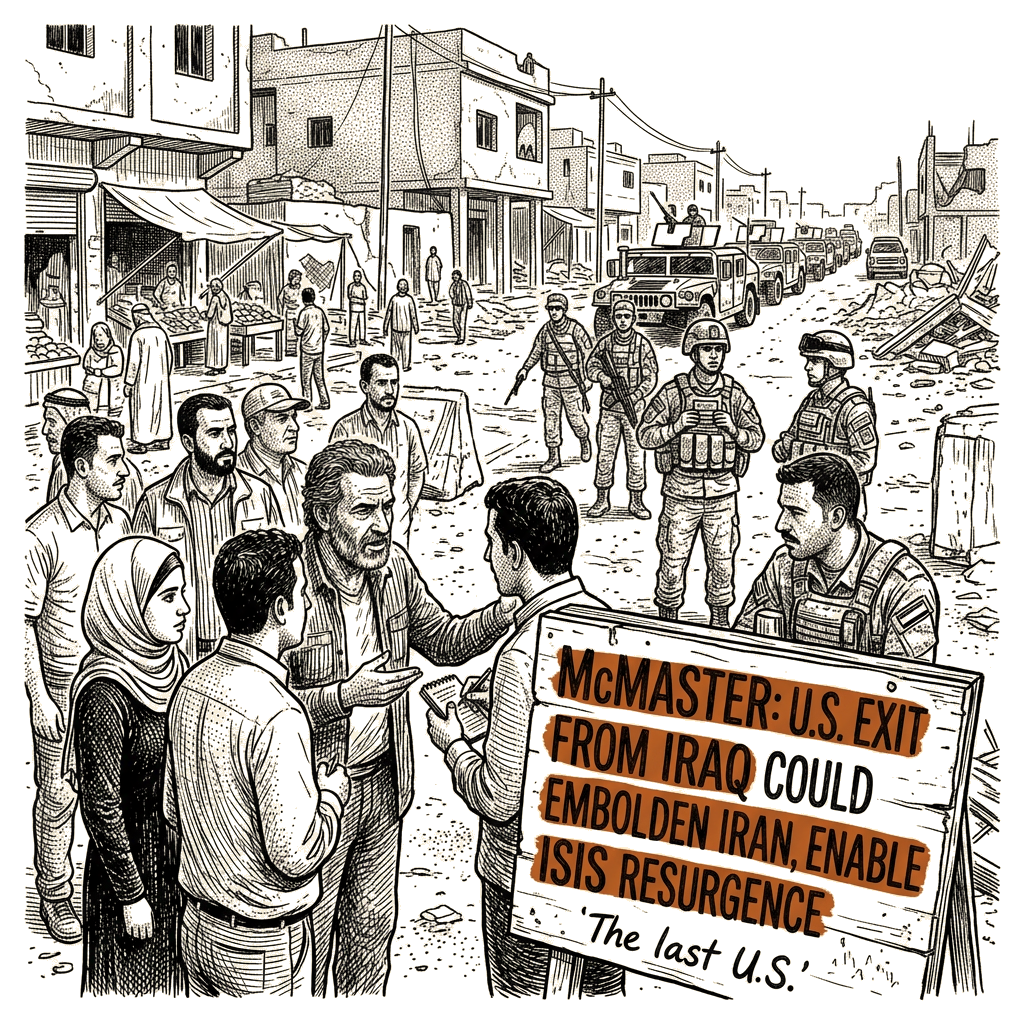
The last U.S. troops have departed Iraq, more than two decades after the U.S.-led invasion, as Iraq marks the pullout as a restoration of sovereignty. Retired Lt. Gen. H.R. McMaster, who commanded U.S. troops in Iraq, told NPR’s Morning Edition that the timing could strengthen Iran and leave Iraq vulnerable to a resurgence of ISIS.
“I think it’s not the right time,” McMaster said. “This is going to embolden, I think, the Iranians to a certain extent, and it’s not clear that there has been the enduring defeat of ISIS.”
The pullout comes as the United States and Israel are at war with neighboring Iran, according to NPR, which placed the conflict alongside the troop withdrawal in its opening.
In his conversation with NPR’s Michel Martin, McMaster said a continued U.S. presence helped with intelligence gathering and support for Iraqi forces fighting ISIS. He also said Iranian-backed militias operating outside Baghdad’s control remain a threat to Iraqi sovereignty.
McMaster served 34 years in the Army and later became President Trump’s national security adviser during his first term. In 2005, he commanded the 3rd Armored Cavalry Regiment during a major counterinsurgency campaign against al-Qaida in Tal Afar, a city in northwestern Iraq near the Syrian border. He later helped shape U.S. military strategy in Iraq and Afghanistan and is now a senior fellow at Stanford University’s Hoover Institution.
The U.S.-led invasion opened more than a decade of war and upheaval that exacted an enormous toll on Iraqis, according to NPR. At least 200,000 Iraqi civilians were killed, according to Iraq Body Count, a U.K.-based independent organization that tracks civilian deaths using morgue records and other documentation. Millions more were displaced during the war and its aftermath.
Asked how the troops he led might view the withdrawal, McMaster said he hoped they would feel “tremendous pride.” He called their fight against al-Qaida in Iraq “a righteous mission.”