Trump labels AI ‘superintelligence’ in new executive order
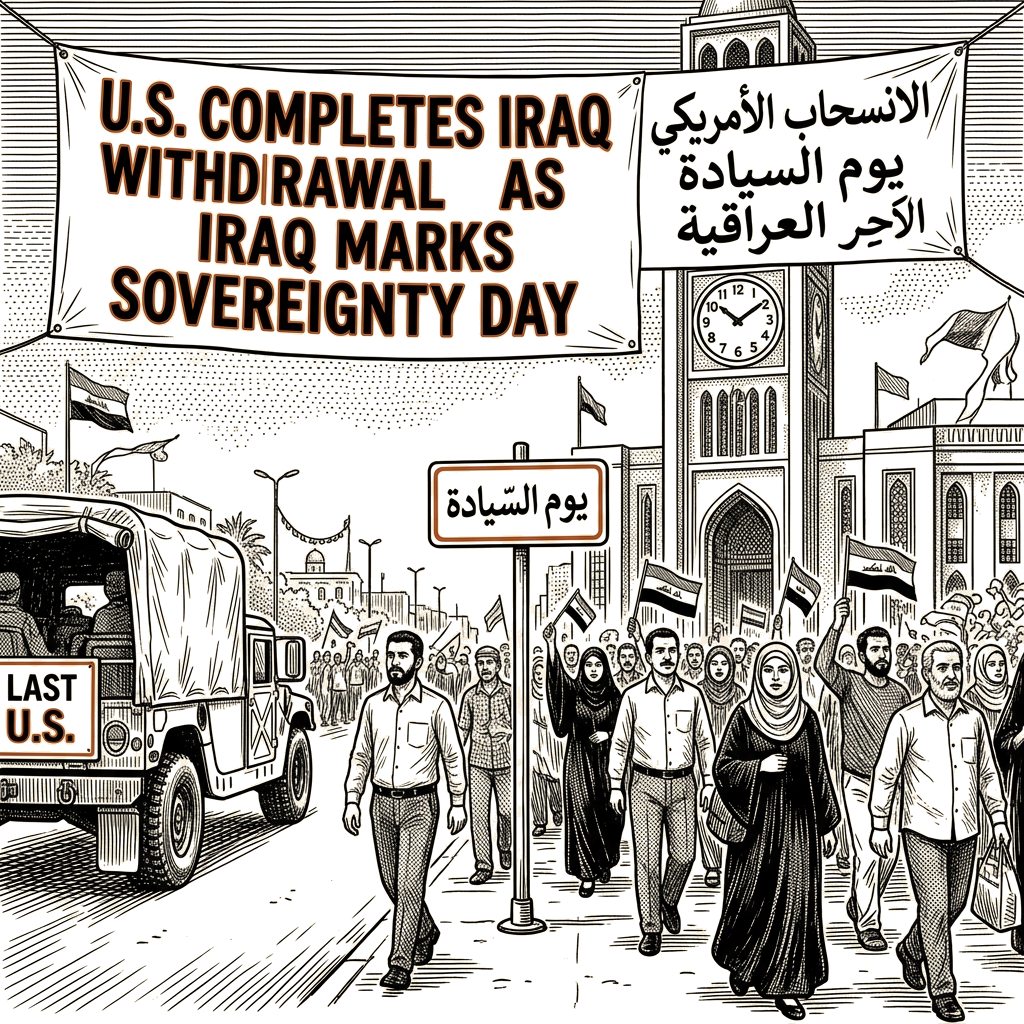
The last U.S. forces have withdrawn from Iraq, more than two decades after the U.S.-led invasion that overthrew Saddam Hussein. Iraq marked Tuesday as “Sovereignty Day.” The withdrawal comes as attacks linked to the U.S.-Iran war raise new questions about Iraq’s ability to defend itself without U.S. air defenses.
The Kurdish region of Iraq has been hit hard during the U.S. war with Iran, leaving its leaders concerned about their defenses, NPR’s Jane Arraf tells Up First. Iran-backed militias are celebrating the withdrawal. Arraf says many Iraqis enjoying the holiday today want “what they have long wanted for their families: a normal, peaceful life.”
This is not the first U.S. withdrawal from Iraq. Troops also left in 2011, before returning three years later to help fight ISIS. NPR’s Morning Edition included a conversation with retired Lt. Gen. H. R. McMaster, former U.S. National Security adviser, about how the final withdrawal of U.S. troops from Iraq impacts the Middle East.
In a separate development Tuesday, the U.S. Supreme Court allowed the Trump administration to resume, for now, deporting migrants to countries not listed in their removal orders. The court will hear full arguments in December. The court did not explain why it paused a lower-court ruling blocking the policy but asked both sides whether lower courts had authority to intervene and whether the policy violates due process or protections against torture.
Third-country removals allow the government to send immigrants elsewhere when their home countries refuse to accept them, NPR’s Linda Kenyon says. Immigration advocates warn the policy could cause irreparable damage. One immigrant challenging the policy says he fears being sent to a country where he would not receive treatment for his severe mental illness.
Mahmoud Khalil, who became a prominent face of Columbia University’s pro-Palestinian movement, is also fighting the Trump administration’s effort to deport him. He told Fresh Air that 104 days in immigration detention strengthened his resolve to challenge the case.
On the same day, President Trump says that technology companies can largely self-regulate when it comes to artificial intelligence. After meeting with top AI executives Tuesday, he signed an executive order referring to the technology as “superintelligence” for government agencies and launched an AI-powered website, America.gov.
Trump said the Justice Department or FBI could step in if companies break the law — but NPR’s Emily Feng notes there are no new AI laws behind the meeting. Executives from six major AI companies signed a one-page document pledging to monitor their models and prevent harmful uses such as hacking. Asked whether the agreement was enforceable, Trump called it “morally binding” and said the companies would be “policing each other.”
In Lesotho, a small mountainous country surrounded by South Africa, young shepherds can spend months tending livestock in remote areas, often missing school. The Good Shepherd School offers flexible evening classes in reading, writing and counting.
Behind the story, by Meg Anderson, National Desk correspondent. Since the 2020 police killing of George Floyd, programs that send unarmed responders to some 911 calls instead of police have quietly grown — from just six in 2020 to nearly 100 today. “I wanted to understand what it takes to do that work well, so I spent a few days with the community response program in Durham, N.C.,” Anderson said. From the back of their minivan, she watched responders handle 911 calls about trespassing and panhandling. They doled out bottled water, snacks and fresh socks, and defused some tough situations: an agitated man refusing to leave a parking lot, a paranoid man asking to go to the hospital, a woman needing a safer place to live. But they often had few long-term solutions to offer.
Researchers told Anderson the tension is common. The goal after 2020 was to avoid more police killings, not solve problems like homelessness. Now, Durham and dozens of other cities are wrestling with this bigger question: is success resolving the crisis? Or is it to offer a path to stability, so that eventually fewer 911 calls are made in the first place?
Three things to know. NPR staff listened to nearly 1,500 podcasts and picked 20 finalists for this year’s Student Podcast Challenge. Cathy Tie wants to show that her startup’s gene-editing technology could repair disease-causing mutations in embryos and help prevent inherited diseases. Editing genes in human embryos is illegal in the U.S. A saxophonist, a forensic anthropologist and a historian are among this year’s 20 MacArthur fellows — each receiving an $800,000 “genius grant.”
The newsletter was edited by Majd Al-Waheidi.