Greco had found president, vice president exempt from most federal conflict-of-interest rules
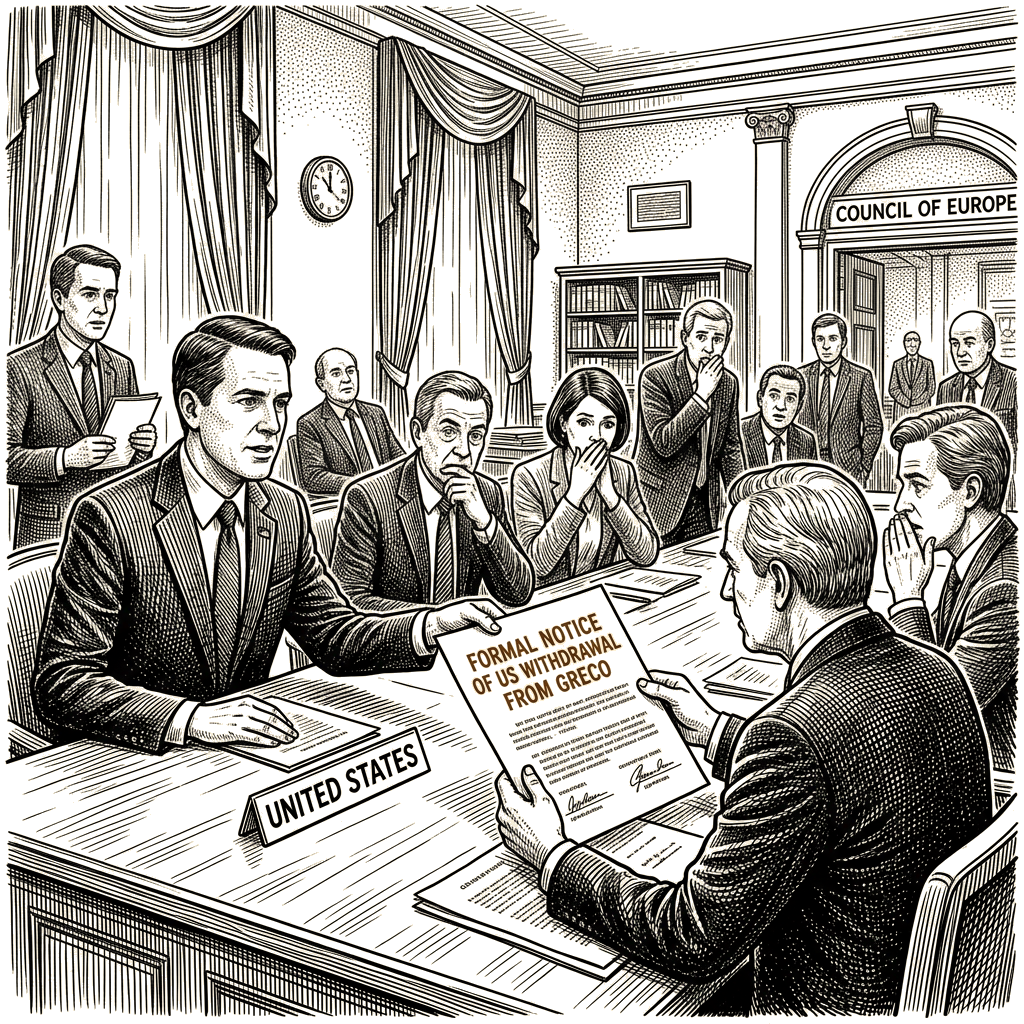
The Trump administration formally notified the Council of Europe’s Group of States against Corruption, known as Greco, on Monday that the United States is leaving the Strasbourg-based anti-corruption monitoring body, the Guardian reported. The withdrawal was set in motion by an internal State Department proposal dated 1 September, according to a document seen by the newspaper. It ends more than 25 years of US participation in the multilateral group, which was established in 1999.
The exit is the latest in a series of withdrawals from international organizations by the Trump administration, part of a broader effort to pull back from bodies the administration regards as inefficient, overreaching, or out of step with its priorities. It comes as Greco’s most recent assessment of the United States found shortcomings in the country’s own anti-corruption framework, including exemptions that shield the president and vice president from most federal conflict-of-interest rules that apply to other executive-branch officials.
A State Department spokesperson said the decision followed a review of US involvement in the body and “marks a shift from countries holding each other to shared standards towards Washington acting on its own.” The spokesperson framed the withdrawal as a redirection of resources: “The US Department of State’s primary responsibility is to protect the American people. The United States is focused on combating criminal threats that directly threaten Americans, including corruption undermining American security and prosperity.”
The spokesperson added that the department had concluded that Greco membership, which carries an annual financial contribution, “does not provide tangible benefits to US national security.” “The era of writing blank checks to international bureaucracies is over,” the spokesperson said. Going forward, the department would prioritize “higher-impact tools” against corruption, including visa restrictions, sanctions, and targeted foreign assistance to strengthen foreign criminal investigations into corruption that directly threatens US security and prosperity.
The US joined Greco in 2000, making it one of only two non-European members alongside Kazakhstan. Greco’s total budget for 2025 was about €3m, or roughly $3.4m, funded by contributions from its 48 members. It is unclear how much the United States has paid so far in contributions. Russia left Greco in 2023, and Belarus followed in 2024.
Greco operates by peer review: members assess one another’s anti-corruption frameworks and publish recommendations, with later rounds checking compliance. The body has no power to fine or penalize states. Its record has been mixed.
In its latest annual report, Greco said states had fully or partly implemented almost 90% of its recommendations on preventing corruption among parliamentarians, judges, and prosecutors. Parliamentarians remained the weakest area, with 15.5% of recommendations still unimplemented, compared with 8.6% for judges and 5.7% for prosecutors. Some cases have dragged on for more than a decade, and Greco’s monitoring has found significant shortcomings in a number of countries.
The United States itself was assessed in a December 2023 Greco report. Greco credited Washington with strong laws and institutions for preventing corruption in the executive branch but said the country lacked an overarching anti-corruption strategy and pointed out that the president and vice president are exempt from most federal conflict-of-interest rules. Greco made 10 recommendations to the US, including developing an overarching anti-corruption strategy for the executive branch. Greco’s fifth-round evaluation page does not currently show a published US compliance report following that assessment.
In response to the US exit, the Council of Europe described the United States as a “valuable contributor” to Greco and said the group “remains open to resuming cooperation with the United States in the future in support of shared efforts to prevent corruption, strengthen integrity and uphold the rule of law.”