CVS counters with $7 million ad campaign and text messages to customers
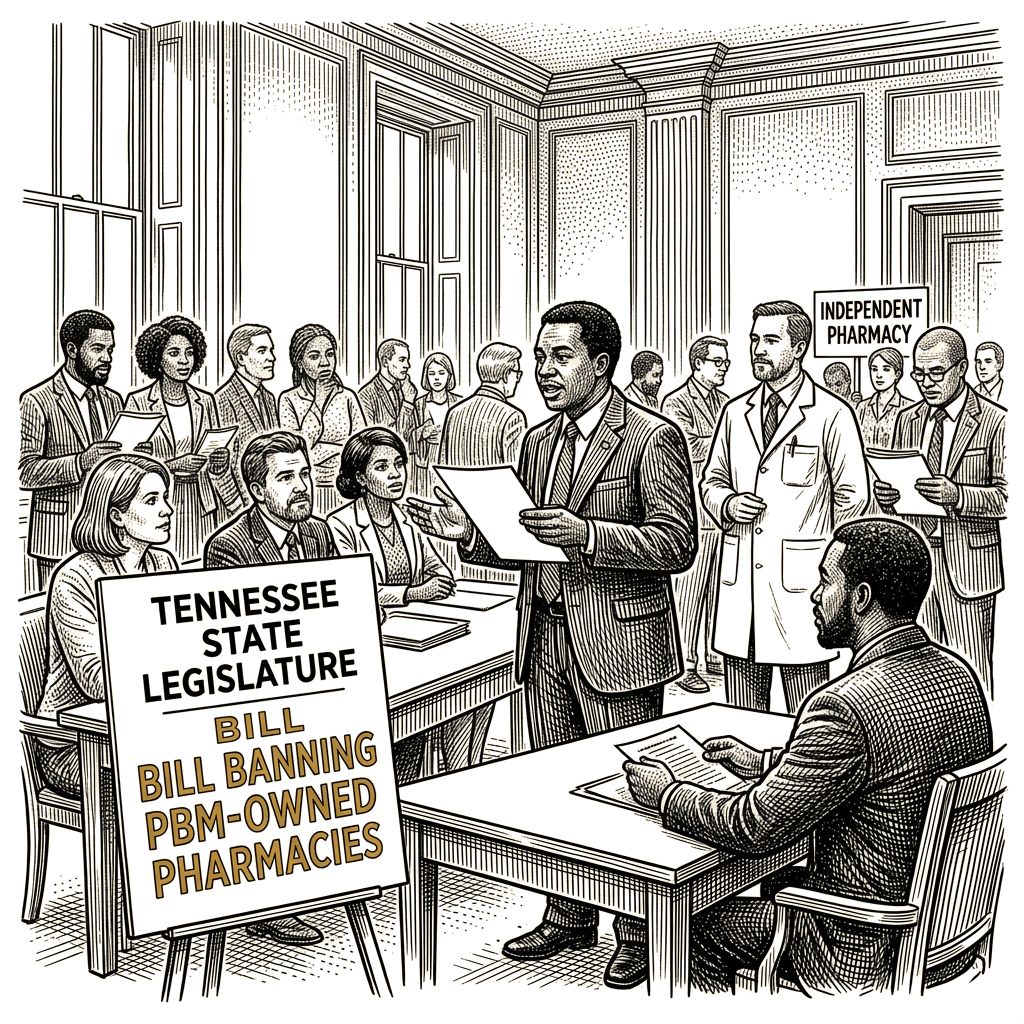
The Tennessee General Assembly has passed a bill that would bar companies that own pharmacy benefit managers from also owning brick-and-mortar pharmacies, becoming the latest state to move against the drug-price middlemen. The bill, which does not take effect until 2028, was led by state Sen. Bobby Harshbarger, a Republican pharmacist from a small city in northeastern Tennessee, and passed with votes from members of both parties.
CVS Health, whose holdings include both CVS Caremark, one of the country’s dominant PBMs, and CVS Pharmacy, the nation’s largest retail drugstore chain, has emerged as the legislation’s primary target. The conglomerate, which reported $400 billion in revenue last year, also owns the major health insurer Aetna and operates 134 retail pharmacies in Tennessee.
The Josephs, a Tennessee couple married for 35 years, have become unlikely allies in the fight. Amye Joseph, a Republican, said the issue has unified her household in an era of political polarization. “We hate CVS. I’m going to be straight-up,” she said. She described frustration with a lack of face-to-face interaction with pharmacists, prices that seem to rise without explanation, and pressure from CVS Caremark to fill prescriptions at CVS stores rather than at the couple’s local pharmacy. “They’re not even a middleman,” she said. “They’re a money grab for CVS.”
Her husband, Charlie, a Democrat and retired fire captain, said he discovered he could save money on his blood pressure medication by paying cash at his local pharmacy for a 90-day supply rather than using his CVS Caremark drug plan for a 30-day supply. “Right now, it’s more of an inconvenience than anything else as far as it goes, but there’s no consistency,” he said. “The whole healthcare thing is just frustrating, on a good day.”
In recent years, every state has imposed restrictions on PBMs. The Tennessee bill is one of a growing number that would also outlaw companies that own PBMs from owning brick-and-mortar pharmacies, as CVS does, drawing unusual bipartisan support in statehouses where healthcare debates are typically partisan. Independent pharmacies, which have little choice but to contract with major PBMs while also competing with the conglomerate-owned pharmacies, have pressed lawmakers for relief.
Antonio Ciaccia, CEO of 46brooklyn Research, a nonprofit think tank that tracks drug pricing, said the Republican shift reflects a feeling even within the GOP that the prescription drug market is no longer functioning as a free market. “Republicans are looking at this issue, saying, We know what competition is supposed to do, and it isn’t happening,” said Ciaccia, a critic of the PBM industry. “This is not a free market.”
The PBM industry has pushed back. Greg Lopes, a spokesperson for the Pharmaceutical Care Management Association, which represents PBMs nationwide, said the industry’s role is to lower drug costs and that drug manufacturers are seeking to shift blame. “PBMs are the only part of the prescription drug supply chain working to lower drug costs, which makes PBMs the target of powerful groups, Big Pharma and pharmacists,” Lopes said. “Drug manufacturers attempt to shift blame for high drug costs to PBMs in order to retain their profit margins and weaken PBMs’ ability to lower costs.”
Barak Richman, a lawyer and economist at George Washington University who studies healthcare competition, described the rivalry between drugmakers and PBMs as a corporate “cage match.” “We have wildly passionate partisan divides on a lot of healthcare,” he said. “But there’s a lot of healthcare policy that I don’t think is obviously partisan.”
Last year, attorneys general from nearly 40 states and U.S. territories wrote to congressional leaders arguing that “horizontal consolidation and vertical integration have transformed PBMs from useful administrative service providers into market-dominating behemoths.” At the federal level, Sen. Elizabeth Warren, D-Mass., and Sen. Josh Hawley, R-Mo., have come together to back a similar PBM ownership ban. The House version has been sponsored by U.S. Rep. Diana Harshbarger, R-Tenn., a pharmacist and the mother of the Tennessee state senator who led the state legislative push.
In a February legislative hearing, Bobby Harshbarger framed the bill as a test of whether the prescription drug market remains a free market. “If a corporation argues that its pharmacy cannot survive unless it is owned by the same entity that sets the reimbursement rate, then we’re not talking about a free market. We’re talking about control,” he said.
CVS officials urged Tennessee lawmakers to reject the measure. “Any proposed reform should be evaluated based on whether it improves access to care, simplifies the patient experience, and enhances affordability,” CVS spokesperson Phil Blando said in a statement. In a separate statement, Blando added that “looking at the price of a single prescription does not reflect the value of a comprehensive pharmacy benefit,” and said the company’s “focus remains delivering the lowest possible cost and the greatest overall value for members and plan sponsors.”
To fight the bill, CVS launched a $7 million television advertising campaign, claiming it would have to close all 134 of its Tennessee pharmacies, similar to its threat in neighboring Arkansas, where state lawmakers passed a comparable measure in 2025. CVS also sent text messages to Tennessee customers asking them to contact their lawmakers; ominous CVS texts helped kill another PBM ownership ban in Louisiana last year.
Sponsors of the legislation said closure was not the only option and that CVS could also divest either its stores or its PBM. In urging his colleagues to support the bill, state Sen. Rusty Crowe, a Republican from northeastern Tennessee, invoked a military metaphor: “I learned when I was in the Vietnam War, when you start taking on flak, you know you’re over the damn target.”
Although Republicans did not need Democratic votes to pass the bill, they received them. State Rep. Antonio Parkinson, a Democrat from Memphis, said he saw the bill as a way to lower drug prices and support small pharmacies. “If there’s a benefit to my people, I’m supporting it,” Parkinson said.
The Tennessee bill does not take effect until 2028, and CVS has sued in state court. The Arkansas law, passed in 2025, is being held up in court after CVS challenged its constitutionality. An analysis by the Tennessee legislature’s researchers concluded the bill could drive up healthcare costs in the short term. CVS has not divested or closed its pharmacies in either state, and the laws have yet to take effect.