BSW support breaches firewall, enabling AfD to take state chamber presidency
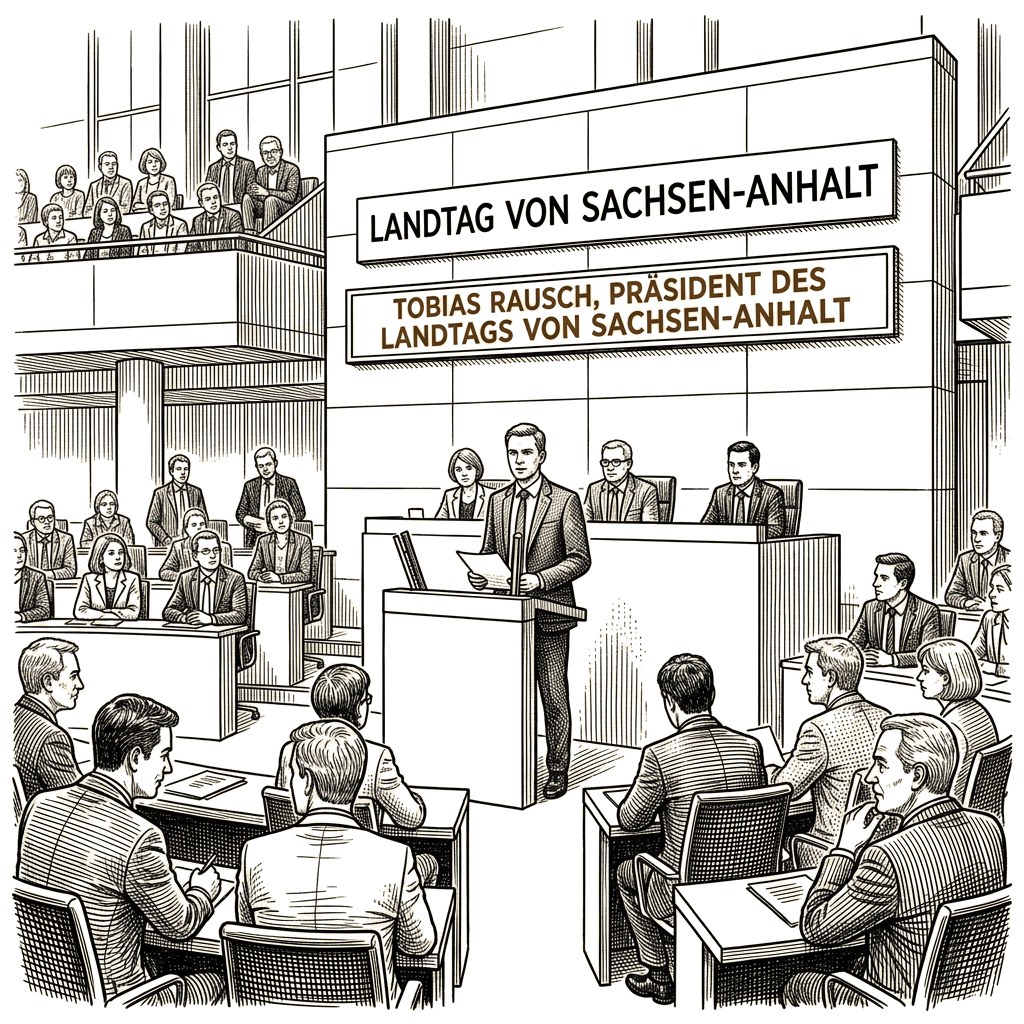
Tobias Rausch, a 35-year-old former estate agent, won 48 of 82 votes in the first round of voting in Magdeburg on Tuesday to become president of the Saxony-Anhalt state parliament, the first time the Alternative für Deutschland has led a state chamber. The Guardian, which characterizes the AfD as far-right, reported that Rausch’s election makes him the first leader of a German state parliament described that way since the second world war. Twenty-nine members voted against Rausch and five abstained.
Rausch’s election was secured with the backing of the Bündnis Sahra Wagenknecht (BSW), a small leftwing party that, according to The Guardian, echoes the AfD’s stances on Russia and immigration. Five BSW lawmakers had said in advance they would vote for Rausch, and Tuesday’s result indicates four other members voted for the 35-year-old in the secret ballot. BSW founder Sahra Wagenknecht declared it was time to do away with “firewall idiocy.” Her deputy, Christian Leye, said “the firewall is not working” and that the votes of nearly 44 percent of electors could not be ignored. “We need an intelligent way of dealing with the AfD and that means dealing with the content of their programme instead of a firewall,” Leye told German media.
Later in the day, Hans-Thomas Tillschneider, part of the AfD’s “more extreme wing” and the architect of the party’s “radical” manifesto, was elected as Rausch’s deputy. He received 44 votes in the secret ballot, though it was not immediately clear which parties supported him; the BSW had said it would refuse to vote for him.
The AfD’s parliamentary group holds 39 of the chamber’s seats, narrowly short of an absolute majority. The willingness of politicians to break the firewall gives the party a chance of being able to form a government in the state, a feat it had looked unlikely to pull off. The BSW says it will support an AfD-led parliament only if a nonpartisan figure is appointed to lead it, a position the AfD rejects. Ulrich Siegmund, the AfD’s lead candidate and a close ally of Rausch, has until December to form a government. He has not yet said which parties or politicians have agreed to cooperate, only that “negotiations are going well.” The AfD claims to be courting members of the CDU to break the firewall, a claim CDU leaders deny.
In his acceptance speech, Rausch promised to represent all voices and “take different opinions seriously and to try to take decisions in a transparent way.” He was applauded by his own parliamentary group and by the BSW; other members did not respond. Outside the parliament building, demonstrators read from the German constitution as the result was announced.
Tillschneider, who is being lined up as the state’s culture and science minister, is a scholar of Islamic studies whose family emigrated from Romania to Germany in the 1980s. According to The Guardian, he has referred to Russian President Vladimir Putin as “a real man with a sound set of values” and has accused immigrants of “streaming in here in masses … wanting to squander our money.” He has described Islam as a “fungus” growing on the “German oak.”
Before the vote, Eva von Angern of Die Linke, the longest-serving member of the Saxony-Anhalt parliament, drew parallels between Rausch’s election to the speaker’s post and Hermann Göring’s use of that role in the Reichstag in the 1930s to facilitate Adolf Hitler’s rise to power. She claimed that the negative consequences of the AfD’s win in the state were already being felt in lower tourist numbers and teachers withdrawing job applications.
Rausch was one of the central figures in a nepotism scandal over AfD members employing relatives in parliament. He denied claims that several of his siblings and a brother-in-law were working in the state parliament but confirmed he was employing several players at the football club where he is a member. Rausch is a close ally and confidant of Ulrich Siegmund, the AfD’s lead candidate, who is positioning himself to take over as leader of Saxony-Anhalt.
Opposition members raised alarm over the breach of the firewall. “Whoever has invested a representative of extremist and anti-constitutional party with this office will bear responsibility for the consequences,” said Green MP Susan Sziborra-Seidlitz, to loud applause.
The AfD, which Saxony-Anhalt’s intelligence agency classes as “rightwing extremist,” won nearly 44 percent of the vote in state elections last month, delivering a sharp blow to Merz and his CDU. The result, combined with two other regional elections in September, has piled pressure on the chancellor, who pledged on taking federal office in 2025 that he would halve AfD support by boosting the economy and reducing immigration. Instead, CDU support has more or less halved and the AfD has surged to about 30 percent in national polls.