ECB rate hikes and Middle East energy costs add pressure
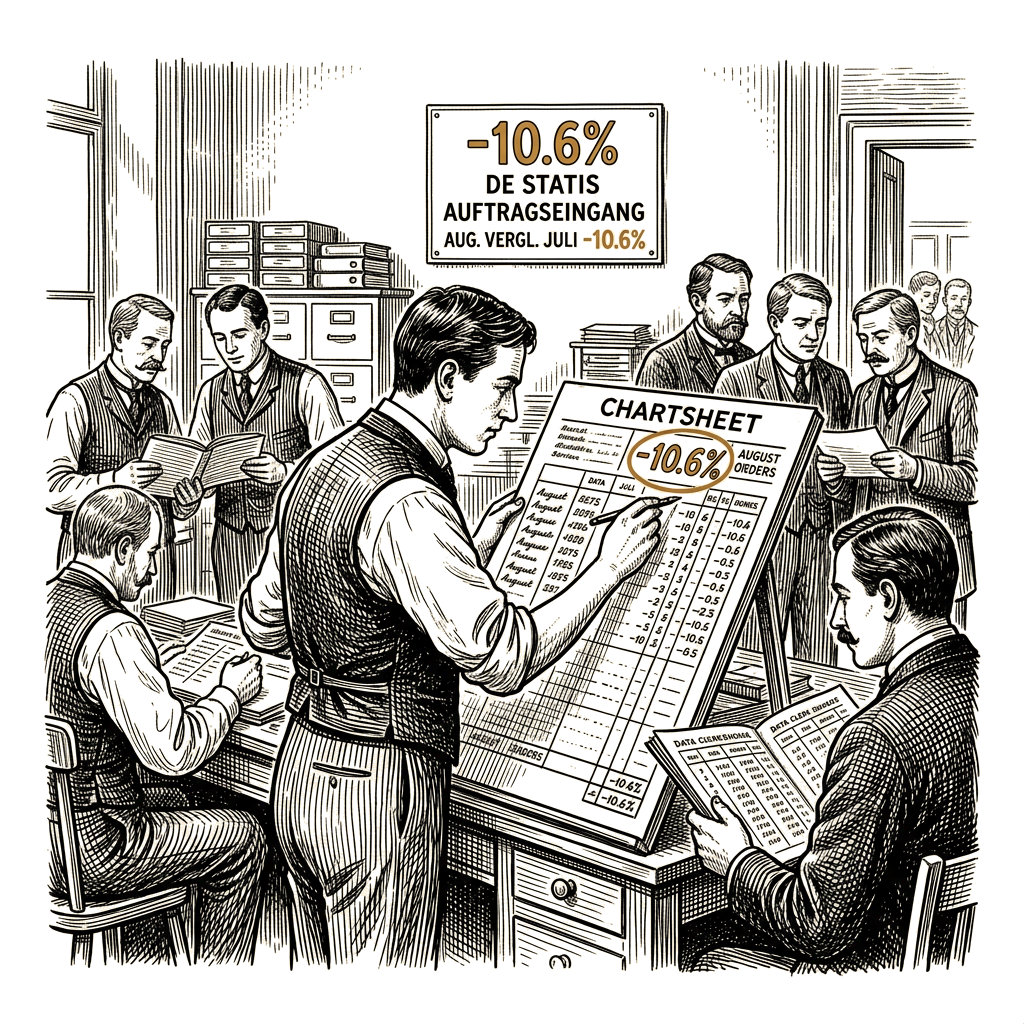
German factory orders fell 10.6% in August, far steeper than the 1.0% decline that economists polled by The Wall Street Journal had expected, according to data agency Destatis. The drop reversed a 3.2% rise in July and pointed to growing pressure on industrial demand as the war in the Middle East continues to keep energy costs elevated.
The August decline was driven largely by a 61.5% monthly drop in demand for “other transport equipment” — aircraft, ships, trains and military vehicles, Destatis said. Orders in that sector had more than doubled in July on large-scale contracts, setting up a sharp reversal as those contracts rolled off.
Manufacturing orders had held up better than feared at the start of the conflict, with demand for some products boosted by stockpiling and German producers gaining an advantage over Asian rivals facing even greater supply disruptions. But as the war in Iran drags on, cost burdens are mounting. German companies’ expectations for selling prices increased in September as higher energy costs fed through to prices. Natural-gas and electricity prices hit their highest levels since late 2022 in mid-September, while crude-oil prices also rose sharply.
The European Central Bank has raised interest rates twice since the start of the war, increasing borrowing costs for companies and weighing on investment. German 10-year government bond yields have risen sharply this year, tightening financial conditions further. That could give policymakers reason to move cautiously on further rate increases if the energy shock pushes up inflation while simultaneously weighing on demand.
The decline comes against a mixed backdrop for German manufacturing. A business survey by S&P Global showed a jump in manufacturing sentiment in September to its highest level since May 2023. A group of major German economic research institutes recently raised their 2026 growth forecast to 1.3%, almost doubling their March projection, driven by strong exports and a robust manufacturing sector.