Condemned woman woke ‘angry and confused’ after surviving two pentobarbital doses
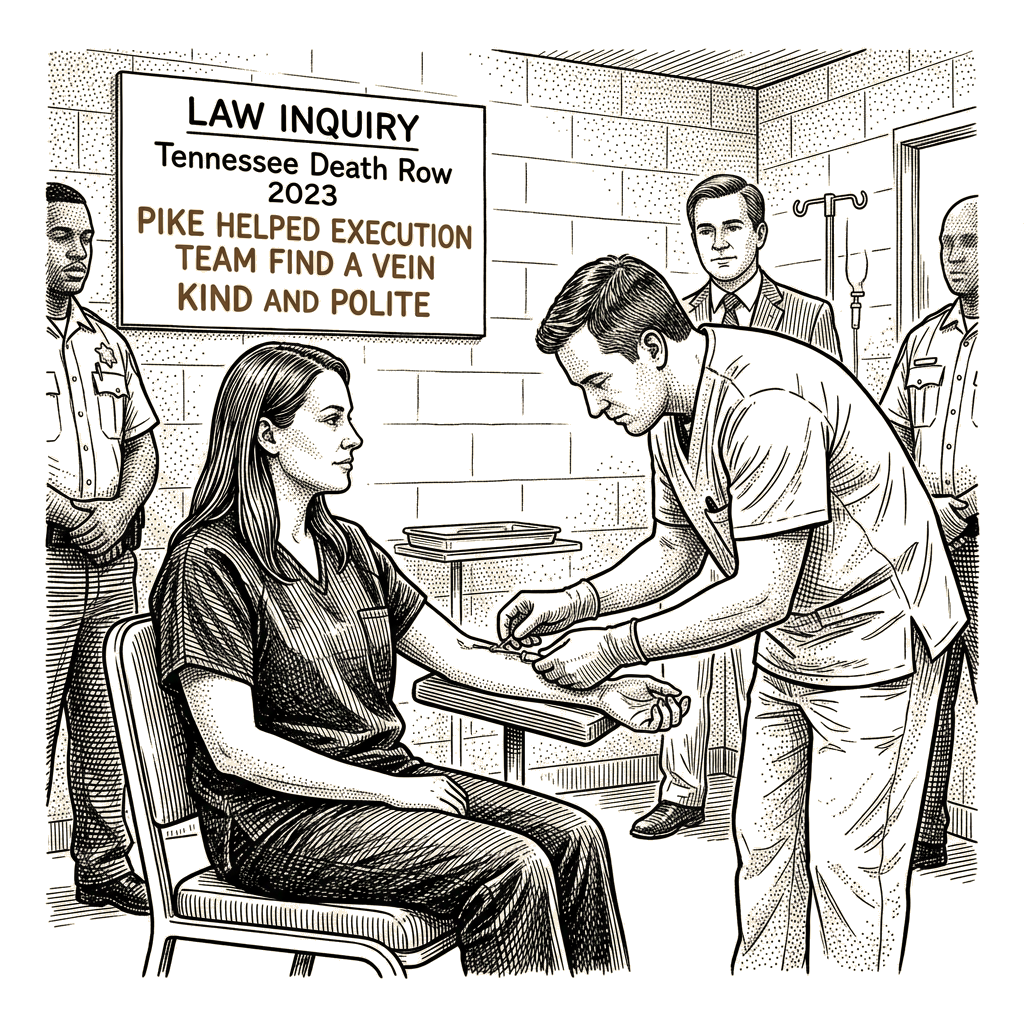
Christa Pike, the Tennessee death row inmate believed to be the only person to survive a US execution by lethal injection, helped the execution team find a vein in her arm and remained “kind and polite” while being injected, her lawyer said Wednesday. Pike woke days later in a hospital “angry and confused,” with a tube down her throat and surrounded by people she did not recognize, according to attorney Randy Spivey.
The disclosures came during an emergency court hearing in Tennessee where Chancellor I’Ashea Myles ordered the state to preserve all evidence from the September 30 botched execution — including IV lines, syringes, and packaging — and to document Pike’s psychological condition before, during, and after the attempt.
At a news conference following the hearing, Spivey said his legal team had believed for days that Pike was brain dead and expected her to be taken off life support at any moment. Then, in what Spivey called a “shock to everyone,” she began to talk on Tuesday, recalling only limited details about the execution attempt. Spivey added that Pike had helped the execution team find a vein in her arm, and was kind and polite while she was being injected.
Her first words upon waking, Spivey recalled, were “Where am I?” and “Who are you?” She woke with a tube down her throat and surrounded by people she did not recognize, he said. Both of her arms are now “tremendously swollen,” she has a blood clot in one arm, pneumonia, and cannot swallow, according to Spivey. “We don’t know the toll all of this will take” on her mental health, he said, noting how she was left “angry and confused” by the ordeal.
Earlier Wednesday, Pike’s lawyers appeared before Chancellor I’Ashea Myles for an emergency hearing, asking the judge to order preservation of all evidence from the botched execution — material her team said could lay groundwork for a future lawsuit against the state. Lawyer Luke Ihnen told the judge that “up until yesterday our client was unconscious, and unable to communicate,” and that she is now “speaking limitedly.” Ihnen described the “roadblocks” that have made it challenging to communicate with his client.
Tennessee Assistant Attorney General Will Ayers called attention to the “unusual procedural position here,” prompting agreement from the judge, and argued that an emergency motion was unnecessary because the state is already compelled to preserve evidence. Judge Myles nevertheless ordered that “anything that was in the actual room needs to be preserved and maintained,” including IV lines, syringes, and waste such as packaging, inserts, and labels. The judge also demanded documentation of Pike’s psychological condition before, during, and after the September 30 attempt, and advised the state to take “special care” not to misplace or accidentally delete any information that may be pertinent to the case.
When the judge asked whether the state intended to reschedule Pike’s execution, Ayers said he did not know the answer.
Ihnen also asked the court to grant Pike phone access to her lawyers and “continuous liberal access to Ms Pike,” saying the team was kept waiting more than two hours during a recent visit to the hospital. He said Tennessee prison officials are keeping her “shackled” to her hospital bed despite requests from medical staff that the handcuffs be removed. The legal team also asked that the Tennessee Department of Corrections be required to notify them 48 hours before any transfer from the hospital to another state-run facility.
Pike, 50, was sentenced to death for the 1995 murder of 19-year-old Colleen Slemmer. On September 30, executioners administered two rounds of pentobarbital but failed to kill her. After it became clear Pike would not die, she was taken to a hospital, where she remained unconscious for days as medical staff worked to clear the drug from her system. She is being restrained at her hands and feet in her hospital bed and continues to receive critical medical care, her lawyers said. Experts and her legal team say her apparent recovery is unprecedented, and that no other US inmate has survived a lethal injection from executioners.
Governor Bill Lee has ordered a pause on all executions in the state for the rest of the year and has said he wants answers about what went wrong. The state’s prisons chief has said he is resigning after the failed execution.
Pike was 18 when she and her then-boyfriend, Tadaryl Shipp, beat, tortured, and killed Slemmer, whom they had met at a job training camp for troubled teens. Shipp, who was 17 at the time, was spared the death penalty because he was not yet legally an adult. He remains in prison.