Morgan Stanley raises Q4 Dated Brent forecast to $105 a barrel
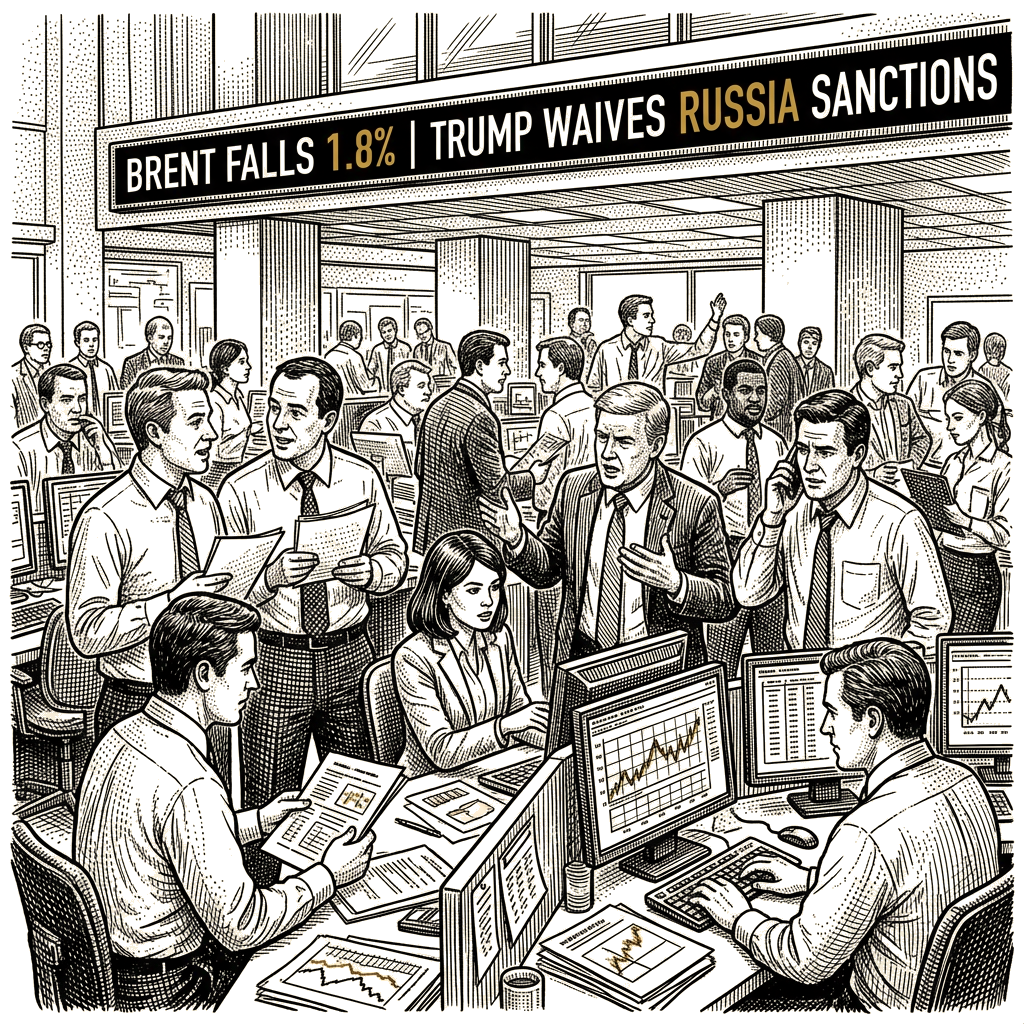
Oil futures pulled back Monday as traders weighed President Trump’s Friday executive order waiving newly imposed sanctions on Russian energy against persistent supply threats stretching from the Baltic to the Persian Gulf. The move interrupted a Friday rally, with December Brent crude down 1.8% at $107.86 a barrel and December West Texas Intermediate off 1.7% at $97.37 a barrel, according to The Wall Street Journal.
Trump signed the order waiving sanctions and tariffs under a new law targeting Russia, potentially easing restrictions on Russian energy trade, the Journal reported. The waiver does not affect earlier sanctions already in place.
Analysts at ANZ Research said the Monday decline could reflect a technical correction following Friday’s gains. Further downside could be limited by geopolitical tensions and the risk of additional supply disruptions, they said.
Russian supply concerns continued Sunday, when Ukrainian drones struck an oil terminal in St. Petersburg, the Journal reported.
Middle East tensions also remained elevated. Iran has been providing Yemen’s Houthi militia with intelligence and targeting assistance for attacks on Saudi Arabia, the Journal reported. The Houthi movement also controls Yemen’s coastline along the Bab al-Mandeb Strait, a key route for Saudi oil exports, according to the report.
Shipping risks persisted elsewhere in the region. The U.K. Maritime Trade Operations agency reported an attack on a tugboat near the United Arab Emirates on Sunday, following attacks on two tankers off Saudi Arabia on Friday.
Despite recovering Middle East crude exports, combined supply from affected Gulf producers and Russia is running 5.5 million barrels a day below year-earlier levels, according to Morgan Stanley. The bank said record tanker freight costs, low inventories and continued geopolitical risks are supporting prices, and it raised its fourth-quarter Dated Brent forecast to $105 a barrel.
Analysts at ING said a sustained recovery in shipments through the Strait of Hormuz would require greater confidence in regional stability, with a U.S.-Iran agreement needed to reduce the geopolitical risk premium.