Seven OPEC+ members including Saudi Arabia and Russia to hold November output
Oil prices fell Monday as traders weighed a planned Group of Seven release of 100 million barrels of crude oil and refined fuel through the International Energy Agency against renewed attacks on shipping in the Strait of Hormuz and persistent Middle East supply risks. December Brent crude futures fell 0.7% to $101.59 a barrel, while December West Texas Intermediate futures dropped 1% to $88.54 a barrel, The Wall Street Journal reported.
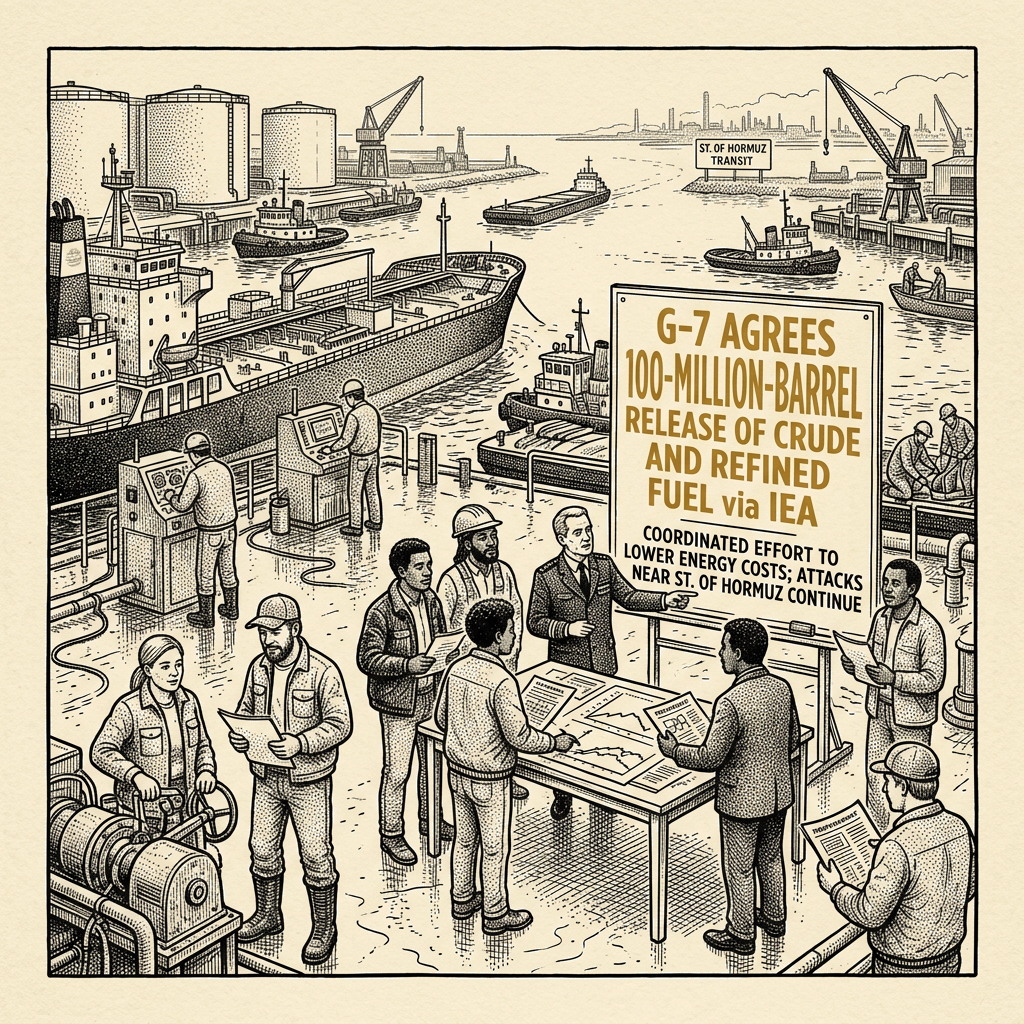
The G-7 countries agreed Friday to implement the coordinated release, which the IEA said will be staggered over four months and includes a substantial diesel release in the first 20 days. Member countries also pledged not to restrict energy exports between one another.
The IEA added that around 325 million barrels of the 400 million barrels pledged under a separate collective action announced in March have so far been released. While Middle East crude exports have recovered significantly, refined-product flows — particularly diesel — remain severely constrained, the agency said.
“A staggered release of European fuel stocks could help ease pressure through the winter, but any effect on prices may be short-lived because global markets remain tight and there is little clarity over when Middle Eastern and Russian supplies will normalize,” Eleanor Budds of S&P Global Energy CERA said.
Separately, seven members of the Organization of the Petroleum Exporting Countries and its allies, including Saudi Arabia and Russia, agreed Sunday to keep production levels steady in November. OPEC’s Joint Ministerial Monitoring Committee also expressed concern over attacks on energy infrastructure and disruptions to international maritime routes, saying they threaten supply availability and increase market volatility.
Shipping risks around the Strait of Hormuz have increased again. U.K. Maritime Trade Operations said Sunday that a tanker in the Strait of Hormuz was struck by an unknown projectile, damaging its engine room. The crew was reported safe and no environmental impact was reported. Seven vessel attacks have been reported around the strait since Sept. 28, The Wall Street Journal reported, threatening the recent recovery in Middle East crude exports. Gulf producers had pushed crude shipments back toward prewar levels using shuttle tankers and alternative export routes, but those gains are now at risk.