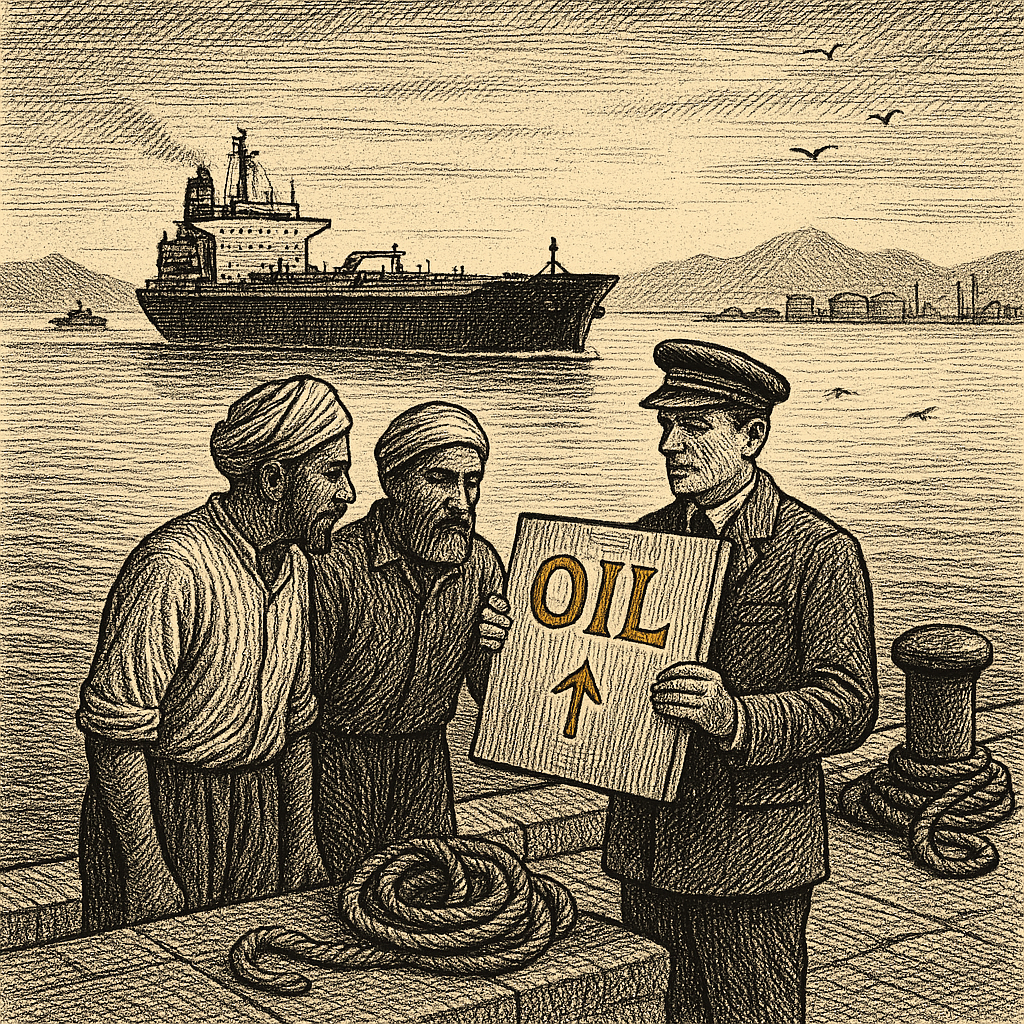
Brent crude edges down 0.2% on reassurances US spared Iranian energy infrastructure
Oil prices edged lower in early trading Friday but remained on track for a weekly gain of around 5%, as a flare-up in fighting between the U.S. and Iran curtailed traffic through the Strait of Hormuz while the Trump administration’s decision to avoid targeting Iranian energy infrastructure tempered supply fears.
Brent crude, the international oil benchmark, fell 0.2% to $76.18 a barrel in early European trading, according to The Wall Street Journal. West Texas Intermediate, the U.S. benchmark, slipped 0.1% to $72.02. In Asian trading hours, front-month WTI futures were 0.3% lower at $71.85 a barrel, ANZ Research analysts said in a research report.
The fresh hostilities began Thursday when Iranian armed forces launched attacks on U.S. military infrastructure in Gulf states following U.S. strikes on Iran’s southern coastal and eastern provinces, further straining a three-week-old ceasefire, as previously reported by multiple wire services.
Analysts at Saxo Bank said the modest pullback from midweek highs reflected market participants’ view that the latest tensions represent a challenge to the ceasefire rather than a complete breakdown. The assessment was reinforced by President Donald Trump’s comments earlier in the week, which had briefly led markets to fear a more dramatic escalation, the analysts said.
“With oil prices softening following the midweek spike, traders appear to view the latest tensions as a challenge to the ceasefire rather than a complete breakdown, as Trump’s comments earlier in the week briefly led markets to fear,” Saxo Bank analysts said.
ANZ Research analysts said the market drew some reassurance from the Trump administration’s decision to target military sites rather than energy infrastructure.
“Despite the U.S. ramping up attacks on military sites in Iran, the market drew some reassurance from the Trump administration’s decision to avoid targeting Iranian energy infrastructure,” ANZ Research analysts said in a note.
The Strait of Hormuz, the key waterway through which regional crude exports transit, remained effectively shut to commercial traffic. Saxo Bank analysts said no large commodity-laden vessels were seen transiting the waterway. MSI previously reported that the strait’s reopening has repeatedly faltered during negotiations, with oil prices swinging sharply on each diplomatic development since the conflict began.
Vandana Hari, founder of oil market analysis provider Vanda Insights, said in comments to news outlets that a substantial risk premium persists as Hormuz transits are at a near-standstill with no clear signs on when normal reopening might resume. However, Hari added, market confidence in the U.S. and Iran returning to diplomacy appears to be capping the upside.