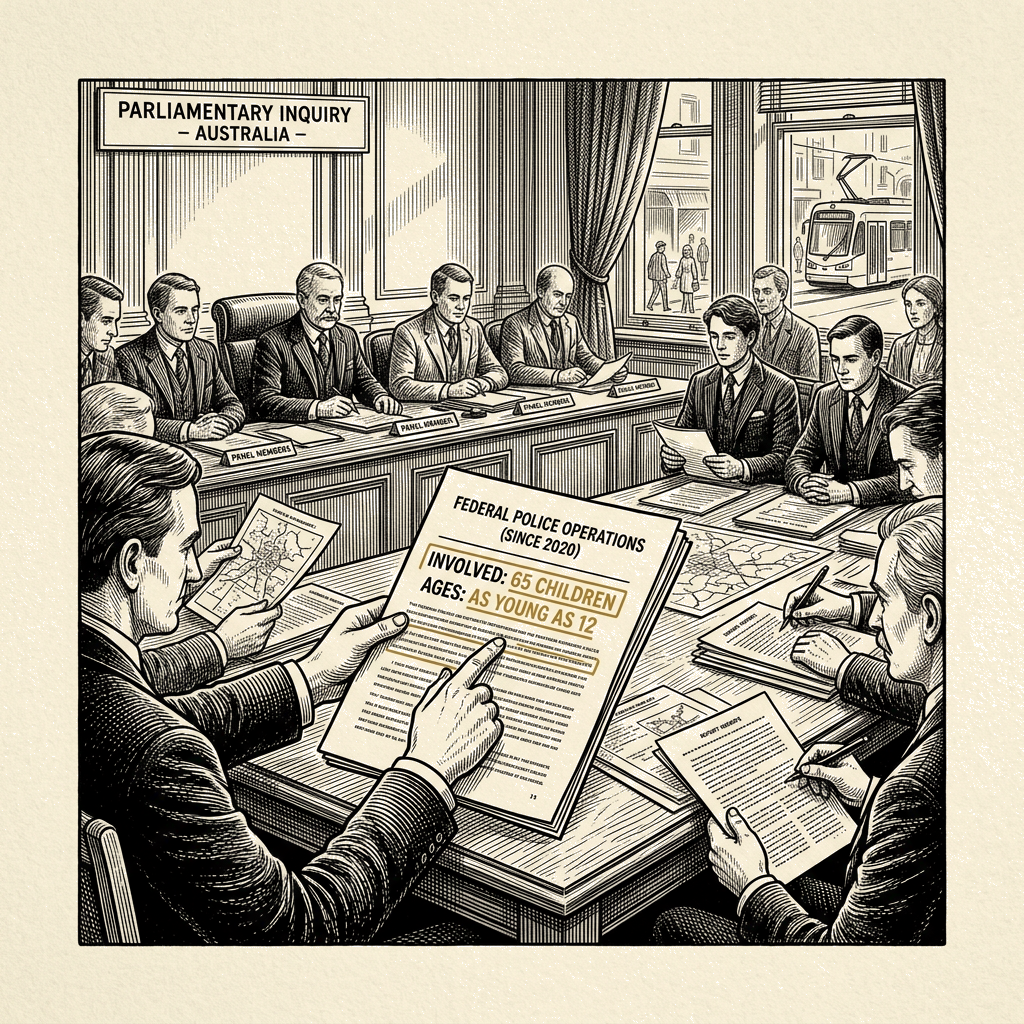
State or Commonwealth authorities charged 35 children with terrorism-related offences
The inquiry heard that, since 2020, 65 children, including some as young as 12, had been subject to federal police operations. State or Commonwealth authorities had charged 35 of the 65 children with terrorism-related offences.
Australian Federal Police acting deputy commissioner Sandra Booth told the committee on Wednesday that artificial intelligence was accelerating the pace and scale of radicalisation among young people. Booth said radicalisation traditionally took years or months but could now happen within days.
Booth attributed the change to artificial intelligence, a growing grievance generation, young people searching for purpose and belonging, and the sophistication of online networks. She said: “The AFP is deeply concerned that AI is accelerating and lowering the skills required to actively manipulate and radicalise victims online, and then cause serious harm.”
Booth warned that, without serious intervention, Australia’s mental health, education and judicial systems could be overwhelmed by people committing serious criminal offences. She said the consequences could also extend to democracy and institutions. “Australia is at the crossroads of a tsunami of youth crime as young, vulnerable and impressionable individuals are being radicalised and manipulated at rapid speed,” Booth said.
The inquiry heard that Australia had experienced an increase in the number of threats made against politicians. In one example of radicalisation, an investigation found that a 13-year-old boy allegedly possessed violent extremist material. The boy was using the social media platform Discord, and during a raid at his home, police alleged they found a notebook containing plans for a school shooting. “This was not in the US,” Booth told the hearing. “This was in Australia.”
ASIO deputy director general for intelligence service delivery Claire McGuinness said the spy agency was encountering more children, including 12-year-olds. “This is in stark contrast to where we were, say, 20 years ago, where we would have seen a caseload predominantly of individuals within their early 20s, so quite a significant shift over the period,” she said.
Parliamentary Joint Committee on Intelligence and Security chair Senator Raff Ciccone said parliament was trying to understand why people were being radicalised in a matter of days and weeks. “I want to extend an invitation to people who have been personally affected by radicalisation,” he said. “We recognise that these experiences can be deeply difficult and that coming forward may not be easy.”
Home Affairs counter-terrorism coordinator Brendan Dowling said the nation was “probably identifying people too late,” after radicalised people had already come to the attention of law enforcement. “We’ve long faced an enduring threat from terrorism and violent extremism in Australia but the nature of that threat is changing,” he said. “It is both more urgent and more challenging than ever before.”
A final report from the Parliamentary Joint Committee on Intelligence and Security will be handed down in March next year.