Yardzen demand for fire-resilient design has more than tripled since 2024
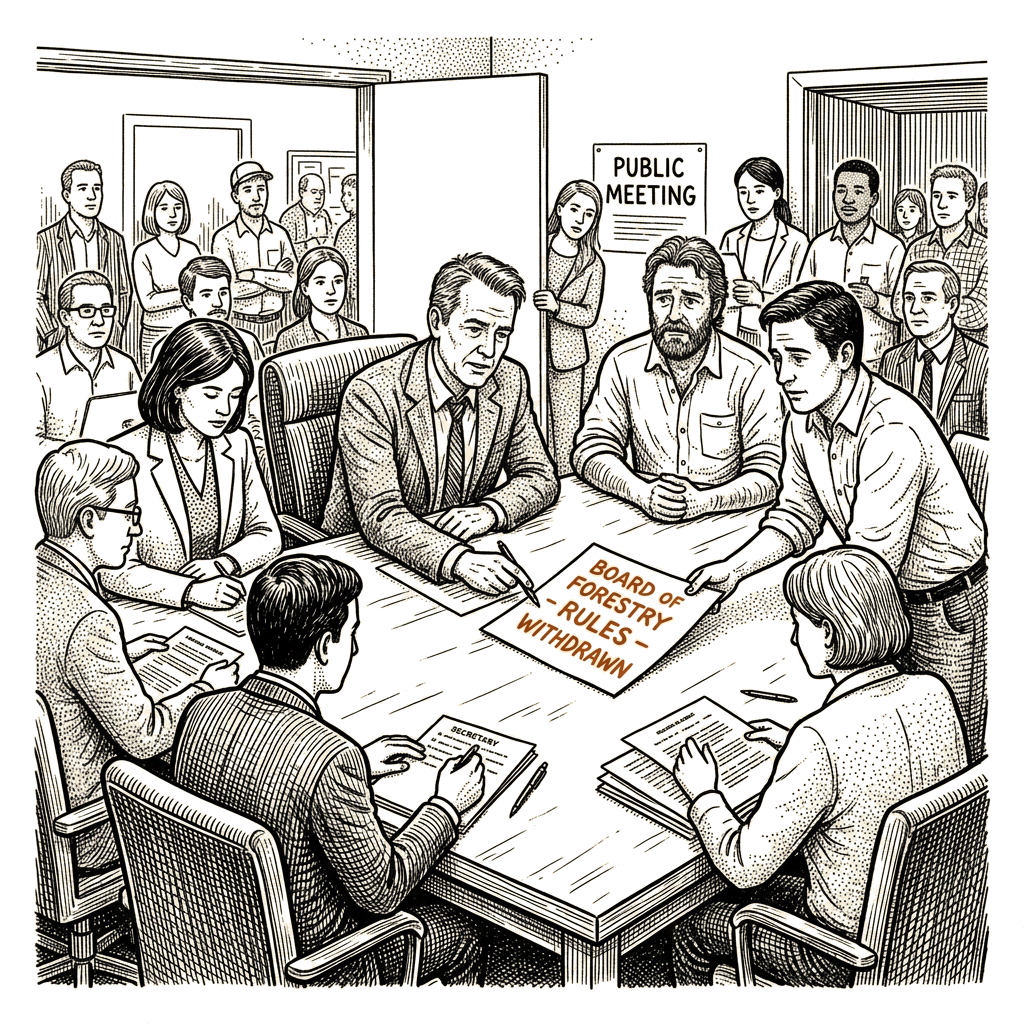
In August, California’s Board of Forestry and Fire Protection approved a statewide Zone 0 mandate for high-risk wildfire areas. The board withdrew the rules package in September to make clarity edits, and a board spokesperson said the board expects to resubmit the package to the Office of Administrative Law in November. If approved, the mandate could reshape landscaping requirements for roughly 2 million structures, The Wall Street Journal reported.
The Wall Street Journal described Zone 0 as the 0-to-5-foot buffer surrounding a structure; fire scientists call it a critical defense against wildfire destruction. Best practices call for keeping the area free of flammable materials, including plants, bark mulch, wooden fences, wooden patio furniture and jute doormats.
A California Department of Forestry and Fire Protection diagram lays out three layers. A noncombustible perimeter uses gravel or hardscaping without plants, wooden decks or wooden outdoor furniture to stop windblown ember ignitions. An inner buffer addresses direct flames and heat, with plants irrigated, grass mowed and tree branches kept 10 feet from chimneys and structures. An outer buffer is intended to slow wildfires by thinning dense trees, clearing dead brush and breaking up continuous vegetation. The drawing is schematic and not to scale.
The report described the Hayes family as representing a broader shift across California, where the 5-foot buffer is rapidly changing from an afterthought into a sought-after home feature. The report linked the landscaping shift in the nation’s most populous state to mounting climate threats, shrinking insurance options and modern fire science.
Julianna and Mark Hayes decided to overhaul the landscaping at their home in Northern California’s Marin County. They were not legally required to clear a 5-foot perimeter surrounding their house, but the couple is spending around $100,000 to replace nearly all of the foundation plants in their lush Japanese garden with rocks, turf and pavers. “In the back of my husband’s mind is, ‘Let’s just get ahead of it,’” she said.
At the national landscape design and build platform Yardzen, demand for fire-resilient design has more than tripled since 2024. Allison Messner, the company’s CEO, founded it after her home survived a 2017 wildfire in Sonoma County. She said, “Nothing can keep a house from burning, but there are decisions that can be made to increase the house’s resilience,” and added, “Zone 0 is one decision.”
Zone 0 began gaining statewide momentum after the 2017–2018 fire season. Some local fire codes, home insurers and communities have already adopted various best practices associated with Zone 0 and broader defensible space, which spans up to 100 feet from a structure across distinct zones. Community pushback to Zone 0 mandates has surfaced, but Todd Lando, a battalion chief and wildfire hazard mitigation specialist with Central Marin Fire, said it comes mostly from a vocal minority. “I think the vast majority of residents understand this is the world we’re living in,” he said.
In 2018, Lando helped establish a 5-foot buffer requirement for new construction and major home remodels in Marin County. The local mandate stemmed from research by the Insurance Institute for Business & Home Safety showing that wind-driven embers, rather than direct flame contact, cause 60% to 90% of structural ignitions. Lando, who also serves as president of wildfire resilience nonprofit Fire Safe Marin, said, “What 135,000 destroyed structures across the West have taught us over 30 years is that most ignitions happen when tiny embers land right against the house.”
That science drove Debra and Paul Smith to act. After losing their Solano County home to wildfire in 2020, the couple rebuilt with a steel fence, an aluminum patio pergola and a roughly 10-foot concrete and rock buffer around their new house. The Smiths described fire prevention as a mindset they live out every day. Paul Smith said, “We think about what we can do to prevent any possibility of a recurrence,” and added, “And that goes for how we built our house.”
For other homeowners, The Wall Street Journal identified staying insured as a primary driver of landscaping changes. Ryan Elam, a retired software developer, is moving between two San Diego County properties, both located in Very High Fire Hazard Severity Zones according to the state’s Fire Hazard Severity Zone map. His Mediterranean-inspired home in San Diego County has a front yard with a ring of drought-tolerant bushes bedded in roughly $6,000 worth of fresh mulch, and the yard is being reassessed for its fire implications.
Elam said his longtime insurer has refused to cover his new home due to high wildfire risk, forcing him to shop for coverage that he expects will require clearing landscaping, including two birch trees framing the front entrance. For his current home, Elam plans to make whatever modifications the eventual buyer’s insurer demands and is already letting plants near the exterior die off for easier removal. Elam said the mulch will certainly have to go, too.
Home insurers and government fire agencies operate independently, but their Zone 0 guidelines align closely because both draw on the same scientific research, Janet Ruiz of the Insurance Information Institute said. She said a statewide Zone 0 mandate would give home insurers a more consistent way to assess the safety of homes in high-risk areas.
The price of Zone 0 compliance depends entirely on how a homeowner chooses to tackle it. Simple shrub clearing and mulch raking can cost next to nothing, while an average full landscape redesign at Yardzen runs around $50,000. Lando said a fire-safe perimeter does not require changing the entire landscape: “It changes what sits directly against the house, not the whole landscape.”
Designers are bridging the gap with noncombustible materials such as composite decking, concrete, porcelain pavers and river rock within the 5-foot zone. Scott Lawn, founder of Greenway Landscape Design & Build in Southern California, is using metal plants. He recently won three beautification awards for a Rancho Santa Fe home where he replaced foundation plants with boulders, gravel, cement pots and flameproof steel plant sculptures with internal lighting. Lawn said the homeowner relandscaped specifically to comply with Zone Zero guidelines that are enforced locally by the Rancho Santa Fe Fire Protection District and approximate the state’s framework.
Joe Raboine, vice president of design at Belgard, a manufacturer of pavers, retaining walls and outdoor living products, expects innovation across the industry, including manufacturers exploring movable landscape elements such as planters, which could be relocated quickly during periods of elevated wildfire risk. Elam sees a permanent shift ahead in California landscaping. He said, “Real lawns won’t exist,” and explained, “Why have a lawn if the only thing I’m irrigating is a tiny patch of grass? Then I just won’t have grass.”
MSI’s April 21 report on controlled home-fire tests described the five-foot buffer as a practical defense against embers; California’s August approval, September withdrawal for clarity edits and expected November resubmission could turn that guidance into a statewide requirement for high-risk areas if approved.