UK September retail sales fall 0.4%, above expected decline
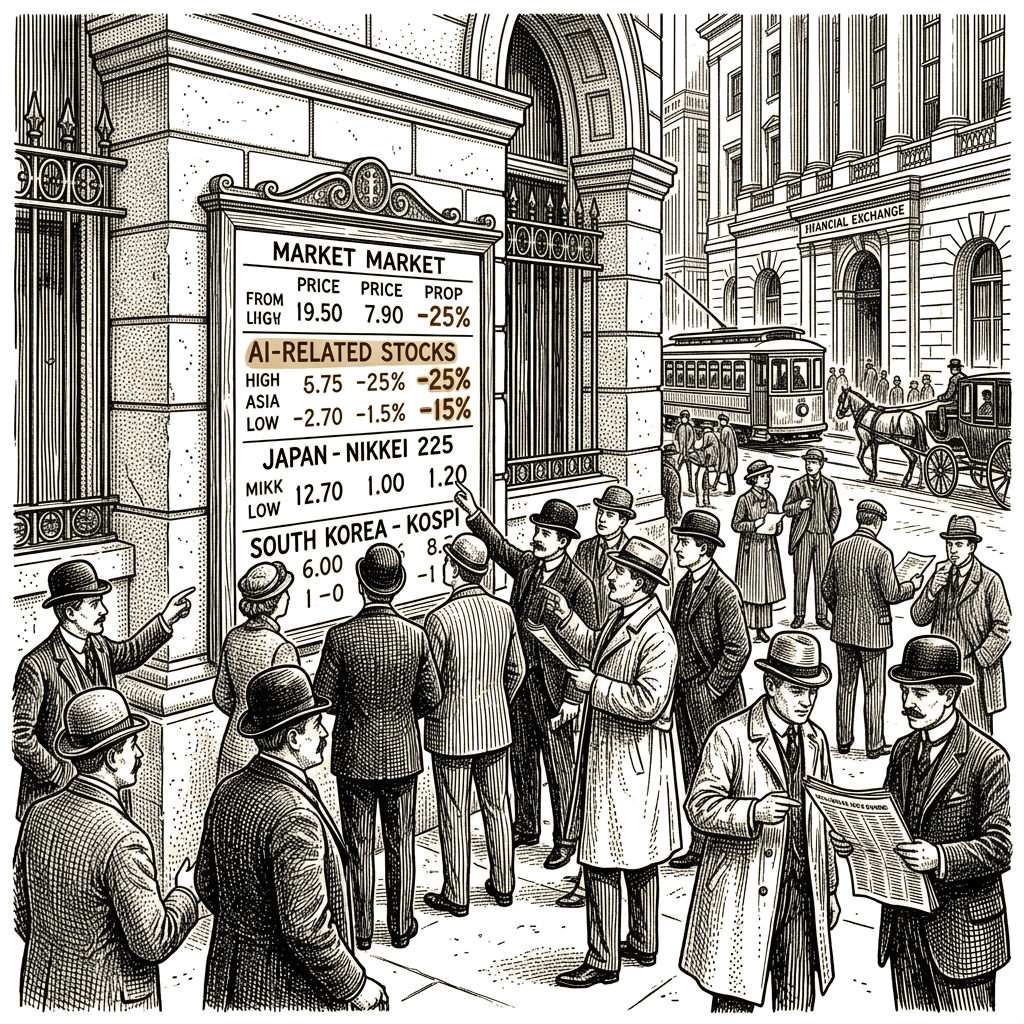
A fresh wave of selling hit AI-related stocks worldwide overnight on Oct. 23 as investors grew more anxious about the sustainability of AI-fueled returns. Japan and South Korea, buoyed by their exposure to the AI investment boom, fell before recovering some ground to trade broadly flat on the day.
In the preceding U.S. session, the blue-chip S&P 500 fell 1.2% in its worst performance since July, the tech-heavy Nasdaq dropped 2.6% in its biggest decline since June, and the Philadelphia Semiconductor Index fell about 6.7%, its worst day since June and lowest level since July.
Jim Reid of Deutsche Bank said: “As storm Austen hits these shores this morning, clouds kept darkening for markets yesterday, as the wobbles of recent weeks all collided at once.” Reid said mounting stress around France was one factor, noting that the Franco-German 10-year spread widened by 14.8 basis points, its largest daily widening since the initial pandemic turmoil in March 2020.
Reid said continued AI fears were gathering pace and that the Philadelphia index’s fall to its lowest level since July had dragged down equities more broadly. He linked the latest geopolitical fears to rising oil prices. Brent crude rose 4.00% to $113.17 per barrel, reaching a five-month high.
Reid said the concerns collectively drove a broad risk-off move and noted a strong move toward US Treasuries, widely considered the best-quality government debt in the market and a safe-haven asset. He said: “In the midst of all these market pressures, an interesting theme was the flight to US Treasuries, which returned to its traditional risk-off role in periods of turmoil. In fact, the 10yr yield fell -16.6bps to 4.95%.” The yield’s decline was its largest one-day drop since August 2024.
Strong US data offered a counterpoint. Weekly initial jobless claims fell to a three-month low of 194,000 in the week ending Oct. 17, below the 200,000 expected. The smoother four-week moving average reached its lowest level since September 2022, when the unemployment rate was 3.5%. Reid said the data demonstrated that financial stress was weighing on market sentiment rather than the fundamentals.
Ipek Ozkardeskaya, an analyst at Swissquote, said the falling value of some of the world’s biggest tech and AI stocks suggested the sector’s bubble was bursting. Ozkardeskaya said: “Given the more than 50% retreat in memory chipmakers’ share prices from their peaks, we could now argue that their exponential rise was a bubble, and that the bubble has burst.” Ozkardeskaya added that the memory-chip companies continued to benefit from strong AI-related demand and traded at very low forward earnings multiples, with Samsung and SK Hynix at around three to four times, but buyers were nowhere to be found.
Investors were watching closely next week because Microsoft, Google, Amazon and Sandisk were due to report their latest results.
Elsewhere that morning, Great Britain’s retail sales fell 0.4% in September, compared with expectations of a 0.1% drop. Official figures released on Friday showed that an unseasonably warm start to autumn weighed on online clothing vendors, while supermarkets also recorded lower sales volumes.
Thomas Pugh, chief economist at RSM UK, said: “The drop in retail sales in September and sharp fall in consumer confidence in October raises the risk that the economy’s recent run of resilience might be coming to an end.” Pugh said at least part of the September decline could be attributed to warm weather dampening demand for winter clothing, an effect that might reverse in October. Retailers also reported lower footfall and customers cutting back, suggesting cost-of-living pressures might be starting to bite, Pugh said. He said the October consumer-confidence slump suggested higher inflation and borrowing costs were now having a bigger impact on confidence and spending, with nervousness ahead of what seemed likely to be another tax-raising budget possibly also playing a role.
The live-blog calendar listed 7 a.m. BST British retail sales; 9 a.m. BST the Eurozone flash PMI; 9:30 a.m. BST the UK flash PMI and construction statistics for Great Britain 2025; 11:30 a.m. BST Russia’s interest-rate decision; and 3 p.m. BST the U.S. flash PMI and University of Michigan’s U.S. consumer-confidence index.
Previous coverage documented Asian shares tumbling as the global bond sell-off deepened on Sept. 2 and AI stocks extending their decline in South Korea on Aug. 19. The Oct. 23 overnight session brought renewed AI-stock selling before Japan and South Korea recovered to trade broadly flat; the Philadelphia Semiconductor Index’s 6.7% drop occurred in the preceding U.S. session.