Working group weighs expanded sexual-relationship ban, one-call line and longer filing window
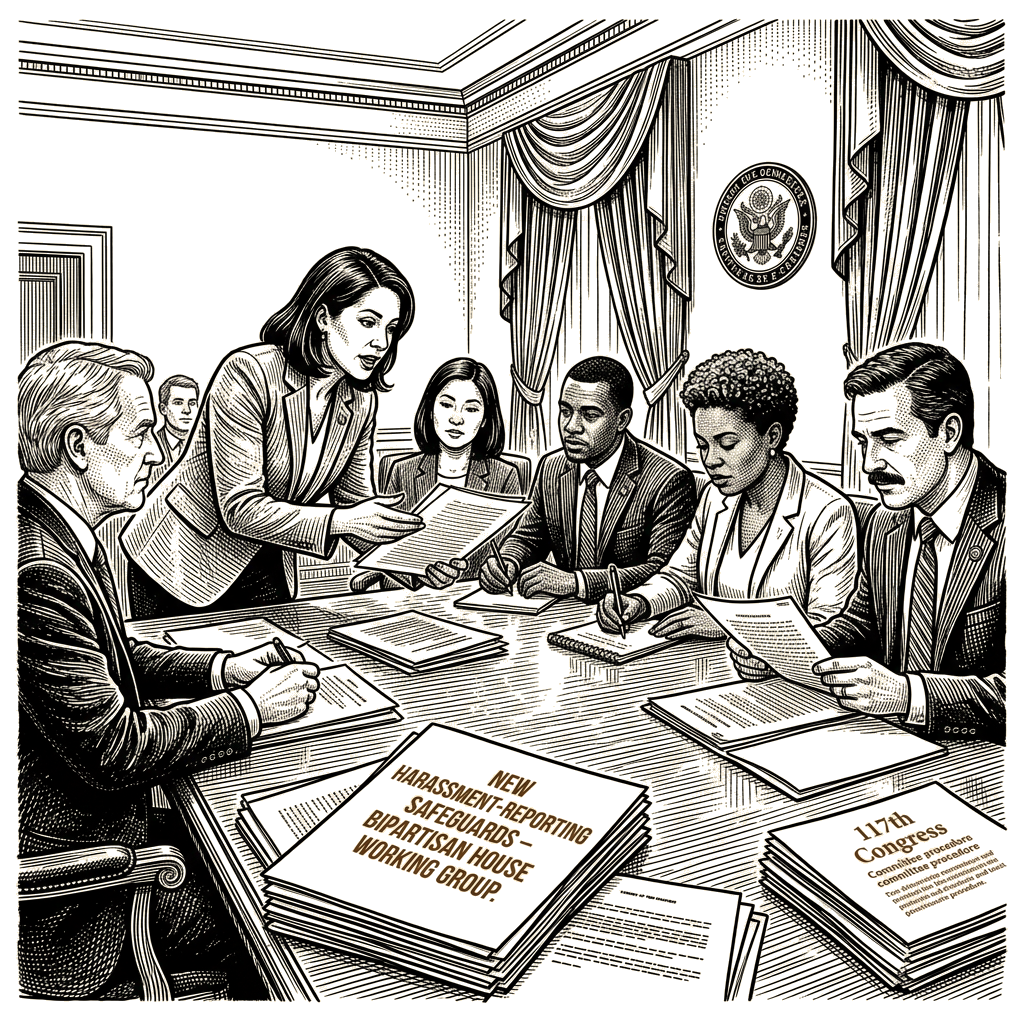
A bipartisan House working group led by Rep. Kat Cammack, R-Fla., and Rep. Teresa Leger Fernandez, D-N.M., is reviewing Congress’s handling of sexual misconduct after this year’s spike in House Ethics Committee investigations related to sexual misconduct. Possible areas of change include House rules governing lawmakers’ sexual relationships with members of their own staff or their committees’ staff, a simpler route for reporting harassment and more time to file claims. The task force is expected to release recommended changes after the Nov. 3 elections and has a goal of taking action before the end of the year.
Cammack said the group’s findings were disturbing. She said victims were unclear about where they could go for help and did not trust there would be repercussions for the perpetrator. Current requirements for reporting harassment can also work against victims, she said, including a 180-day “shot clock” for filing a claim after an alleged violation. “It’s a disaster,” Cammack said. “The entire system on Capitol Hill is really designed to create a chilling effect for victims.”
Cammack began working on the task force this spring to combat sexual misconduct on Capitol Hill. The Florida Republican soon heard from former staffers who wanted to share their stories. Cammack said the accounts “came out of the woodwork.” She said the former employees had stayed silent because it was well established that coming forward would be the end of a career they had worked hard to achieve. “Those were some of the hardest conversations to have,” Cammack said. “And the stories were gut-wrenching.”
The working group took shape as cases began to surface before the House Ethics Committee. Cammack said she and her colleagues began discussing what they could do to “clean up the House.” She approached Speaker Mike Johnson, R-La., about getting the effort on board. Johnson’s response, she said, was: “Well, good timing, because I was going to come to you and ask you to take this effort up.” Leger Fernandez was also talking with Democratic leadership about reforms when Cammack contacted her about working together.
Leger Fernandez said the Democratic Women’s Caucus and the Republican Women’s Caucus both called for structural changes. “What was neat is on both sides of the aisle, the Democratic Women’s Caucus and the Republican Women’s Caucus were both saying there needs to be structural changes. We need to work together,” Leger Fernandez said.
The group started with listening sessions involving lawmakers and staff. It also sought advice on best practices from people in the military, corporate America and victims advocacy groups. Cammack and Leger Fernandez held a packed-room meeting with staff in July.
Congressional leaders created the working group after this year’s spike in House Ethics Committee investigations related to sexual misconduct. Congress generally struggled in 2026 to do more than keep the federal government running, while the House Ethics Committee handled a series of ethics cases. Three lawmakers resigned this year rather than face the prospect of an expulsion vote. Two of those resignations involved alleged sexual misconduct. Separately, another member was censured for his interactions with two female aides on his staff, and other investigations remain ongoing.
At the time those ethics cases emerged, Congress was confronting public outrage over the government’s handling of the Jeffrey Epstein case, according to the Associated Press. In the preceding months, members of the Democratic Women’s Caucus had multiple meetings with survivors who were pressing for the release of Epstein-related files at the Department of Justice.
In April, the House Ethics Committee began investigating whether then-Rep. Eric Swalwell, D-Calif., engaged in sexual misconduct toward an employee working under his supervision. Swalwell soon resigned as colleagues called for his expulsion. Rep. Tony Gonzales, R-Texas, also resigned as the committee investigated whether he had engaged in sexual misconduct toward an employee in his office. Gonzales had acknowledged an affair with a staff member who later died by suicide.
The committee then recommended the censure of Rep. Chuck Edwards, R-N.C., following an investigation that concluded he engaged in persistent unprofessional and inappropriate conduct toward two young female staffers in his office. The House followed the recommendation with a 413-2 vote.
Rep. Jimmy Gomez, D-Calif., is also the subject of a committee investigation into whether he may have engaged in sexual misconduct with a House staffer. Gomez said he would cooperate with the investigation but maintained that his actions were consensual and did not violate the law or House Ethics rules. He also apologized to his family and constituents. The committee is separately investigating whether Rep. Cory Mills, R-Fla., engaged in sexual misconduct or dating violence, among other allegations. Mills has denied the allegations and recently lost a Republican primary.
Congress has addressed sexual harassment before. Legislation passed in 2018, among other things, required lawmakers to reimburse the Treasury Department for awards and settlements related to sexual harassment cases. It also required staff to have access to a dedicated advocate who could guide them through the process of filing a claim with the Office of Congressional Workplace Rights.
Some recommendations from the task force are expected to involve changing House rules. Lawmakers are already banned from having sexual relationships with members of their own staff or their committees’ staff, and the group wants to expand that prohibition to all congressional staff. “If you are looking to advance your love life on Capitol Hill, you’re there for the wrong reason, in my opinion,” said Cammack, who served as a congressional aide for several years before winning election to the House.
The working group is also seeking to streamline the reporting system for staff who want to report harassment. Many staff members do not know where to go with a complaint. “I call it a 911 for sexual harassment line that you can make one call and find out what all the alternative options might be for somebody,” Leger Fernandez said.
Another change under consideration could give alleged victims more time to file a complaint. The Equal Employment Opportunity Commission, which enforces antidiscrimination laws, also enforces a 180-day window for filing a complaint, but that can be extended to 300 days in cases covered by state or local anti-discrimination law. Lengthening the period would require an update to the Congressional Accountability Act, which requires Congress to follow many of the same employment laws that apply in the private sector. Updating current law would also require Senate support, complicating its prospects.
The working group is also looking to increase accountability for lawmakers and senior members of their staff who engage in harassment. “The fact that we’re still trying to insist that it is not OK to sexually abuse or harass women in 2026 is outrageous, and if you’re a woman, is so incredibly frustrating and sad,” Leger Fernandez said.