Naval buildup expands Trump’s options for renewed operations against Iran
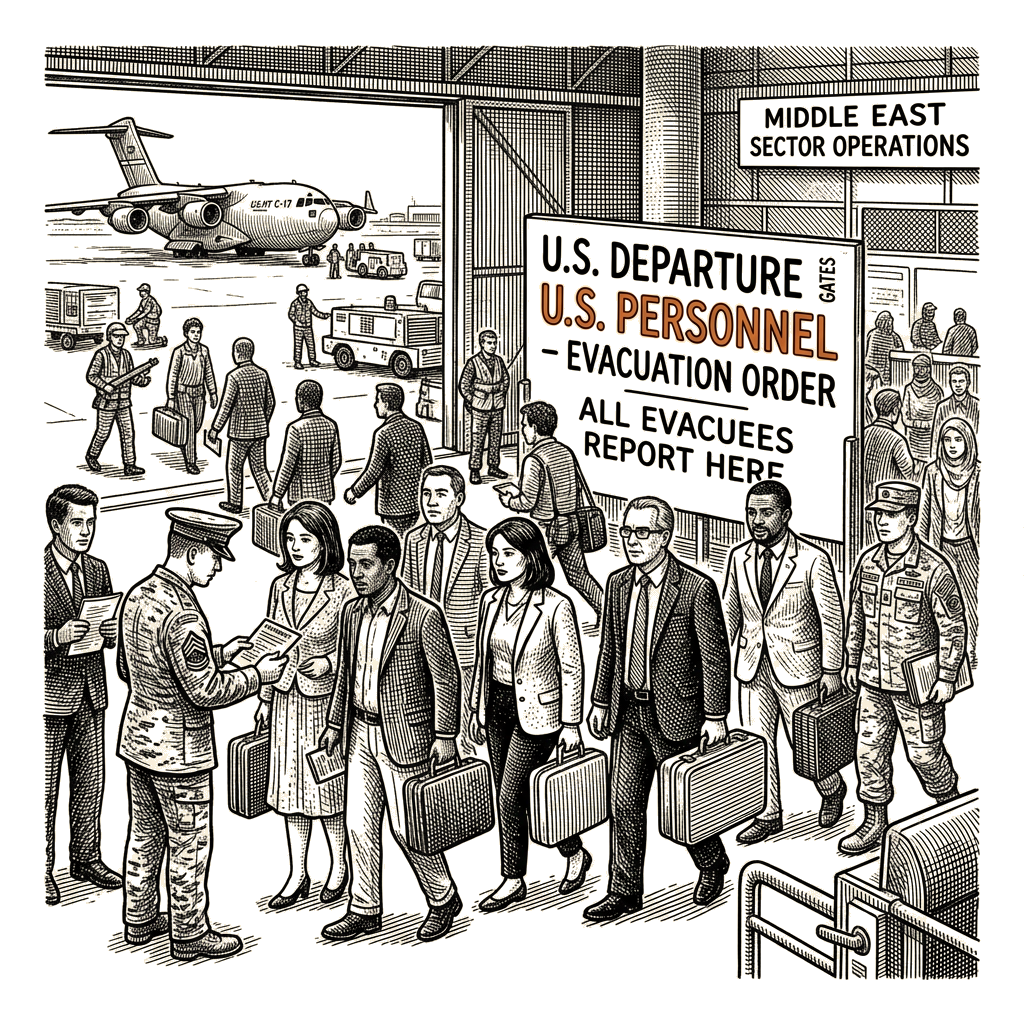
The United States ordered diplomats and staff to leave the embassy in Saudi Arabia and other diplomatic missions and evacuated personnel from military bases across the Middle East, U.S. officials said. An intelligence assessment suggested that suspected Iranian efforts to target Americans had reached advanced stages, and officials described the base evacuations as preparation for renewed fighting.
A Friday memo from Jay Clayton, the director of national intelligence, to Secretary of State Marco Rubio described the assessment. Clayton wrote: “Iran has substantially increased efforts to target U.S. personnel. The lethal plotting efforts by the Iranians against U.S. citizens have reached advanced stages in both the Middle East and certain other countries.” U.S. officials confirmed the memo and intelligence, which Axios had reported earlier.
The evacuation orders initially cited threats from the Iran-backed Houthi militants in Yemen. A U.S. official said Friday that suspected Iranian terror plots targeting U.S. personnel informed the decision to order embassy staff from their posts. The United States also evacuated bomber aircraft from a base in the U.K. this month because of intelligence about an Iranian plot to attack aircraft and personnel, The Wall Street Journal previously reported.
The State Department updated travel advisories for 13 Middle Eastern countries on Friday over concerns about Iran and the Houthis.
White House officials had previously said there would be no renewed operations against Iran before the Nov. 3 elections. But the administration was now preparing to resume strikes following the midterms, U.S. officials said. At a rally in Florida on Friday, Trump said, “We may do another little ‘Epic Fury,’” using the name for the U.S. military campaign against Iran.
U.S. officials said Trump had been briefed on a series of options prepared by the Pentagon. According to some officials, the plans ranged from striking nuclear facilities and infrastructure, such as bridges, to assaults on islands controlled by Iran. U.S. officials said Trump was leaning toward a return to major combat operations, though no final decisions had been made. Critics said another round of missile attacks would not compel Tehran to surrender its nuclear program but would raise global energy prices.
Tehran had long promised retaliation if the United States resumed attacks. Iranian Foreign Minister Abbas Araghchi posted on social media in recent days: “Last time you wanted to ‘finish the job’, Iran emerged even stronger. Want to try your luck again? Be our guest. But be careful; we have unfinished jobs too.”
Before the war began in February, Trump administration officials warned about the potential for Iran to strike American targets first, adding that the risk necessitated U.S. pre-emptive attacks on Iran alongside Israel.
Trump had previously threatened a significant escalation before pulling back in favor of negotiations. His administration tightened sanctions and continued the blockade of Iranian trade in the Strait of Hormuz.
The Navy had two aircraft carrier strike groups in the Middle East, with a third on the way from the Pacific, and it was unclear how long all three would remain. The United States was also bringing another amphibious assault ship loaded with Marines, expanding Trump’s options to seize territory. Once the additional carrier strike group and Marine expeditionary unit arrived, more than two dozen Navy ships would operate in the region, a Navy official said.
The Wall Street Journal recently observed a large shipment of standoff land attack missiles and bunker buster bombs arrive on the aircraft carrier USS George Washington in the Arabian Sea, a sign that the ship’s air wing was preparing for a much larger bombing campaign. Capt. Nicholas DeLeo, the ship’s commanding officer, said, “We are always prepared,” and added, “We’re always paying attention, focused on our surroundings and ready to react reflexively or proactively.”
The Pentagon said the military’s job was to develop and present options to the president. The evacuations, travel warnings and carrier buildup were unfolding at the same time, while officials said Trump had not decided whether or when to resume major combat operations.