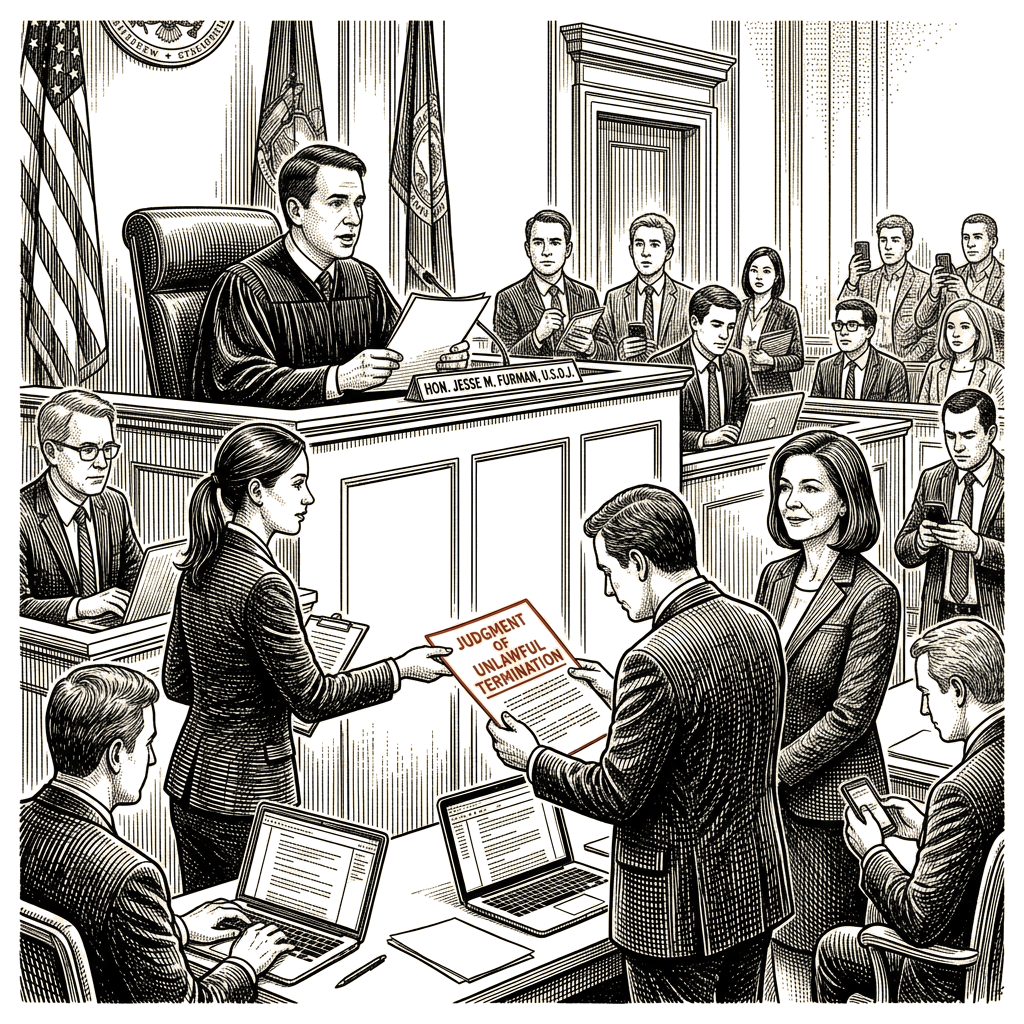
Furman cites nearly two centuries of Supreme Court precedent
Maurene Comey served as an assistant U.S. attorney for a decade and worked on some of the nation’s highest-profile cases. Furman said she consistently received “the highest accolades from supervisors and peers alike.”
After her July 2025 firing, Comey sued the Justice Department and others, alleging that her termination violated the constitutional separation of powers, the First Amendment and the Due Process Clause of the Fifth Amendment.
Comey asserted that she was fired because she was the daughter of former FBI Director James Comey, a longtime foe of President Donald Trump, or because of her perceived political affiliation and beliefs, the judge noted.
Legal analysis of removal authority and congressional regulation
Furman rejected the government’s claim that Comey could be fired because federal prosecutors exercise the president’s “conclusive and preclusive” powers. “The Court concludes the Defendants are wrong,” he wrote.
He also rejected the government’s broader position that Congress is barred from regulating the removal of federal prosecutors. Furman said that claim “flies in the face of nearly two centuries of Supreme Court precedent.”
The judge placed the ruling within the equilibrium of the nation’s constitutional system, writing: “Indeed, to accept Defendants’ argument would be to unsettle the very equilibrium established by this Nation’s constitutional system.”
The Justice Department did not immediately respond to an email seeking comment.