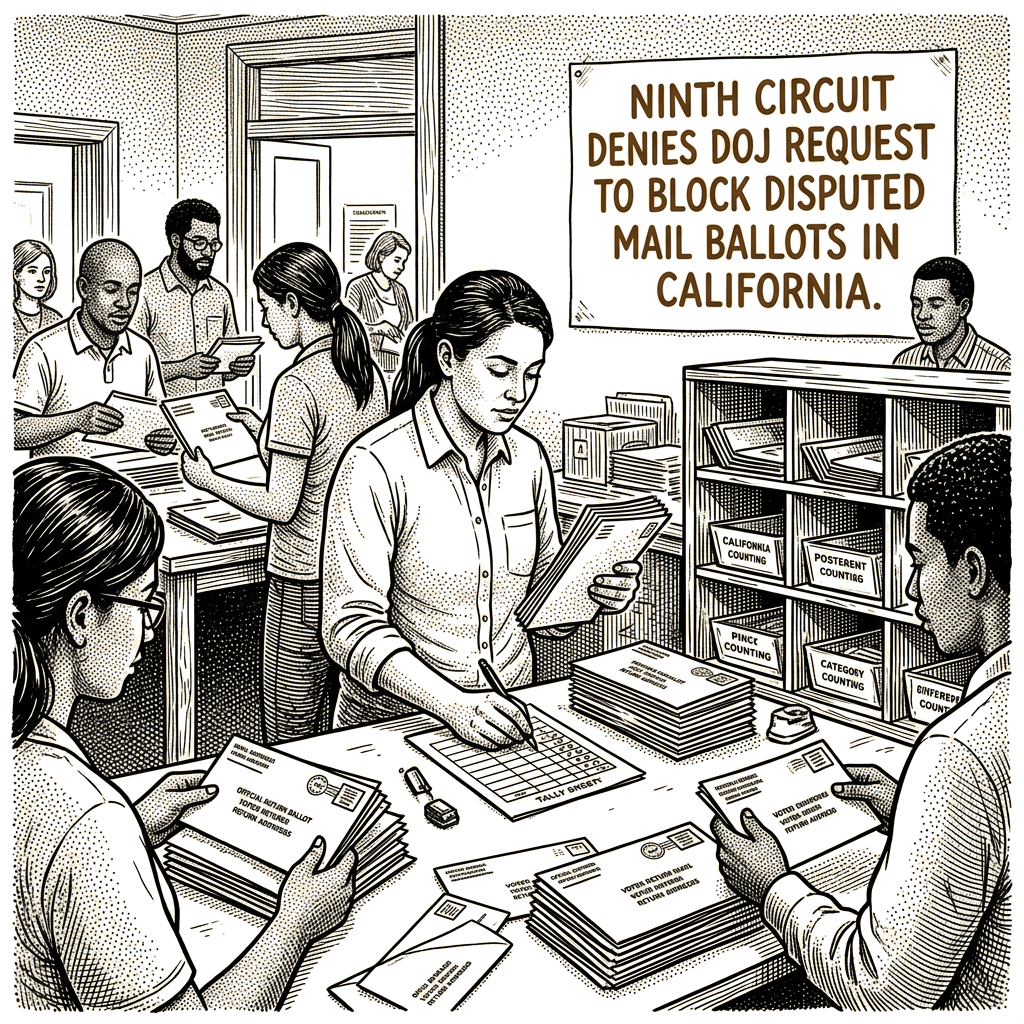
The federal list included more than 20,000 registered voters
The Ninth US Circuit Court of Appeals on Monday denied the Trump administration’s request to block California from counting mail-in ballots associated with more than 20,000 registered voters whom the federal government alleges are likely noncitizens. The San Francisco-based court’s ruling came ahead of the November 3 midterms.
The ruling allows California to continue counting the disputed mail ballots, but it does not settle the broader fight over federal oversight of elections. Federal allegations about people on the list remain the basis of the administration’s position.
The Justice Department’s request focused on a federal list of more than 20,000 registered voters whom the government alleged were likely noncitizens. The department asked the court to stop California from counting mail-in ballots from people on that list.
On Friday, before the ruling, at least 18 counties across California received letters demanding that local election officials set aside and verify ballots that the administration claimed belonged to noncitizen voters. The demands called for both set-aside and verification of the ballots.
The Justice Department’s lawsuit, filed earlier this month, sought to block California from counting the disputed mail ballots. The Guardian described the filing as “the latest escalation in the Trump administration’s battle with California.”
The lawsuit also formed part of Trump’s broader effort to assert a greater federal role in overseeing elections. The appeals court ruling marked the latest setback in that effort, denying the department’s request to stop California from counting the disputed mail ballots associated with people on the federal list.
The November 3 midterms were approaching, and Trump’s fellow Republicans were fighting to retain control of Congress. The court’s decision came against that backdrop as the administration sought a greater federal role in elections.
Its immediate result is that California can proceed with counting the disputed mail ballots, while federal officials still allege that the people on the list are likely noncitizens. The broader dispute over federal election oversight remains open.