Newport Beach declares local emergency and distributes free sandbags
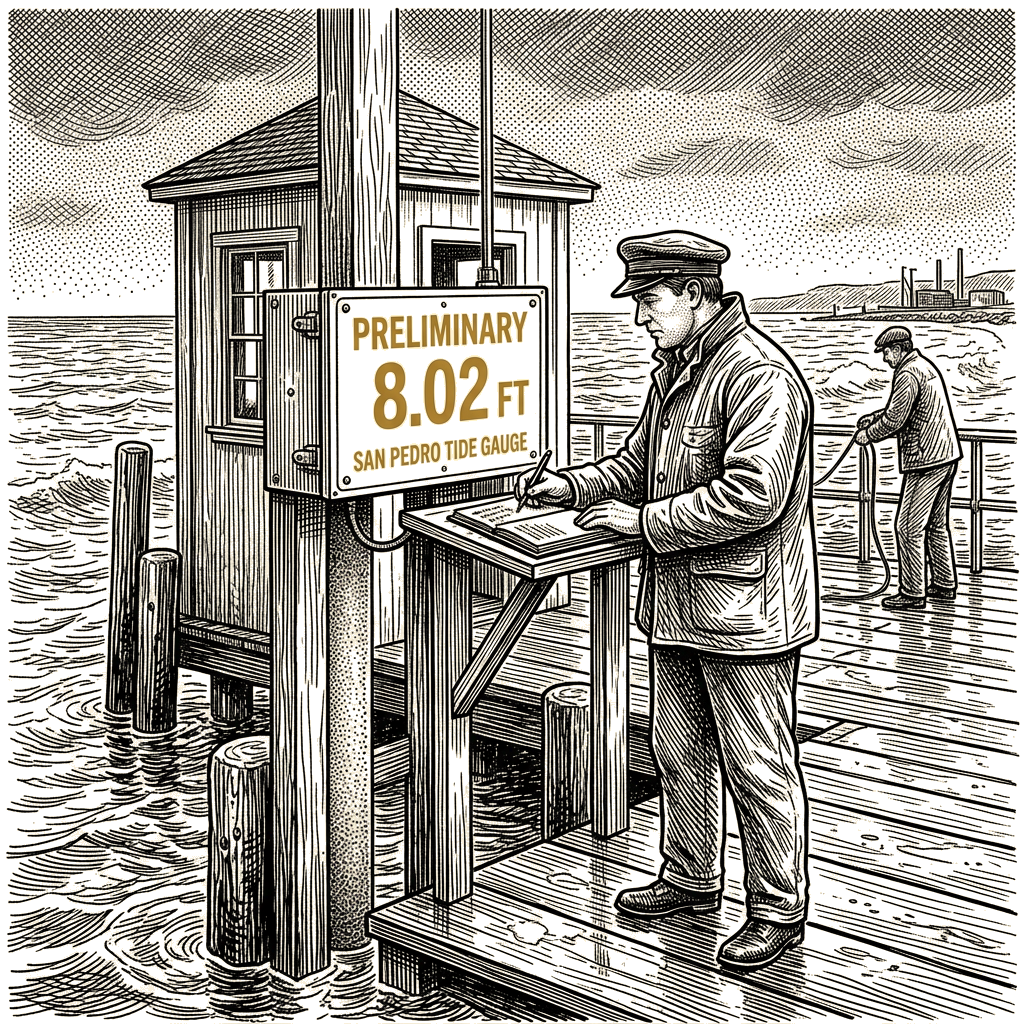
By Monday morning, the National Weather Service’s Los Angeles office reported that it was already seeing record tides. Preliminary observations from the agency’s San Pedro tide gauge were at 8.02 feet, the highest seen in data dating back to November 1923.
The week’s tides were forecast as potentially “record-breaking,” and Southern California coastal communities were preparing for days of flooding. The forecast remained distinct from the preliminary observation already recorded at the San Pedro gauge.
The National Weather Service warned that significant coastal flooding was expected in San Diego and Orange counties through Thursday. The flooding could close roads and inundate homes, businesses and critical infrastructure.
Farther north, a wide swath of the coast from San Luis Obispo County to Los Angeles County could see “minor to moderate” coastal flooding, with tides as high as 8 feet. A photograph included with the report showed waves crashing into a seawall in Long Beach on 22 October. The image was credited to Justin Sullivan/Getty Images.
The National Weather Service office in San Diego advised residents to avoid beaches during high tides and keep farther back from the ocean than usual because waves would run much farther up the beach than expected. The office also said to stay off rock walls and jetties and make sure flood-prone property was protected this week.
More than a week before the exceptionally high tides were forecast to arrive, the Orange County city of Newport Beach declared a local emergency to prepare for flooding. The city said staff were deploying across the area to inspect infrastructure, reinforce beach berms and install sandbags and other equipment. Newport Beach was providing free sandbags and advised residents to inspect vulnerable areas around their properties.
Newport Beach city manager Seimone Jurjis said in a statement that regional ocean water levels had already been about 15 to 22 inches higher than expected because of El Niño and the Kelvin wave.
Jurjis said: “A foot and a half may not sound like much, but in a coastal community like ours, it can mean the difference between water staying below a seawall and water spilling into streets, garages and homes, especially during some of the highest tides of the year.”
With a historic El Niño unfolding in the Pacific, California was expected to face severe storms this winter. Jurjis said elevated water could spill past seawalls into streets, garages and homes during some of the highest tides of the year.
October had already brought other extreme conditions to Southern California, including flooding that overtook city streets and large waves that struck beachside homes. The remnants of Tropical Storm Rachel left a trail of destruction in California, significantly damaging homes, destroying a boardwalk and forcing residents to evacuate.