Nigerian minister says clinical improvement does not rule out infectiousness
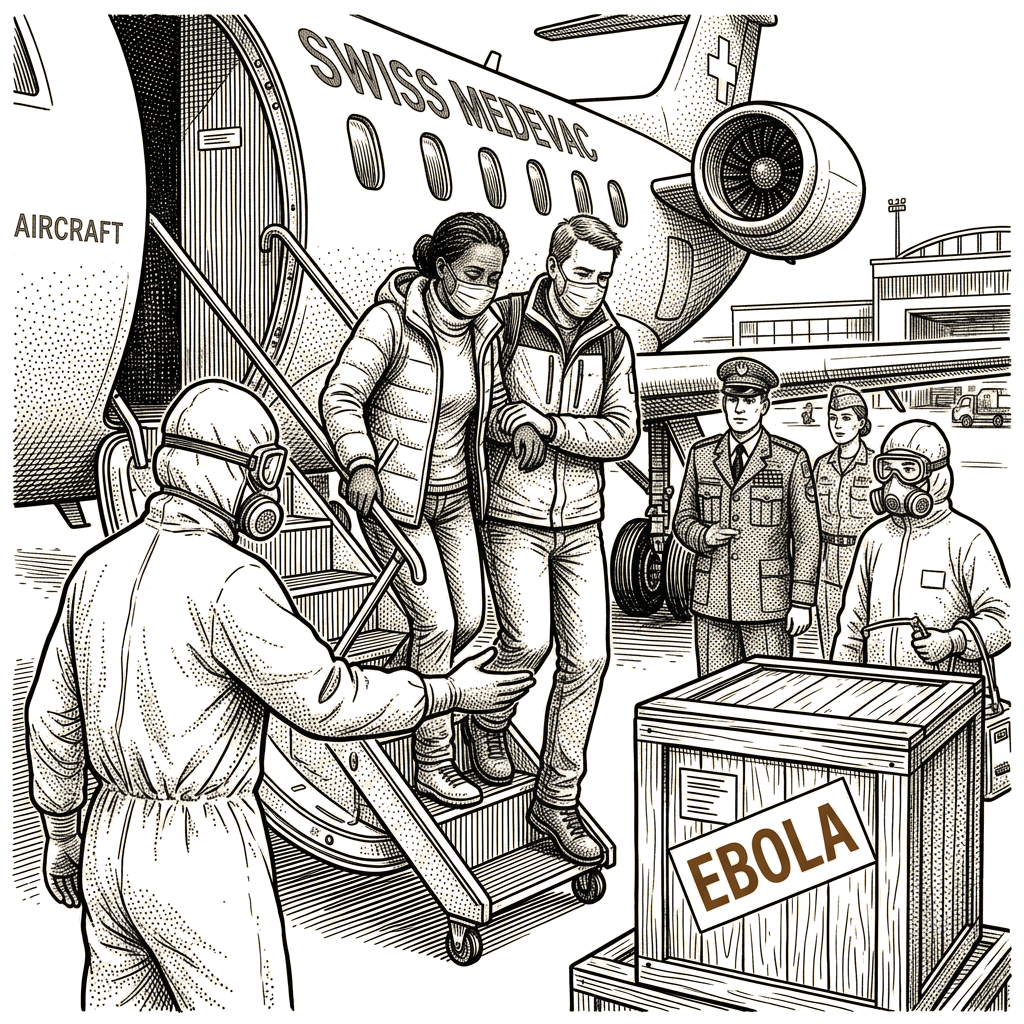
A Swiss national infected with Ebola and her husband, also a Swiss national, arrived in Switzerland on Monday after medical evacuation from Nigeria, according to Swiss health officials. The woman is being treated at Geneva University Hospital, while her husband is in isolation at Zurich University Hospital.
Switzerland’s Federal Office of Public Health said the two hospitals were equipped to manage cases while protecting staff and other patients. In its statement, the office said, “This situation does not pose any risk to the population in Switzerland.”
The Swiss announcement came hours after Nigeria’s Minister of Health and Social Welfare Muhammad Ali Pate announced the couple’s departure. “I confirm that, with my approval, earlier this morning, the index case for Nigeria’s first imported Ebola virus disease departed Abuja for Switzerland,” Pate said.
Pate said Monday that the woman was “clinically much improved, stable, conscious, communicating” and that her clinical laboratory test results were approaching baseline. “This does not mean she is not still infectious, hence the strict protocols in place,” he said.
The woman was Nigeria’s first Ebola case since 2014. Health officials said she arrived in Nigeria from Uganda aboard an international flight, developed symptoms on Oct. 7 and was admitted to a private hospital in Abuja on Oct. 11.
Mohamed Janabi, the African regional director for the World Health Organization, said the couple were evacuated because both were Swiss citizens and the woman’s condition was clinically stable. “The Nigerian medical team successfully managed her through the acute phase of the illness and stabilized her condition,” he said.
Janabi also said, “With the evacuation of the patient and her husband, Nigeria currently has no Ebola cases.” Nigerian health officials said they would continue monitoring the 52 close contacts remaining in Nigeria, while Swiss authorities would monitor the husband, the 53rd identified contact.
Janabi congratulated those involved in the woman’s treatment and evacuation. He said, “This is a remarkable achievement and a testament to what Africa can accomplish when we work together.” He added, “This is a proud moment demonstrating African expertise, resilience and leadership in public health.”
An Oct. 26 update from Africa CDC said the patient was stable and showing clinical improvement at the time of evacuation and that her spouse remained without symptoms. Africa CDC congratulated Nigeria’s emergency responders and health teams and said it would support the Federal Ministry of Health and Social Welfare, NCDC and frontline teams with clinical guidance, infection prevention and control, decontamination of the health facility, and diplomatic and strategic advice.
The evacuation came amid a multi-country Ebola outbreak caused by the rare and severe Bundibugyo virus. The earliest suspected case was a healthcare worker in the Democratic Republic of Congo who developed symptoms in late April and later died. The country declared the outbreak on May 15.
The U.S. Centers for Disease Control and Prevention reported 9,995 confirmed cases and 4,845 deaths since then, with the vast majority occurring in the DRC. Kenya has recorded nine confirmed cases and two deaths; Nigeria has one case; and Uganda has 20 confirmed cases and two confirmed deaths, along with one probable case and one probable death.
France also confirmed one case involving an intensive-care doctor returning from a mission to the DRC in late June. The doctor fully recovered and was discharged from the hospital.