U.N. Assembly continues 34th debate before Wednesday’s scheduled vote
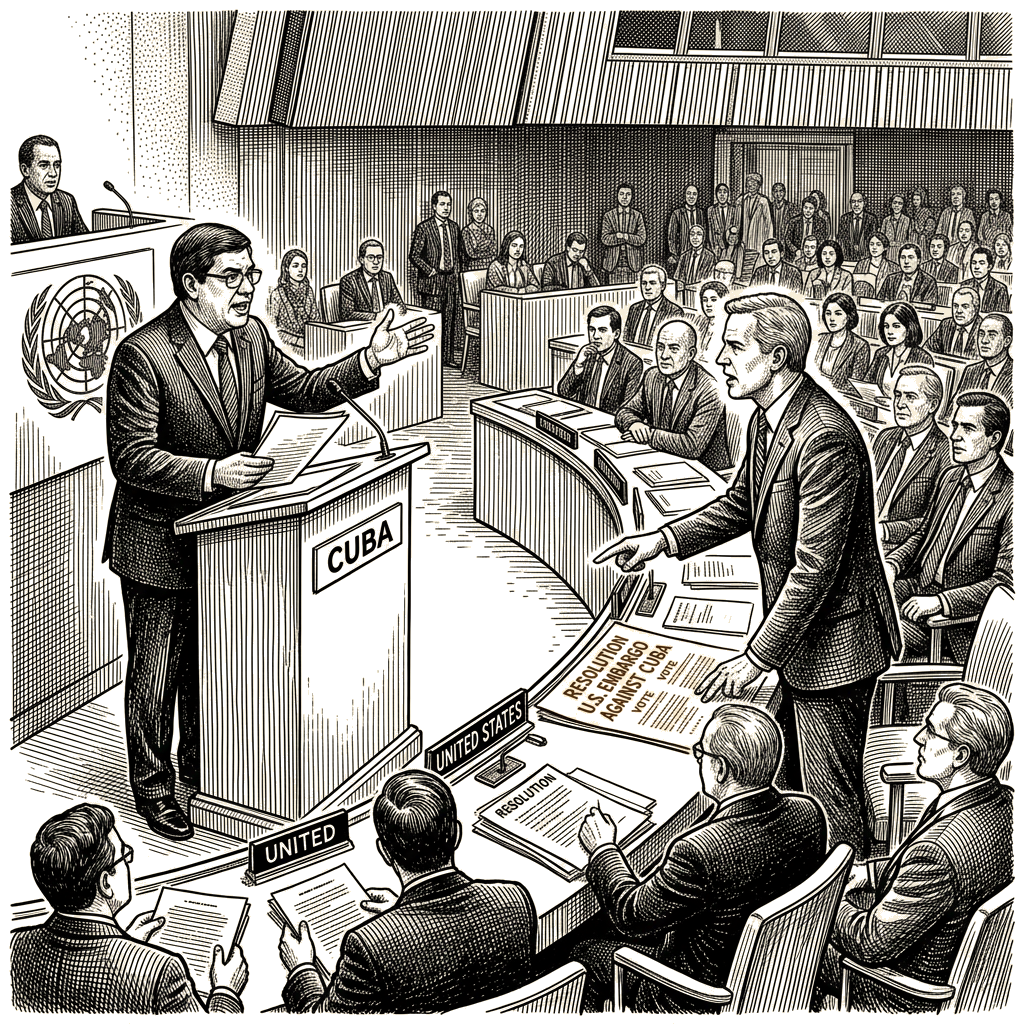
Cuban Foreign Minister Bruno Rodríguez Parrilla and U.S. Ambassador to the United Nations Mike Waltz clashed Tuesday, Oct. 27, 2026, during a U.N. General Assembly session on a resolution calling for an end to the U.S. embargo against Cuba. The confrontation disrupted proceedings in the 193-member assembly.
Waltz sharply criticized Cuba’s political system and leadership while defending the U.S. embargo as a legitimate means of pressure against the communist government. During his remarks, he accused the late Cuban leader Fidel Castro of sending “thousands of homosexuals, Christians and Afro-Cubans” to concentration camps and displayed an old black-and-white photograph of Castro wearing an expensive Rolex watch. Waltz accused the Cuban government of spreading “outright lies” about U.S. imperial pressure, arguing that Cuba’s leadership enriches its elites while blaming Washington for the country’s economic failures.
Rodríguez and members of the Cuban delegation loudly interrupted Waltz’s speech, shouting objections and repeatedly banging on their desks. Rodríguez called the remarks “offensive” and formally asked the presiding officer to call the U.S. ambassador to order, accusing him of using the international forum to defame Cuba. The presiding officer warned that the session could be temporarily suspended if the disruptions continued.
After the confrontation, Waltz wrote on X that “The Castro regime has profited at the expense of the Cuban people with luxury cars, expensive watches and a private island resort.” He added: “As I shared this with the world, regime thugs rushed the stage to interrupt my speech.” In the same post, Waltz wrote: “They can intimidate their own people in Cuba, but think again about trying that nonsense in the United States of America.”
Rodríguez wrote on X afterward that “The U.S. government lies blatantly and constantly in the U.N. General Assembly.” He referred to Waltz’s “arrogance and conceit” and accused him of forgetting that he was at the United Nations rather than the U.S. National Security Council, a Green Beret unit or a Signal group, “where he has repeatedly demonstrated his incompetence and inability.”
Rodríguez accused Washington of using the General Assembly debate to justify its economic restrictions against Cuba. He wrote that the U.S. government launched another attempt to justify its economic aggression against Cuba and its “energy blockade.” He said there was no excuse for maintaining the act of collective punishment imposed on the Cuban people.
Rodríguez also said the day’s statements formed part of what he described as a media, threats and election campaign, and that the U.S. government devoted substantial economic and human resources to it. He also posted: “#CubaNoEsUnaAmenaza El Bloqueo Sí.” The message conveyed his position that Cuba was not a threat while the blockade was.
The two governments described the embargo differently: Waltz defended it as pressure against Cuba’s communist government, while Rodríguez described Washington’s restrictions as collective punishment imposed on the Cuban people.
The confrontation came amid heightened tensions between Washington and Havana after a series of foreign policy measures adopted by President Donald Trump’s administration.
In the days leading up to the debate, Cuba accused the U.S. government, particularly Secretary of State Marco Rubio, of pressuring foreign leaders through threats of financial sanctions and visa restrictions. Cuba said the pressure was intended to discourage participation, encourage abstentions or change countries’ longstanding support for the resolution condemning the embargo. Waltz rejected Cuba’s allegations and accused the Cuban government of coercing other nations.
The General Assembly was expected to continue hearing statements from regional groups and member states before a formal vote on the resolution scheduled for Wednesday. The measure was nonbinding and was being debated for the 34th time.