Voters handed Democrats full control of Congress and Trump’s Republicans a defeat
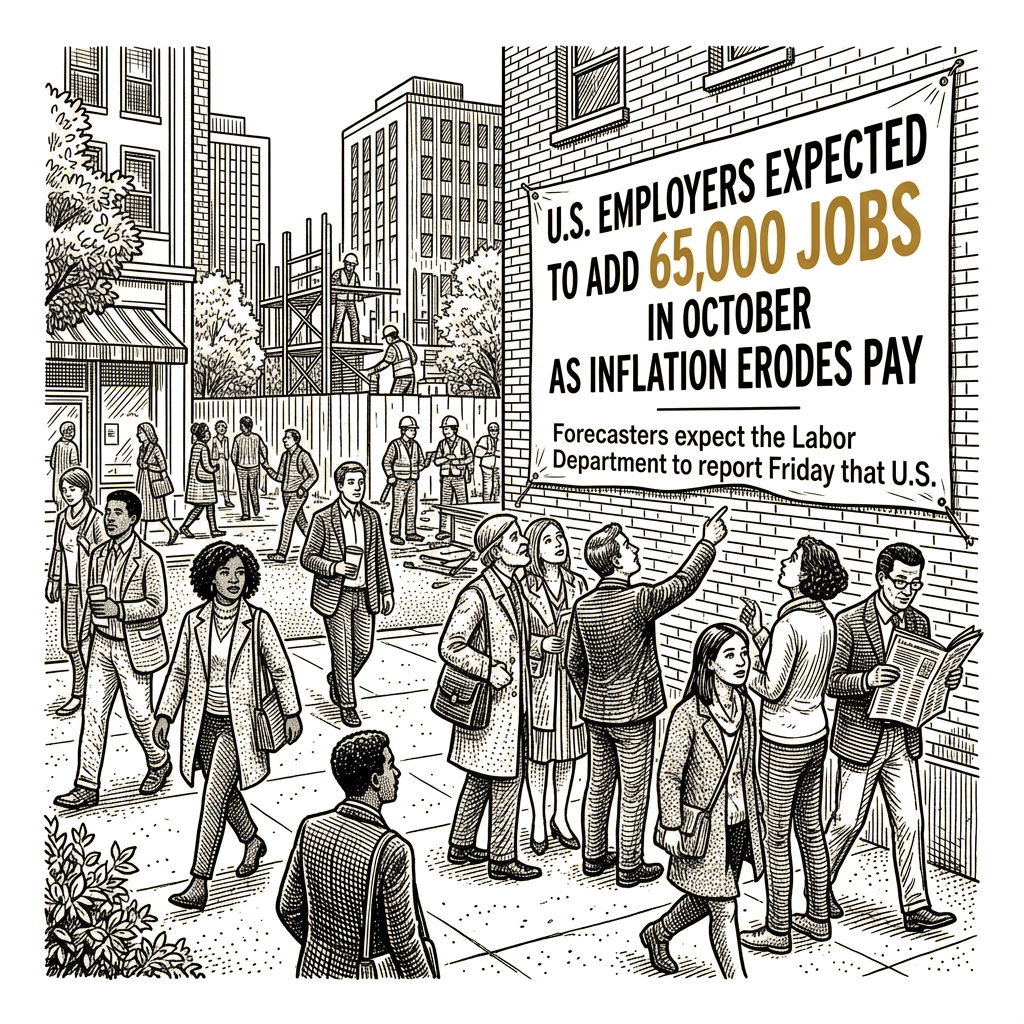
The U.S. job market likely bounced back in October from a disappointing September, with forecasters expecting employers to have added 65,000 jobs and the unemployment rate to have held at a low 4.2%, according to a survey by the data firm FactSet. The Labor Department is scheduled to release the October employment and unemployment figures Friday.
Layoffs remain low, and most Americans enjoy unusual job security. But hiring has probably stayed too modest to deliver much relief to people looking for work, and wage gains have not kept up with persistently high inflation.
The report arrives three days after midterm elections in which voters handed President Donald Trump and his Republican Party a defeat and gave Democrats full control of the U.S. Congress. The Associated Press tied the outcome to voter frustration with the state of the economy — and especially the high cost of living.
The economy has nonetheless proven resilient in the face of a series of shocks, including Trump’s double-digit taxes on imports and the war with Iran, which has driven U.S. gasoline prices above $4 a gallon and pinched family budgets. Gross domestic product, the nation’s output of goods and services, advanced at a 3.4% annual pace from July through September, lifted by strong consumer spending and booming investment in artificial intelligence.
The job market itself has been solid but unspectacular. Employers — companies, government agencies and nonprofits — have added an average of 68,000 jobs a month so far this year, including a September gain of 29,000 that the AP described as disappointing. That pace is modest by historic standards but marks an improvement over 2025, when monthly job creation averaged 9,700 — the weakest performance outside a recession since 2002. High interest rates and Trump’s unpredictable trade policies discouraged hiring last year.
Current hiring remains well below the average of 166,000 jobs a month recorded across 2023 and 2024, and far beneath the 491,000 a month added during the 2021-2022 hiring boom that followed the COVID-19 lockdowns.
Economists describe a “low-fire, low-hire” environment in which employers are reluctant to let go of existing workers but are in no hurry to hire new ones. Young people entering the workforce, and workers who have lost jobs, can struggle to find new positions.
The United States does not need as many new jobs as it once did to keep the unemployment rate from rising, because baby boomer retirements and Trump’s immigration policies mean fewer people are competing for work. In late 2023, the so-called break-even point stood at around 166,000 new jobs a month. It now sits just over 5,000, according to an estimate by Yale University’s Budget Lab, which drew on an earlier Federal Reserve report.
Rising prices have pinched pay for millions of Americans. After taking inflation into account, average hourly earnings fell 0.7% in September — the sixth straight year-over-year drop, which the AP cited as one explanation for voters’ fury at the polls on Tuesday.
The October jobs report comes three days after Tuesday’s elections.