Measure would bar privilege-based withholding of roughly 200,000 pages
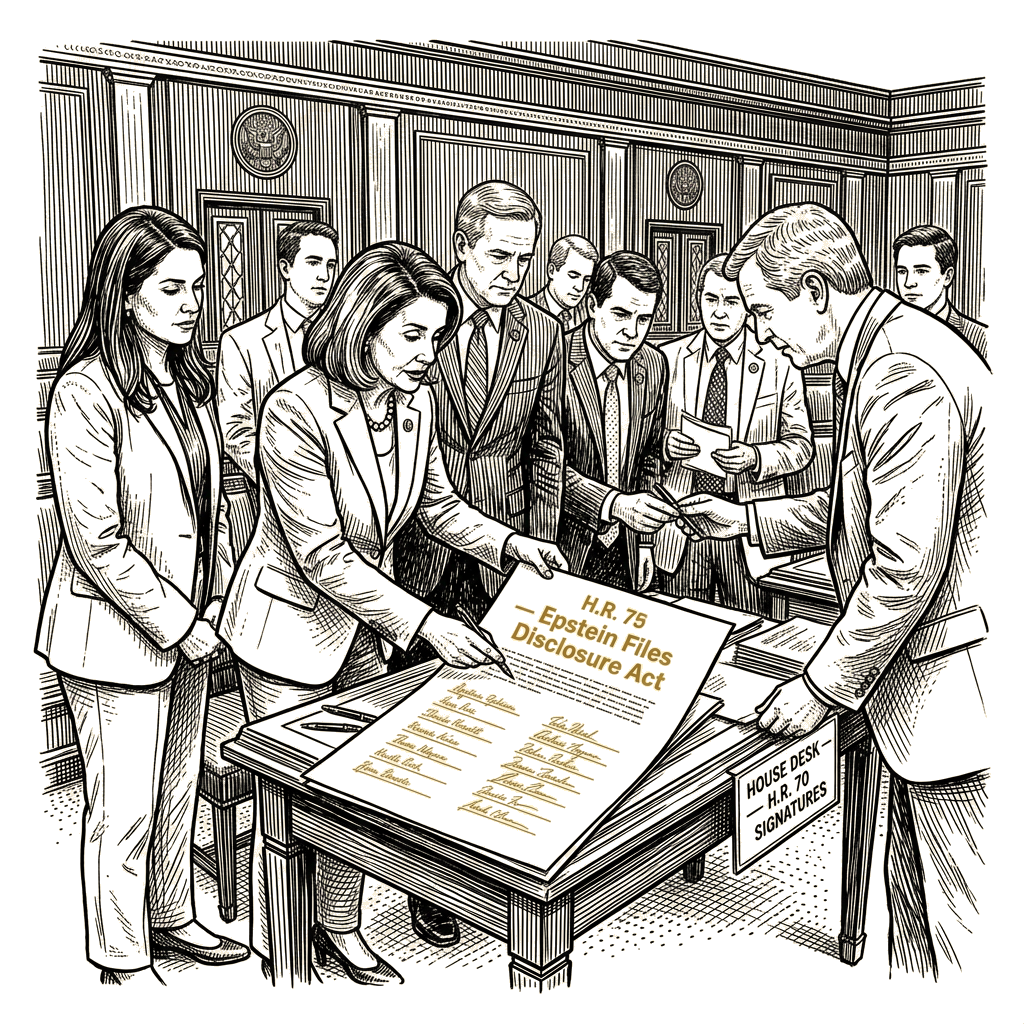
WASHINGTON — Democrats and a small number of House Republicans have forced a new vote later this year on Justice Department files tied to the sex offender Jeffrey Epstein, collecting the 218 signatures needed to bring up a bill that would let states and survivors sue the department over documents it has withheld.
The bipartisan effort, led by Rep. Thomas Massie, R-Ky., and Rep. Ro Khanna, D-Calif., reached the required 218-signature threshold Wednesday after Rep. John Garamendi, D-Calif., signed on, following Rep. Adam Smith, D-Wash., earlier in the week. Discharge petitions allow a majority of lawmakers to bypass the House speaker and put a bill on the floor.
The new bill would amend the Epstein Files Transparency Act, which Congress passed last November over Trump’s initial strong objections after a similar discharge petition led by Massie and Khanna. Trump, who had called that effort a Democratic hoax, later signed the bill into law. The law led to the Justice Department’s release of millions of records related to Epstein in January 2026.
The measure would bar the department from withholding documents under common-law privileges such as attorney-client privilege and deliberative process. The department said in January it had withheld or redacted roughly 200,000 pages on such grounds. Survivors could also obtain unredacted copies of files relating to them, including FBI interview summaries. The Justice Department has said it has complied with the law.
Three Republicans — Rep. Brian Fitzpatrick of Pennsylvania and Reps. Nancy Mace and Ralph Norman of South Carolina — joined Massie in signing the petition in September. None of the four will return to Congress next year.
Other lawmakers who have not signed the petition indicated they would back the bill. “I support the full, absolute, fullest release of the Epstein files that protects victim identities,” said Rep. Tom Barrett, R-Mich. “I’ll likely vote for this bill because it should be in furtherance of that.”
Rep. Michael Guest, R-Miss., said he votes against all discharge petitions “since we’re in the majority,” but added that he would likely support the bill. Rep. Chris Smith, R-N.J., said he would also vote yes.
House rules say the petition must now wait seven legislative days before further action. Nov. 30 is the first day any signer can call the petition up on the House floor, unless Speaker Mike Johnson, R-La., brings the bill up himself, as he did for the first Epstein bill in 2025. If he does not, he will have two legislative days after Nov. 30 to schedule the vote.
If it passes the House, the bill still must pass the Senate before this session of Congress ends in January and be signed by Trump. “Frankly, I’m running out of time,” Massie said. “If I can think of anything else to do, I’ll do it as long as I’m doing the right thing.” Massie, who also drove a failed effort to impeach Defense Secretary Pete Hegseth, is one of the four petition signers not returning to Congress next year.
Democrats have pledged to make Epstein-related oversight a priority when the party takes the majority in January. Rep. Robert Garcia, D-Calif., the incoming chair of the House Oversight Committee, has said he plans to issue subpoenas to force Attorney General Todd Blanche to answer questions about the department’s handling of the Epstein files.