Negotiators focus on 1.5 degrees as the U.S. stays absent
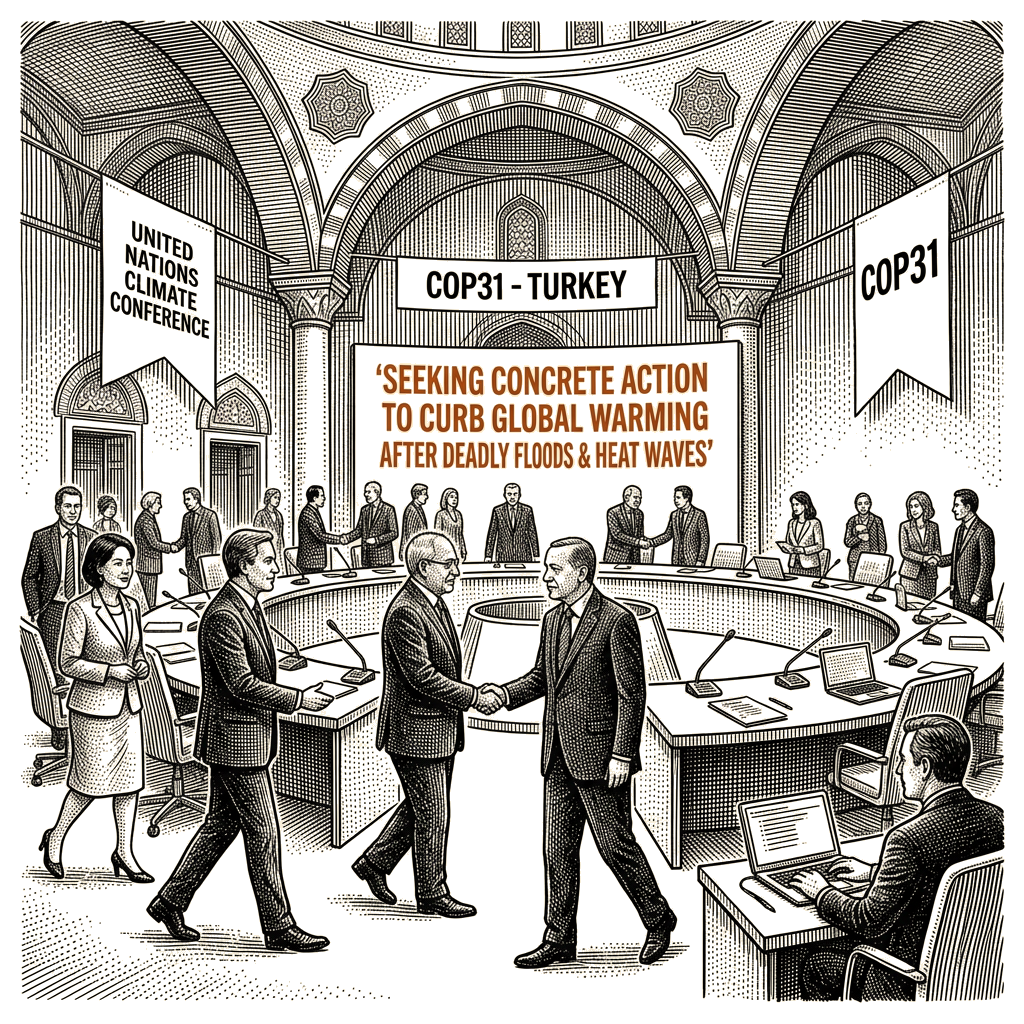
World leaders are scheduled to begin formal discussions Wednesday at the United Nations climate change conference in Turkey, where they hope to agree on concrete actions to curb global warming. The Associated Press reported that the meeting follows a year of deadly floods, heat waves and other climate-related disasters. Turkey hosts COP31, which was officially kicked off Monday amid fears that the world is not moving quickly enough. Australia leads negotiations, and what delegates can and will accomplish remains to be seen.
Past climate talks have drawn criticism for making promises that later fell flat. At the 2023 conference in Dubai, delegates agreed to transition away from fossil fuels such as coal, oil and gas, which the report identifies as a leading contributor to climate change. Subsequent conferences in Azerbaijan and Brazil ended with little agreement on reductions.
Last year’s conference in Brazil produced a compromise agreement pledging additional money to help vulnerable nations adapt to climate change. That agreement addressed adaptation funding, while the conference overall ended with little agreement on reductions.
Scientists say global warming is likely to exceed 1.5 degrees Celsius (2.7 degrees Fahrenheit) above the preindustrial levels of the early 1800s. Limiting temperature rise to that threshold was a goal set during the 2015 Paris Agreement and has remained a focus of international negotiations.
The conference also comes as the war in Iran has increased global prices of gasoline and oil, along with products made from them, including fertilizers and pesticides. The report said those increases have pushed governments to rethink energy policies and investment in renewable sources such as wind and solar.
John Kerry, former U.S. secretary of state and former presidential climate envoy, said, “We don’t need more promises, we need plans,” as the United States remained absent for the second year in a row.
According to the report, the United States is the world’s second-largest polluter after China. U.S. President Donald Trump has called climate change a hoax, targeted offshore wind projects and removed rules limiting power plant emissions.
Formal discussions begin Wednesday with the 1.5-degree threshold, energy-price pressures and previous conferences’ mixed results in view. Delegates hope to agree on concrete actions, but what can and will be accomplished at COP31 remains to be seen.