Pneumonia is the number one cause of measles-related death, Rivera says
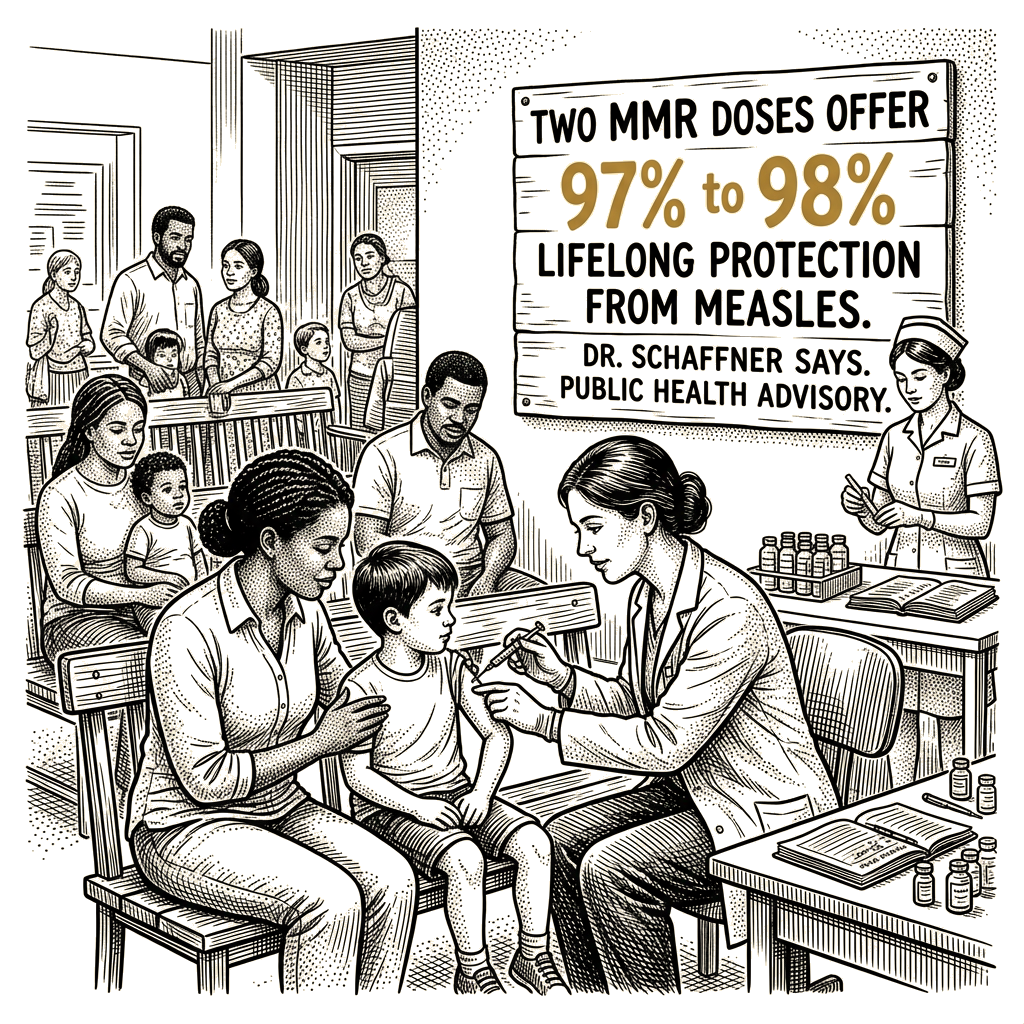
Dr. William Schaffner told PBS News host William Brangham that two recommended MMR doses give a 97% to 98% likelihood of protection against measles for the rest of a person’s life. Brangham framed his question around concern about ‘perhaps this very big undercount of measles’ and asked how much protection vaccination offered and whether it could provide ‘bulletproof, 100 percent protection.’ On the network’s ‘Horizons’ program, Schaffner called MMR ‘close to bulletproof’ and ‘among the best vaccines we have.’
The discussion came as global health authorities were expected to announce the following day that the United States had lost its status as a country where measles had been eliminated. Amna Nawaz said the public-health milestone had been achieved 26 years earlier. U.S. measles cases had doubled during the past year, making it the worst year in three decades.
Schaffner said a vaccinated person who is exposed and still becomes infected would have a milder illness. He defined that outcome as a breakthrough infection and said the possibility did not alter MMR’s strong record for preventing serious disease.
Schaffner described MMR as “terrifically safe” and said there were “very few adverse events” associated with it. He said the vaccine had been used in billions of doses around the world for 50 years.
Brangham said Robert F. Kennedy Jr.’s role was complicated. At times, when asked about measles outbreaks, Kennedy had urged people to get vaccinated because it would protect them. Brangham also said Kennedy’s previous career and current federal role had done “an enormous amount to sow distrust about vaccines” and had claimed vaccines were dangerous, were harming people and that the government had not been forthcoming. Brangham then asked Jessica Malaty Rivera how much responsibility she placed with the federal government’s current leadership.
Jessica Malaty Rivera said Kennedy and the federal government bore a huge amount of responsibility for the outbreak. She qualified that view by saying the movement or the unprecedented outbreak did not necessarily start at the beginning. Rivera said seeds of doubt about the MMR vaccine had been planted years earlier by Kennedy and people from his former organization, Children’s Health Defense, along with others who questioned the vaccine’s safety, effectiveness and usefulness.
Rivera said Kennedy continued to acknowledge MMR as the only way to prevent infection while also suggesting it was acceptable to become infected and suffer through a mild illness. She said this framing had normalized disease among people opposed to MMR vaccination. Rivera said some had been told incorrectly that vitamin A could treat measles, but she said vitamin A cannot.
Rivera rejected the idea that measles should be treated as a routine childhood illness, saying children no longer have to experience a disease that was prevalent in the ’80s. She also cited varicella as another illness for which prevention tools exist and said suffering could be avoided.
Rivera said there is no known specific treatment for measles and that care is supportive. She said some children develop pneumonia and identified pneumonia as the number one cause of measles-related death.
Some children may develop encephalitis, which Rivera described as a dangerous swelling of the brain that can cause permanent damage, including hearing loss, blindness and other impairments. Rivera said measles can also cause complications years after recovery, including a rare encephalitis called SSPE, as well as immune amnesia.
Rivera said those were not benign complications and that measles was almost entirely preventable through two doses of MMR. She said Kennedy knew this and that the administration and its HHS secretary bore responsibility for making clear that children did not have to contract a preventable disease.