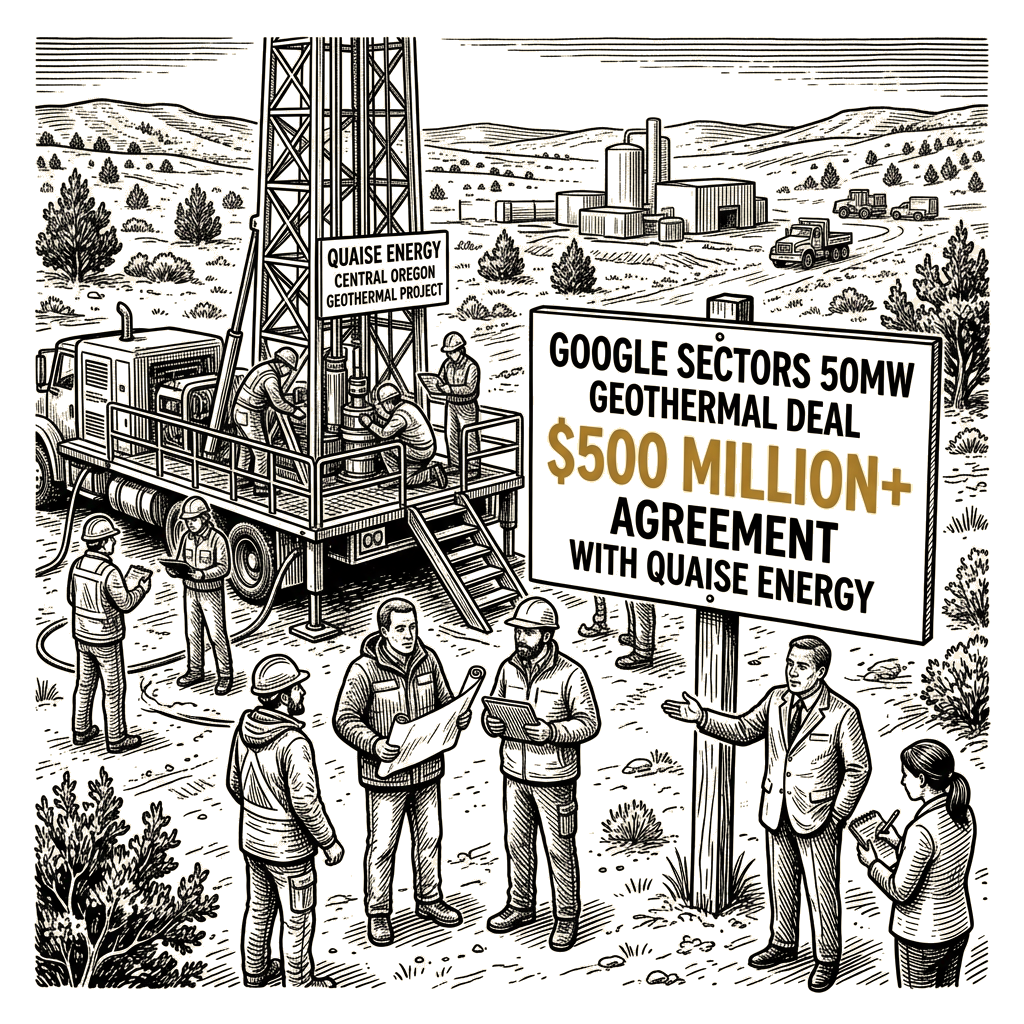
The Oregon project would tap rock above 572 degrees Fahrenheit
Google has signed a deal valued at more than $500 million to secure 50 megawatts of electricity from a geothermal project Quaise Energy is developing in central Oregon. The power will support Google’s existing data-center operations in the state, and Google could begin purchasing it as early as 2030.
For Houston-based Quaise Energy, the agreement represents a major boost for a geothermal startup pursuing a method that remains unproven at commercial scale. Quaise wants to use heat from deep rock to produce clean electricity around the clock.
Quaise said the project will cost about $350 million and would be the world’s first to produce electricity by tapping into rock with temperatures greater than 572 degrees Fahrenheit. The agreement gives the startup a buyer for 50 megawatts from the planned development.
Quaise initially plans to use conventional drilling tools to dig a well about 2.5 miles deep. It would then switch to a gyrotron—essentially a giant microwave—to beam millimeter waves capable of vaporizing rock and extend the well to 3 miles.
Quaise plans to inject water down the wells, use the hot rock to heat the liquid, collect it and use the steam it generates to produce electricity. The company describes the process as a way to deliver clean power around the clock.
“It is Google basically putting their thumb on the scale and saying, ‘Okay, we like this. We like what this looks like,’” said Carlos Araque, the chief executive at Quaise.
The agreement comes as Google seeks electricity supplies to power new data centers and support the development of artificial intelligence. Google signed a power deal with geothermal company Fervo Energy earlier this year.
Google is also working with companies developing nuclear power and long-duration storage, among other technologies. The Quaise agreement would add electricity for existing operations in Oregon while Google continues to pursue other sources of power.
“The scale of power that we’re looking for and also the scale of impact we’re trying to have on the grid requires us to foster that ecosystem,” said Lucia Tian, who leads Google’s efforts to develop and expand advanced clean energy technologies.
The agreement provides Quaise with a major customer, but its technology remains unproven at commercial scale. For Google, the project adds a future power source for existing data-center operations in Oregon, with purchases beginning as early as 2030.