Forest Service agreement targets the wildland-urban interface
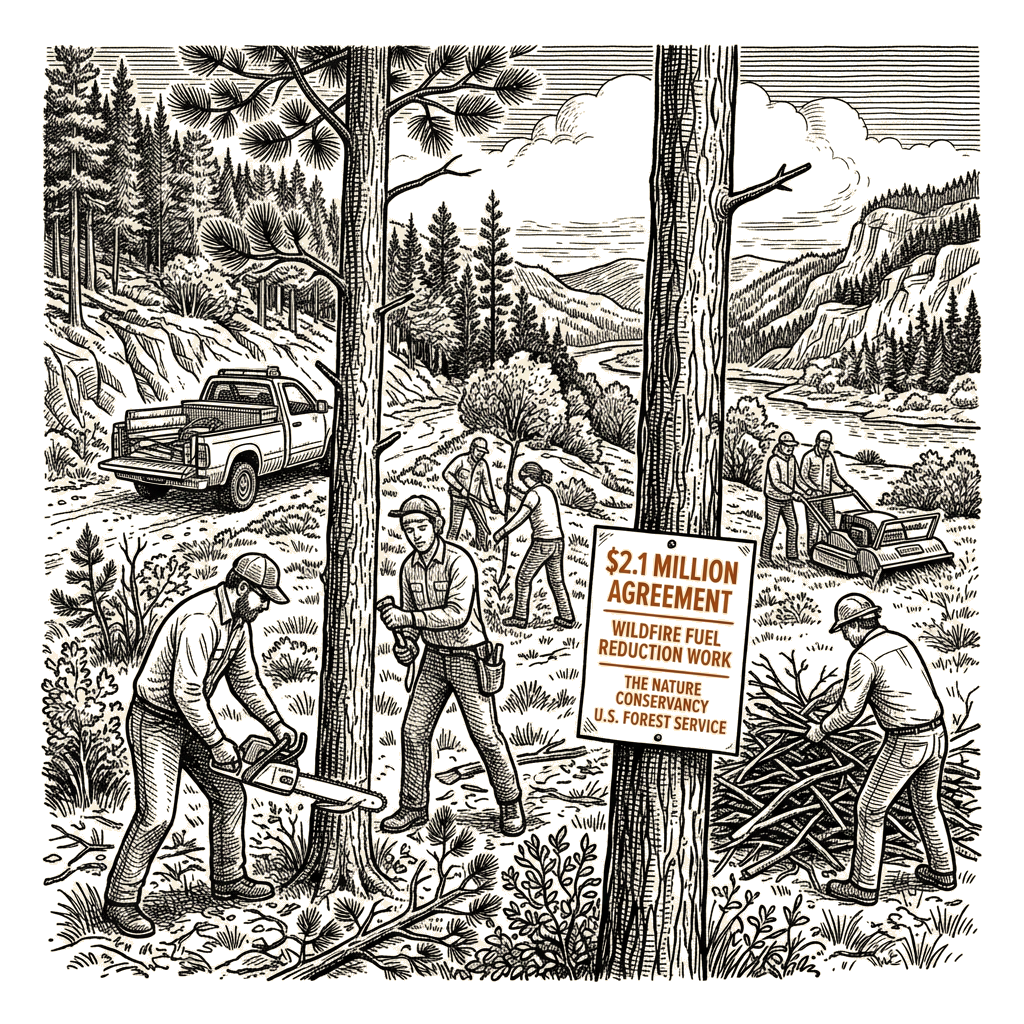
The Nature Conservancy announced a $2.1 million agreement with the U.S. Forest Service in a Monday press release to expand forest restoration and wildfire fuels reduction in Idaho and Wyoming. Under the agreement, The Nature Conservancy will provide additional workforce support for prescribed fires, ecological thinning and other work to reduce overgrowth that fuels wildfires.
Projects funded by the agreement will focus on the wildland-urban interface, the area where human development and undeveloped wild lands meet. The projects will take place in the Caribou-Targhee, Payette and Salmon-Challis national forests in Idaho and the Bridger-Teton National Forest in Wyoming. Officials said existing agreements with the U.S. Forest Service are in place in those forests.
The agreement is intended to expand the Forest Service’s capacity to manage hazardous fuels while helping restore forests. The work responds to what Great Basin Geographic Area Fire Director Ben Newburn described as the growing threat of high-severity wildfire to communities across Idaho and Wyoming.
Prescribed fires are planned and controlled fires intentionally set by land managers or firefighters to remove excess vegetation or dead wood and brush that can fuel wildfires, or to accomplish other ecological goals. The agreement also supports ecological thinning and other forest restoration work intended to reduce the overgrowth that can fuel wildfires.
“Hazardous fuels reduction projects remain a critical tool for protecting communities across Idaho and Wyoming from the growing threat of high‑severity wildfire,” Great Basin Geographic Area Fire Director Ben Newburn said in a written statement. “Through the Forest Service’s focus on active management, we are strategically reducing dense vegetation and restoring more natural fire behavior to support the development of healthier, more diverse and more resilient landscapes.”
“Progress at this scale is only possible through strong collaboration,” Newburn added. “Our partnership with The Nature Conservancy plays an essential role in expanding capacity, aligning scientific expertise, and accelerating work that safeguards both communities and forests.”
“Recognizing the vital role of prescribed fire and ecological thinning to restore forests — and the great need for more workforce capacity to accomplish it — TNC has spent years developing strong partnerships with the U.S. Forest Service,” Matthew Ward, The Nature Conservancy Idaho forest and fire program manager, said in a written statement. “This agreement enables us to expand proven, proactive restoration strategies and make an even bigger impact for forests and communities in Idaho and Wyoming.”
The agreement adds The Nature Conservancy workforce support to Forest Service restoration work at the wildland-urban interface. In his written statement, Great Basin Geographic Area Fire Director Ben Newburn said the goals are to reduce dense vegetation, restore more natural fire behavior and support healthier, more diverse and more resilient forests while safeguarding Idaho and Wyoming communities.