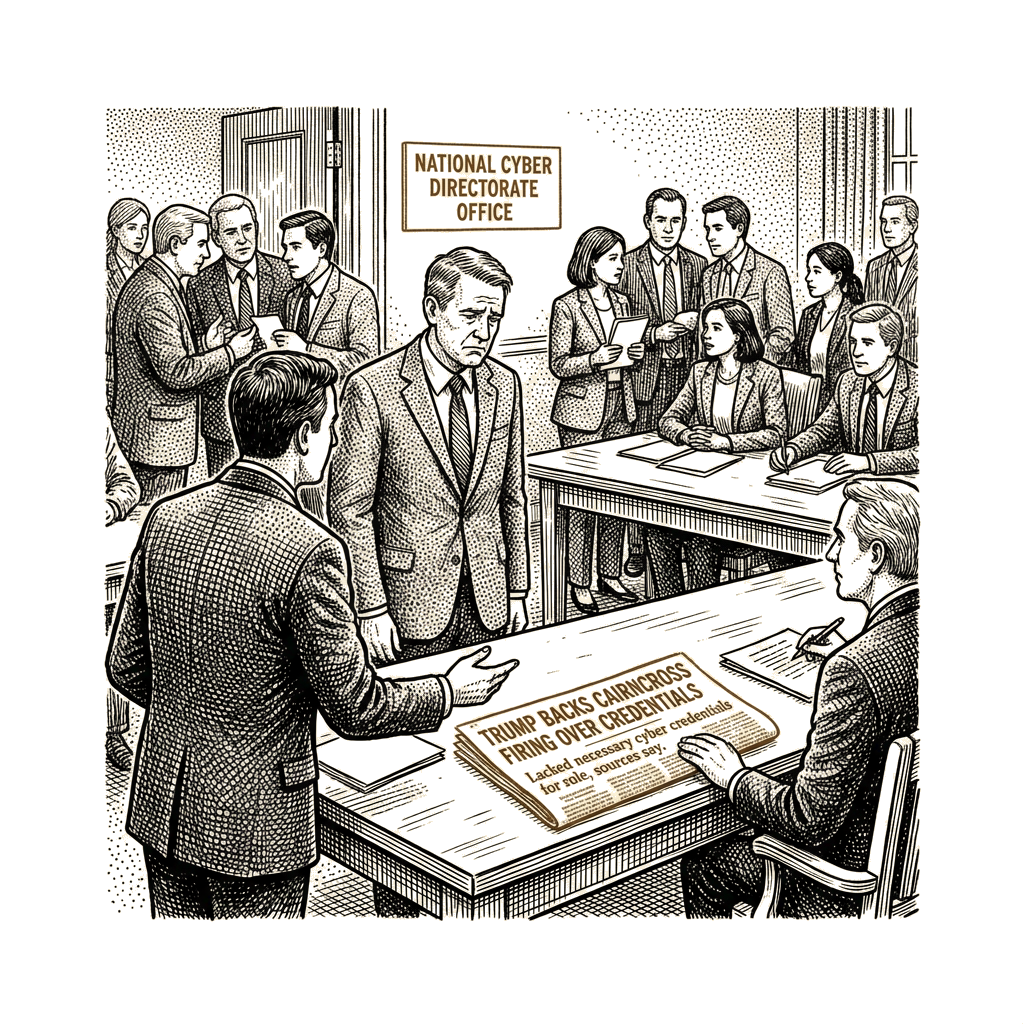
Source says Cairncross replacement was among Stephen Miller’s first chief-of-staff tasks
A person familiar with the change said President Trump supported Sean Cairncross’s firing because Sean Cairncross lacked the credentials to perform the job effectively. Administration officials said Thursday that Kirsten Davies, the Defense Department’s chief information officer, would succeed Cairncross in the role that coordinates cybersecurity policy for the Trump administration. The person said Davies had the requisite skills and that replacing Cairncross was one of Stephen Miller’s first tasks as the new White House chief of staff.
Davies was confirmed by the Senate for her Defense Department role and previously was a top cyber executive for companies including Unilever. The person familiar with the change said Davies had the requisite skills for the national cyber director job. Her background combined a Pentagon position with senior private-sector cybersecurity work.
The Wall Street Journal described Cairncross as one of the faces of the administration’s AI strategy. He helped lead the response that spring to Anthropic’s Mythos model after it demonstrated the ability to carry out cyberattacks. He also implemented a June executive order intended to give the government more visibility into models before they were released.
Cairncross worked closely with Director of National Intelligence Jay Clayton and with Marco Rubio, the national security adviser and secretary of state. He also sometimes clashed with administration officials and technology-industry representatives over how to increase oversight of leading models from companies including Anthropic and OpenAI without creating burdensome regulations.
The change comes as the administration responds to a wave of cyber threats posed by what is believed to be new artificial-intelligence models. The Wall Street Journal reported that powerful new AI tools were capable of carrying out cyberattacks and that recent outages across banks, airlines, federal agencies and technology companies were driven by patches to fix vulnerabilities identified by AI. The White House has faced criticism over its response to the tools and outages. Democrats set to take control of Congress in January said the administration had been slow to provide clear explanations for the outages and had at times been too deferential to technology companies.
The Wall Street Journal reported that the administration had faced additional pressure in recent weeks from a scandal involving former Nvidia CEO Jensen Huang. According to the report, Huang had a close relationship with Trump and was a top adviser on AI policy. The report also said Huang was having an affair with a suspected Chinese spy accused of smuggling Nvidia chips to China.
Cairncross was a longtime official at the Republican National Committee. He worked in the White House during the first Trump administration, then worked for the RNC again during the 2024 election cycle before becoming national cyber director. Senators questioned his lack of cyber experience during his confirmation process but nevertheless confirmed him.
Michael LoSapio, a Palantir cybersecurity officer and Trump’s pick to lead the Cybersecurity and Infrastructure Security Agency, faced questions from senators Thursday about proposed budget and staff cuts. The agency works closely with the national cyber director to defend against cyber threats. LoSapio was one of several nominees facing obstacles to confirmation.
Axios had earlier reported Cairncross’s departure and Davies’s appointment. Efforts to reach Cairncross for comment were unsuccessful.
Director of National Intelligence Jay Clayton said in a statement: “It has been my pleasure to work closely with Kirsten on national security matters, and I look forward to now working with her to navigate an increasingly dynamic and fast-moving cyber landscape.”