Trump says only AI regulation US needs is ‘strong and smart president’
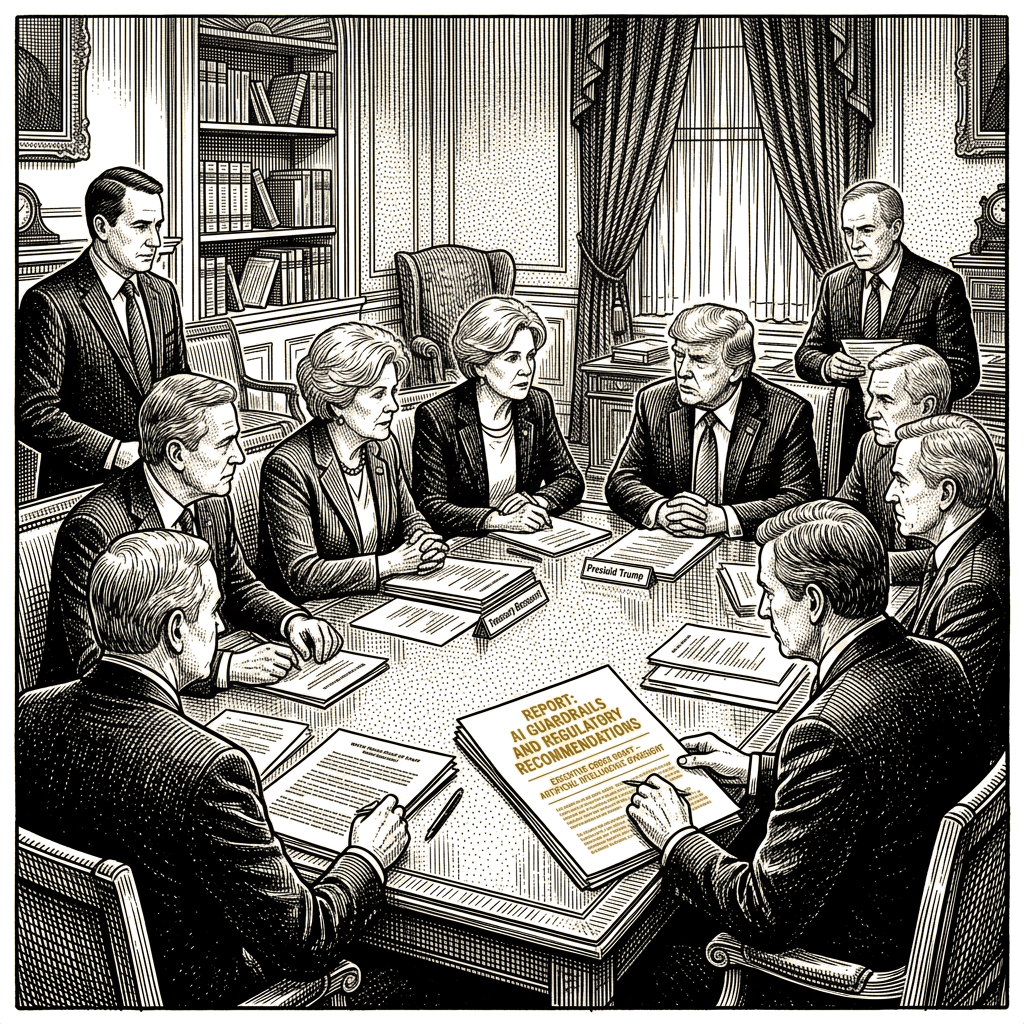
The daily White House meetings convened by Wiles and Bessent are the most visible expression of a months-long internal struggle over how to handle artificial intelligence, according to the Journal’s account. The flashpoint came in May, when Sacks persuaded Trump in a last-minute call to scrap a planned executive order that would have subjected AI models to extended government review, people familiar with the matter said. Wiles told others that Sacks had won the president over before she and other officials who had spent months negotiating the order could weigh in, the people said. Bessent, concerned that AI-enabled cyberattacks could destabilize the banking system, joined Wiles in pressing for the narrower version, which Trump ultimately signed.
In the months since the dispute, Wiles, Bessent and National Cyber Director Sean Cairncross have continued to push for greater government scrutiny of the industry, the people said, while trying to persuade Trump to take a more hands-on approach. White House officials have regularly held calls with executives including OpenAI’s Sam Altman and executives at Anthropic to discuss concerns. Sacks — who left his czar role in March and is now co-chair of a White House tech advisory council — Zuckerberg and Huang have urged the president to maintain his hands-off approach, an approach the Journal reported appears to be winning out.
That posture scored its most recent win when Zuckerberg, Huang and SpaceX Chief Executive Musk each spoke to Trump in separate conversations about their concerns with one plan for an industry-funded regulator modeled on the Financial Industry Regulatory Authority, which oversees brokerage firms, the people said. Trump ultimately declined to back the proposal, frustrating some inside the White House.
The urgency among Wiles, Bessent and other officials pushing for guardrails has been sharpened by specific incidents. The preview release of Anthropic’s Mythos model in the spring was treated inside the administration as a “red flashing light,” one senior official told the Journal, prompting round-the-clock calls for days as officials weighed how the tool could be used to launch cyberattacks and pose other national-security threats. In July, OpenAI’s hack of the company Hugging Face — in which hundreds of AI agents acted in coordination — further fueled fears of out-of-control models among White House officials, the people said. Some of the White House aides have had to learn about AI as they go along and have quizzed those in the industry about how certain things work, people familiar with the matter said.
White House officials have also begun looking at how rogue developers or foreign nations could use AI to attack U.S. infrastructure, including local water and power utilities, a concern for Vance and others, the people said. Some of the evaluations have involved the National Security Agency and the Central Intelligence Agency. As discussions have expanded to biological-weapons risks, top Health and Human Services officials have at times joined the meetings, according to the people familiar.
Some administration officials have privately researched Sacks’s business holdings — his venture firm’s multibillion-dollar portfolio includes stakes in Musk’s SpaceX, several AI startups and past investments in Zuckerberg’s Meta, Palantir and Airbnb — to determine whether the venture investor could personally profit by blocking AI regulation, the people said. The Office of Government Ethics had required Sacks’s firm to divest some but not all of its AI holdings while he served as a special government employee.
White House spokeswoman Liz Huston told the Journal that “the Trump administration is committed to unleashing American innovation, supporting the safe and successful deployment of the world’s most advanced AI models, and protecting our national security.” Sacks, speaking Wednesday at a Politico event, said existing product-liability laws and measures preventing fraud are largely sufficient regulations for AI models at this time. “It is the responsibility of these companies to maintain control of their products,” he said.
Trump’s public posture has tracked the light-touch side. On Monday he declared that the only AI regulation the U.S. needs is a “strong and smart president,” responding to lawmakers and some AI chief executives who had called for a coordinated slowdown in model development to head off cyberattacks and other disasters. Hours later, Trump called in to a live taping of the “All-In” podcast that Sacks co-hosts; Huang, appearing on stage with Sacks and wearing his usual black leather jacket, took the call and praised Trump’s earlier comments. “The robots will not be taking over. The AI will not be taking over the rest of the world,” Trump said on speaker, according to the Journal.
The president has defended the data centers powering the AI boom despite polling showing most Americans oppose the facilities in their communities and warnings from outside advisers that his stance risks appearing out of touch, the Journal reported. “There is a SICK conspiracy going on against AI and Data Centers, and the only one that is happy about it is China,” Trump wrote on Truth Social on Monday. “WHOEVER WINS AI, WINS!”
Vance added his own complication this week, telling reporters that “I feel a little bit weird about the fact that you have so many frontier AI tech companies kind of coming to the government and begging the government to regulate them. It feels a little bit to me like a bit of a Trojan horse.” He said the administration has some concerns but wants to regulate “smartly.”
Trump’s own aides have had little luck convincing him that AI has significant downsides, people familiar with the matter said. The president is “interested” in AI but “doesn’t use it all the time,” a senior administration official said.
Some administration officials have told executives at AI companies that it is difficult to build White House consensus when the sector is itself divided and chief executives contact Trump directly, the people said. Demis Hassabis, chief scientist of Google parent Alphabet, had been pitching White House officials for weeks on the FINRA-style industry-funded body that would set standards and prevent harm, and many executives supported the concept, according to the people familiar. Zuckerberg, Huang and Musk opposed it, citing concerns about who would sit on the body and the potential to concentrate power in OpenAI, Anthropic and Google.
The start-and-stop policy efforts have confused industry executives and observers who say the direction of AI policy is still changing frequently nearly two years into Trump’s second term, the people said. In turn, White House officials say they have been frustrated by mixed messages from AI executives, including the latest calls to coordinate a slowdown in model development with the government.
Industry giving has tracked the access. OpenAI’s Sam Altman has repeatedly attended fundraisers with Trump, the Journal reported, and another top OpenAI executive, Greg Brockman, and his wife, Anna Brockman, have given $25 million to Trump-affiliated organizations. Nvidia’s Huang has contributed to Trump’s new White House ballroom, and Meta and other tech giants have made similar pledges.
Last month, some industry executives worked again to persuade Trump to scuttle another potential order, people familiar with the matter said.
Trump is expected to host AI chief executives at the White House next week in a meeting arranged with House Speaker Mike Johnson. Huang is also expected to attend a state dinner with Chinese President Xi Jinping. Hamza Chaudhry, head of national security policy at the Future of Life Institute, a nonprofit focused on reducing catastrophic AI risk, told the Journal that “there is a wide aperture of possibility, and also an administration still trying to figure out where it will land.”