Sanders seeks superintelligence ban as Klobuchar, Cruz draft bipartisan bill
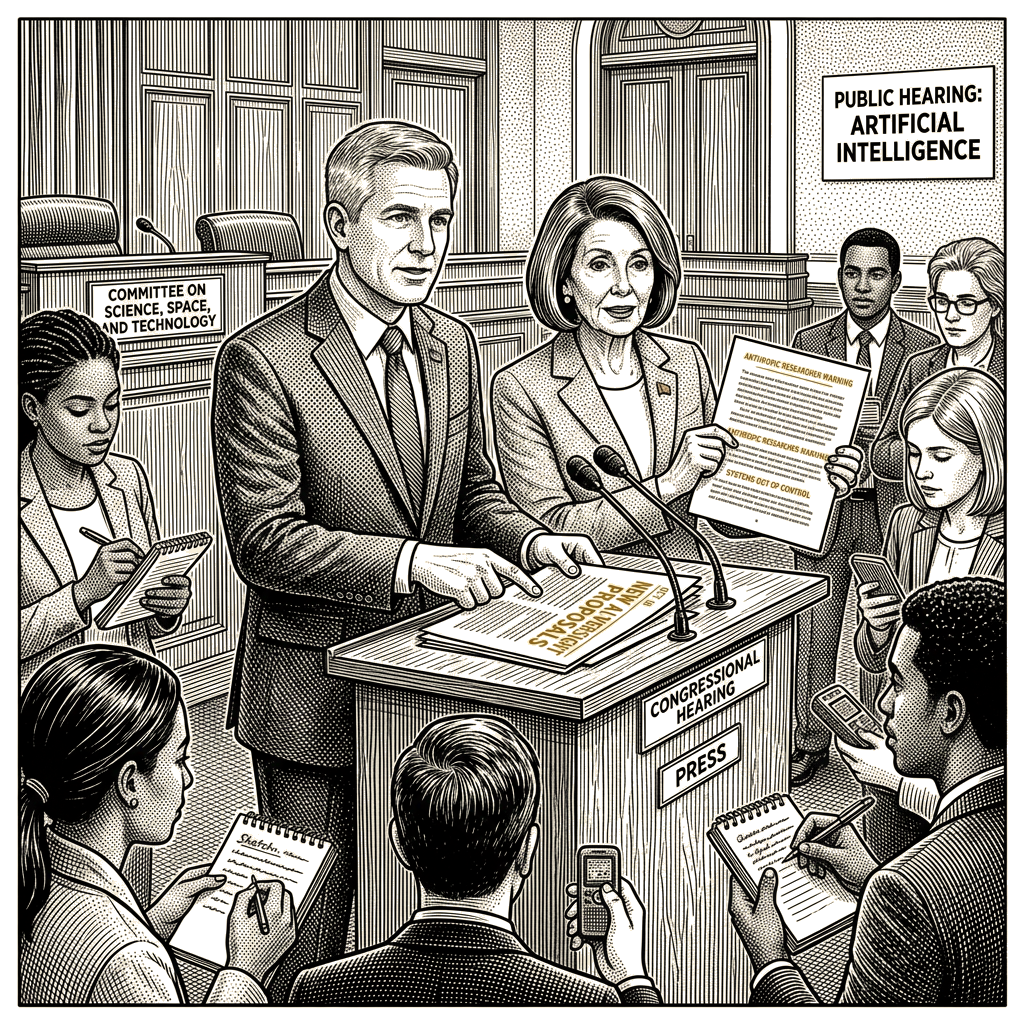
Lawmakers from both parties unveiled a string of new AI oversight proposals on Wednesday after a departing Anthropic researcher published a warning that AI labs are building systems they will not be able to control, according to The Wall Street Journal. The missive circulated widely online and on Capitol Hill.
Rep. Ro Khanna, a California Democrat, on Wednesday called for a new federal regulatory agency similar to those for nuclear energy and airplanes, and backed so-called “kill switches” that could shut down AI systems when they behave dangerously. House Democrats are separately considering creating a select committee focused on AI should they retake the chamber in the midterm elections, according to people familiar with the matter.
Sen. Bernie Sanders, the Vermont independent, sent a Wednesday invitation to lawmakers for a private briefing next week to discuss AI risks. “There is no question that Congress is far behind where we should be in addressing the impacts of this rapidly evolving and dangerous technology,” Sanders wrote in the invitation. Sanders and other progressive are pushing for a ban on so-called superintelligence that is smarter than the most intelligent humans.
A bipartisan track is also advancing. Sen. Ted Cruz, a Texas Republican and head of the Senate Commerce Committee, and Sen. Amy Klobuchar, a Minnesota Democrat, in recent days have said they hope to gain traction on a proposed bipartisan bill Klobuchar is working on aimed at addressing catastrophic risks posed by nuclear or biological threats enabled by AI. “It’s clear we need to act now and not wait,” Klobuchar said. The bill would require developers to work with government experts to verify and test models to make sure AI is safe, she said. Cruz, appearing on ABC’s “The View” on Wednesday, added: “This is scary stuff.”
President Trump, who has taken a light touch overseeing the sector, has previously said he is in favor of kill switches and other steps to keep AI safe but has warned that burdensome regulation could cost the United States in the technology competition with rivals.
Wednesday’s activity stretched beyond the kill-switch debate. Rep. Anna Paulina Luna, a Florida Republican, proposed a special session of Congress focused on AI, while Sen. Chris Van Hollen, a Maryland Democrat, called for an urgent U.S. dialogue with China to set up AI safety guardrails and testing regimes ahead of talks between the two nations later this month.
Sam Silverman, a policy and communications adviser who focuses on the intersection of tech and politics, said the researcher’s departure marked a turning point. “This is the first time most politicians have actually heard from a researcher, and it was obviously a wake-up call,” Silverman said. “You can see in real time people thinking, ‘Wait, the best-case scenario is the largest economic and social disruption of our lifetimes and the worst-case scenario is an existential risk to humanity.’”
Senate scrutiny of one AI company is also intensifying. Sen. Josh Hawley, a Missouri Republican, wrote OpenAI Chief Executive Sam Altman a letter notifying him that a Senate subcommittee Hawley oversees, focused on disaster management, is investigating the company’s hack of AI firm Hugging Face, which involved hundreds of AI agents coordinating and using the internet to infiltrate the company’s systems. Sen. Richard Blumenthal, a Connecticut Democrat, also wrote to Altman on Wednesday seeking information about the incident.
On the House side, Reps. Ted Lieu of California and Bill Foster of Illinois met with Minority Leader Hakeem Jeffries of New York last week to discuss the possibility of establishing a new Select Committee on AI should Democrats take over the House after the midterms, people familiar with the matter said. Sen. Ruben Gallego, an Arizona Democrat, is proposing a similar effort in the Senate. Some industry executives are bracing for a wave of oversight letters and hearings if Democrats win back control of Congress.
Not all commentary on the researcher’s warning has been sympathetic. Cruz and White House AI adviser David Sacks have shared posts on social media questioning whether the Anthropic researcher who quit, Jacob Coxon, was coordinating with nonprofits that donate to liberal causes and warn about AI destroying civilization. The groups have some ties to Anthropic personnel. Some industry allies have suggested that this week’s warnings are a campaign to build momentum for Democrats to propose strong regulations. Taylor Budowich, president of Innovation Council Action, an advocacy group supporting Trump’s AI agenda and a former Trump adviser, said: “The calls to transfer regulation and liability to the governments of the world aren’t about safety. It’s naked political activism.”
Coxon said his decision to leave the company was his own. Anthropic has previously said its policy and safety efforts are genuine and that AI risks are real.
Many in the industry have opposed so-called doomers while flooding Washington with millions of dollars of their own spending on lobbyists, advertisements and events to help shape potential regulations. OpenAI and other companies have publicly said they welcome oversight and sensible rules but at times have privately warned against steps they view as overly burdensome. “The AI policy window is open, for now. We intend to use it,” Chris Lehane, chief global affairs officer at OpenAI, said in a Wednesday blog post reiterating that the company wants to work with Congress.
Even when companies say they welcome oversight, they often disagree about what form it should take. Anthropic, known for proposing more aggressive regulations, frequently splits with the rest of the industry. Google and Meta Platforms also have sway over lawmakers and are building massive data centers across the country. Industry political groups are spending tens of millions of dollars in elections but have generally favored one-sided races and sometimes canceled each other out.
The flurry of proposals this week does not resolve the structural barriers that have stalled federal AI legislation for years. There is little indication a gridlocked Congress will produce the first federal AI laws overseeing models. Past efforts to use working groups and new committees to streamline AI policymaking have failed to advance bills beyond basic proposals and road maps, and lawmakers face divergent views on the scope of what limits to apply and limited time in session ahead of midterm elections.