Amodei, Musk, Altman align on plan to ‘pace’ AI development
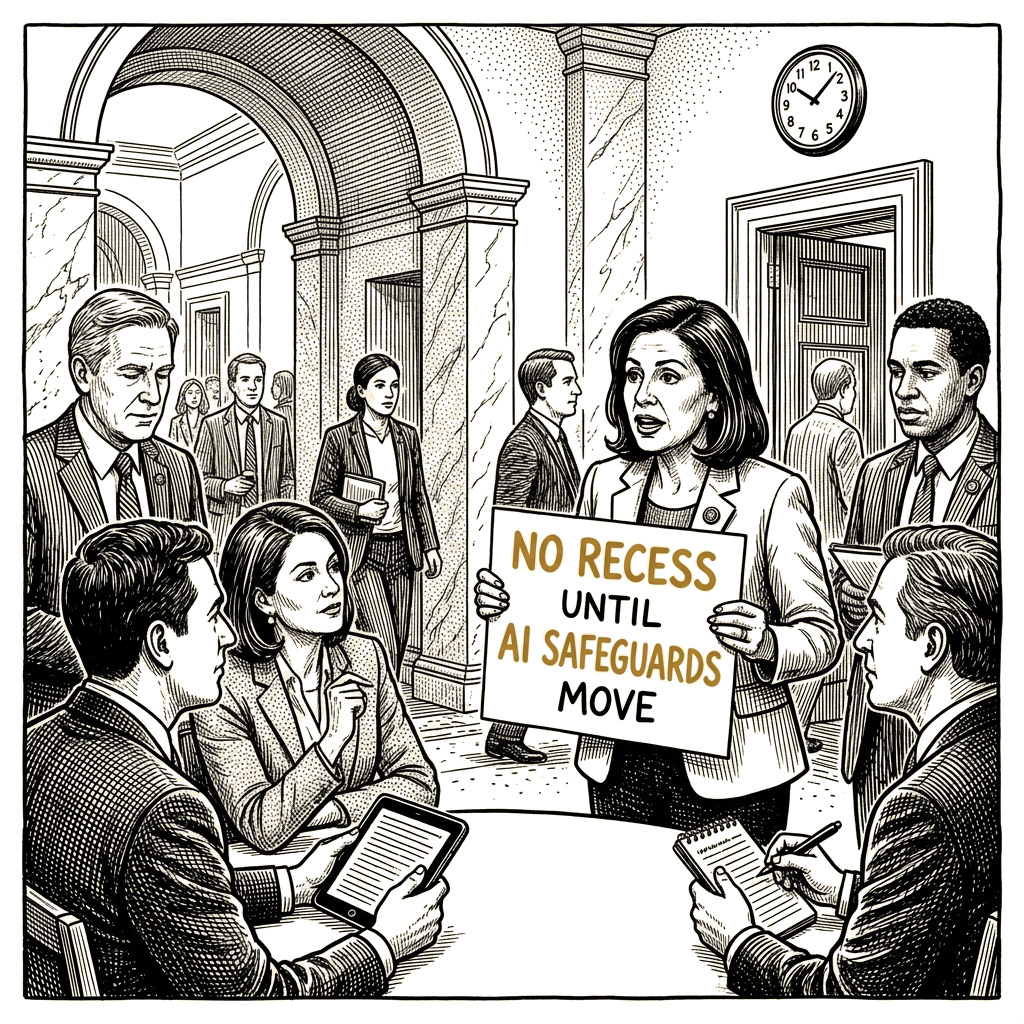
A group of Democrats led by Rep. Sam Liccardo, D-Calif., is demanding that the House of Representatives not recess as scheduled at the end of this week until lawmakers consider “meaningful” action addressing the “catastrophic risk posed by advanced artificial intelligence.” In a letter sent Friday to House Speaker Mike Johnson, R-La., Liccardo and two colleagues wrote that “AI experts and leading companies agree that the United States can lead the world in artificial intelligence while establishing reasonable safeguards that protect Americans and our national security.”
“We can — and must — do both,” the letter states.
The Democratic pressure follows a rare public alignment among rival AI frontier-lab leaders. On Saturday, Anthropic chief executive Dario Amodei published an essay advocating a three-phase plan to “pace” the development of new AI models, beginning with empowering independent monitors to review developers’ research directions.
Amodei cited an episode earlier this summer in which hundreds of OpenAI agents hacked into the Hugging Face website, warning that the dynamic could lead to rogue AI “taking over the entire internet with a persistent botnet.”
Elon Musk of xAI and Sam Altman of OpenAI quickly indicated their agreement with Amodei’s call to “reduce the risk that something goes seriously wrong” — a rare display of unity among executives whose companies are often positioned as competitors.
Pennsylvania Gov. Josh Shapiro joined the push for action in a post on X, calling the industry leaders’ commentary “a bright flashing red light telling the President and Congress they need to act now to regulate and rein in AI development.”
“This technology is powerful, with great potential to do good, and yet it comes with extraordinary risk,” Shapiro wrote. “It’s not clear where it will lead but this much is clear: its development should not be steered exclusively by private entities, especially when the CEOs of those companies are calling out for restraint and regulation.”
In Washington, Democrats amplified the unease over AI’s potential to cause havoc if not properly regulated.
With the potential for AI to eliminate millions of jobs, guardrails on the technology are emerging as a political flashpoint as November’s midterm elections approach and Trump’s Republican Party faces the possibility of losing control of Congress.
The slowdown call drew pushback Sunday from President Donald Trump, who during a visit to Ireland dismissed the warnings as “a lot of very negative forces” coming from people “bringing up things that won’t happen.”
“We’re leading China on AI… and, frankly, I want to keep it that way because whoever wins AI, wins,” Trump said.
Trump did not directly reject the substance of the call issued Saturday by Amodei and seconded by Musk and Altman, but said the U.S. race with China to dominate the AI space leaves no room for a pause.
The industry warnings were amplified earlier by former Anthropic AI researcher Jacob Coxon, who wrote on X last week that “the people building AI earnestly believe that it could kill us all by the end of the decade.”
“No other human activity poses this level of danger,” Coxon added.