The 2026 super El Niño raises baseline coastal water levels
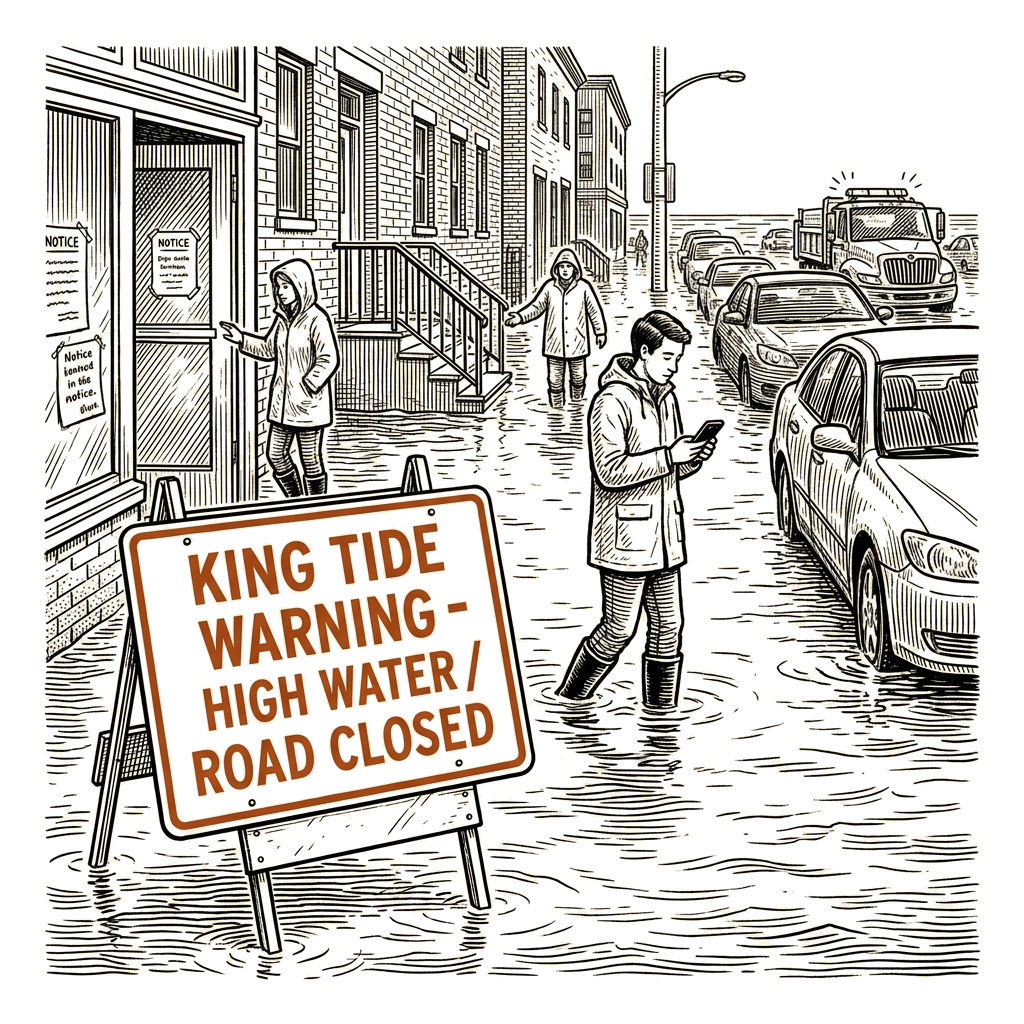
King tides are increasingly flooding U.S. coastal communities as climate change accelerates sea-level rise. The 2026 super El Niño has raised coastal water levels and intensified the effects, while strong winds and storms can worsen the flooding. Four California locations recorded their all-time highest observed water levels in late October, and near-record king tides flooded some low-lying communities as Thanksgiving travel ramped up.
“King tide” is a colloquial rather than scientific term for exceptionally high tides in a given location. “Tides are incredibly complicated. Really every location has different tidal cycles and that’s the basis for what a king tide is,” said Alec Bogdanoff, an oceanographer and meteorologist in Fort Lauderdale, Florida. “It’s a local term for the highest high tides of the year in a location. And when it impacts you, that’s when they call it a king tide.”
The 2026 super El Niño, the natural and temporary warming of parts of the Pacific, has raised coastal water levels and intensified the effects of king tides. Bogdanoff said El Niño caused higher baseline water levels on both coasts in 2026. That temporary influence is separate from the longer-term sea-level rise that climate change is accelerating.
King tides typically occur when the sun, moon and Earth are nearly aligned because their gravitational pull adds together. That alignment raises water levels and produces the greatest tidal effects of the year, and it can happen on both coasts around the same time because the tides respond to the same alignment and the proximity of the moon and sun. Bogdanoff said the highest high tides happen during full moons and new moons and during seasonal cycles that can raise or lower sea levels.
Historically, many coastal areas saw king tides once or twice a year, but some places now experience them more often as sea levels rise. Because king tides bring unusually high water, they can cause local tidal flooding, and strong winds and storms can make the flooding worse.
Bogdanoff said stormwater systems do not function normally when ocean water is higher than the levels they were designed for.
Climate change is driving and accelerating sea-level rise as glaciers and ice sheets melt and seawater expands as it warms. The rising baseline is making king tide flooding more frequent and increasingly disrupting life along the coasts. “El Niño is natural, the sea level rise we’re seeing now isn’t,” Bogdanoff said.
Four California locations recorded their all-time highest observed water levels in late October. Near-record king tides flooded some low-lying California communities as Thanksgiving travel ramped up. Bogdanoff said, “The flooding we’re seeing with these king tides is a preview of what’s to come in the 2030s and beyond.”
In 2011, the U.S. Environmental Protection Agency said sea-level rise would make current king tides become the future’s everyday tides. The statement followed the distinction Bogdanoff drew between El Niño’s temporary warming and the sea-level rise underway now.
Bogdanoff said coastal communities can conduct stormwater assessments and develop adaptation plans that account for future projections for sea-level rise, as his home state is doing with its Resilient Florida Program. Bogdanoff is principal scientist and co-founder of Brizaga, an engineering and consulting firm that helps communities plan for flooding and sea-level rise.
Possible projects include raising roads, finding better ways to protect coastlines, finding more green space that absorbs water and building bigger stormwater systems that rely more on pumps than gravity to drain water more quickly. Bogdanoff said those projects will take time.
The planning challenge includes long-term decisions about what coastal communities will look like in the future. Bogdanoff said some communities face a broader conversation about that future. He said: “We don’t have to fix everything at once. We just need to make sure the next decision is a little smarter than the last one.”
MSI’s Nov. 24 report on king tides raising flood risk across the Pacific Coast and Florida covered the immediate forecasts and preparations. This article adds the scientific context behind that risk: El Niño temporarily raises coastal water levels, while climate-driven sea-level rise makes extreme high tides more frequent and disrupts stormwater systems.