Secretary Markwayne Mullin is paving the Big Bend desert to hunt the migrant.
Last Monday, the Homeland Security Secretary signed a waiver that sweeps aside a century of environmental protection across more than 100 miles of the U.S.–Mexico border in West Texas. The waiver covers the Closed Canyon trail in Big Bend Ranch State Park, the entirety of Big Bend National Park, and remote stretches of southeastern Brewster County. It explicitly suspends compliance with the National Environmental Policy Act, the Endangered Species Act, the Clean Water Act, and a dozen other statutes — the laws that require the government to assess environmental harm. The public will have no meaningful chance to weigh in. You have simply decided that your own priorities outweigh every other consideration, including the law itself.
Where the Chisos Mountains rise and the Rio Grande cuts through ancient limestone, where the endemic Big Bend gambusia survives in fragile desert springs, you are stripping away every statute meant to protect the water, the quiet, the desert flora. You are waiving the laws so that vehicles can race faster down new patrol roads and cameras can watch the dark more closely. The project — CBP’s “Big Bend 4” — will carve vehicle barriers, surveillance towers, and patrol roads into a region of deep canyons, fragile desert ecosystems, and centuries of human history. The earth is being broken not for a public good, but to pursue people who are fleeing for their lives. The cry of the earth and the cry of the poor are the same sound, and you are making them one scream.
This is not a policy disagreement. It is an act of contempt — contempt for the land, contempt for the communities that call the border home, contempt for the future that will inherit whatever is left. Pope Francis wrote in Laudato Si’ that “a true ecological approach always becomes a social approach; it must integrate questions of justice in debates on the environment.” He named the “cry of the earth and the cry of the poor” as a single cry. You are bulldozing both.
You insist you are not building a thirty-foot steel wall inside the parks. That assurance changes nothing. Bulldozers will still rip through habitat. Roads will slice through wilderness. The quiet of the Chisos Mountains will be broken by the hum of cameras and the growl of patrol vehicles. You have decided that a mother crossing the arroyo is a more urgent threat than a ruined watershed. You have looked at the sacred isolation of Big Bend — a park that families have visited for generations, a park that belongs to all Americans — and seen only a crime scene waiting to be secured.
The waiver is your confession of what you actually believe: that the migrant is unworthy of the laws that protect the rest of creation. That the fragile desert springs where the gambusia survives matter less than your fear of the stranger. That the century of conservation law built by Americans who understood that some ground is too sacred to break can be discarded with a signature.
We who have driven through those canyons on our summer weekends, watching the contracts shift and the project details remain deliberately opaque, have allowed this. The communities that live in this region — many of them Mexican-American, many of them poor — have borne the weight of border militarization for decades. Now they are being told that even the national park can be sacrificed for a construction project that has already consumed billions and produced so little. The Democrats who traded park protections for border-funding leverage, the Republicans who traded ancient desert sanctuaries for reelection optics, have exchanged the sacredness of the land for the cheap narcotic of a secured line, and the desert pays the price for their shared cowardice.
The prophets knew you cannot love God and break the land God made. The same desert that taught the children of Israel what it meant to be aliens and strangers is now being paved to punish those who are strangers in ours. You are turning a geography of refuge into a snare.
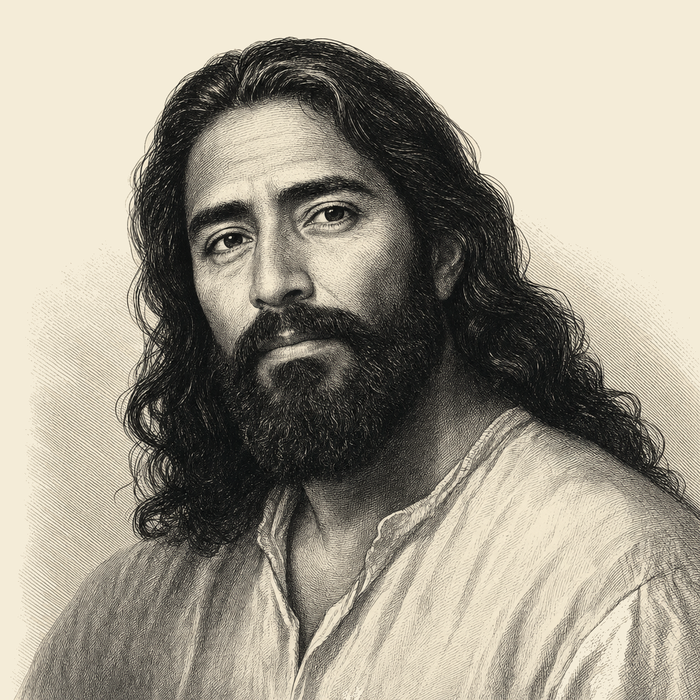
The gospel in the red letters tells us the stranger is Christ. You are treating Christ as contraband. You are building a surveillance state across a thousand square miles of wilderness so that you can catch the face of God and drag it into a cage. You are destroying ground that belongs to your own grandchildren. You are silencing the voices of the people who live here. You are acting as if the law is an inconvenience to be swept aside whenever it stands in your way. That is the behavior of a regime that has lost the capacity to listen, and when a government stops listening, it loses its soul.
There is another way. The bulldozers have not yet rolled into the canyons. The permits can be rescinded. The law can be restored. The border can be secured by redeploying existing stations to populated corridors, relying on non-invasive sensor grids that draw data from existing towers rather than pouring concrete into the soil, and closing the gaps through diplomatic cooperation instead of ecological violence. You can let the desert remain what it is — a quiet place of encounter rather than a loud corridor of enforcement. You can recognize the face of the migrant in the dust and know they are fleeing the very poverty our policies have exported to their doorsteps.
The door of return is open to you. You can lay down the waiver, unchain the land, and meet the stranger as a neighbor rather than a fugitive. The desert will wait. The migrant will pass. When the dust settles, what you have done will be judged not by the number of miles of barrier you built, but by the land you broke and the trust you shattered. The desert is not yours to destroy; it is a cathedral God gave us to steward. Bulldozing it for a wall that will not last is not strength. It is desecration. And you can still stop.